Friday, October 21, 2011

Affordable Health Care!

I found this ephemera on eBay recently. It's a receipt from the hospital I was born in (3 years later), and a statement from the medical clinic at which I was a patient essentially all my young life. (I actually remember the huge cash register-like machine in the clinic office that printed these very bills!)

I was also fascinated to see what doctors and hospitals were charging for their services 60 years ago.
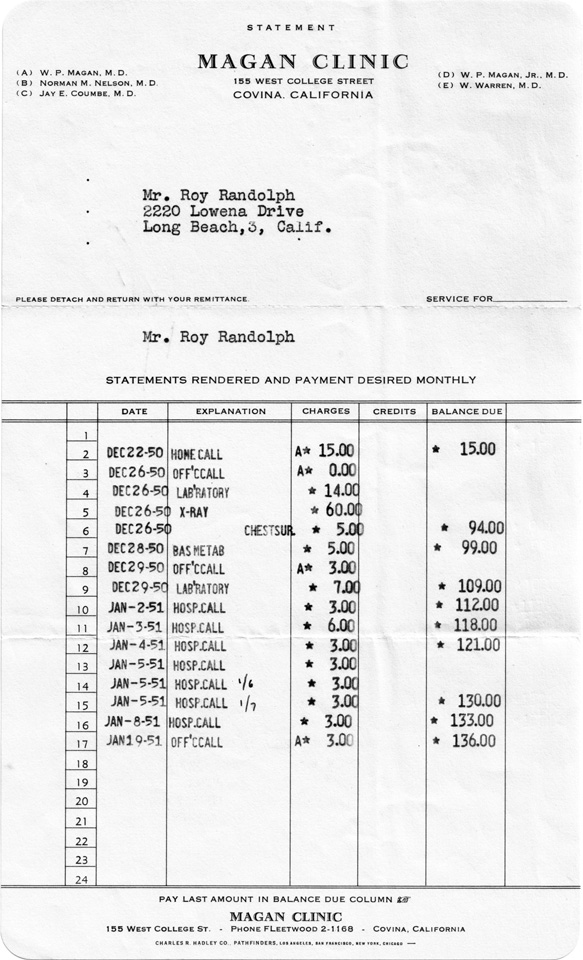
The Magan Clinic bill pretty much tells the story. Mr. Randolph becomes ill the week before Christmas, 1950, and Dr. Magan (the founder of the clinic himself) pays a house call on him on Friday, Dec. 22. He evidently finds something wrong, and tells Mr. Randolph to come to his office the next business day, Tuesday, which amazingly enough is the day after Christmas. (No two-week Holiday vacations for doctors back then!) At the Boxing Day office visit (for which, you'll notice, the doctor did not charge his customary fee), Dr. Magan has his patient get a chest x-ray. Pt. comes back on Friday, and the doctor orders a blood test. Whatever Mr. Randolph has evidently gets much worse over the weekend, though, and he ends up in Covina Hospital. Every day for a week, the doctor visits him in the hospital; on the second day he even pays two visits. By the following Monday, whatever was wrong with Mr. Randolph has improved enough to allow him to leave the hospital, then, a couple weeks after release, Dr. Magan gives him a clean bill of health, for what I suspect was probably a bout of pneumonia.
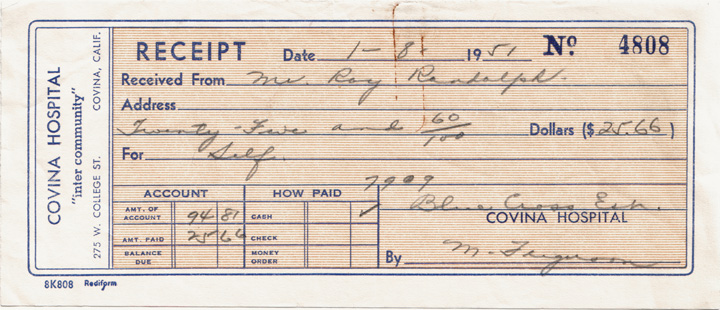
The hospital bill for 7 days cost Mr. Randolph $94.81 out of pocket. He apparently had Blue Cross, so if we assume the standard 80/20 cost split, that means the full amount of the hospital bill was $475, roughly $70 per day. In 2011 dollars, that's $4,145; about $600 per day. (Dr. Magan's bill would be $1,186 today.)

So, in 2011 dollars, this course of treatment that spanned approximately one month ran up $5,331 worth of charges, with Mr. Randolph having to pay roughly $2,000 of that. Not cheap, but what would just the 7 days in the hospital cost today? I shudder to even think about it.

 

Saturday, September 24, 2011

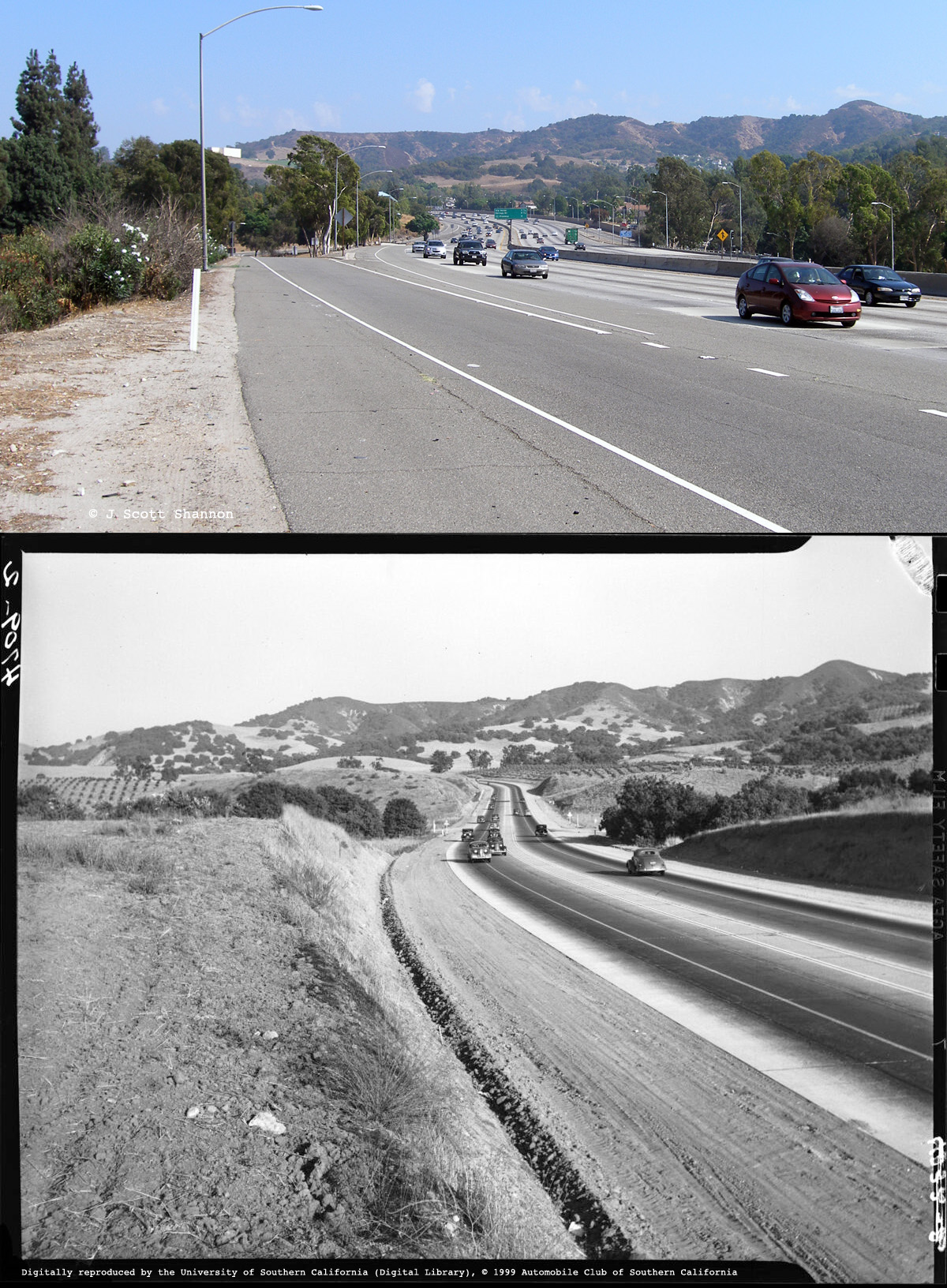
I-10 at Holt, 2011 & 1938


Click on image for an enlargement.

The first highway between the east San Gabriel Valley and the Pomona Valley was built in 1933. It was called Arroyo Avenue, and was designated as part of U.S. Highway 99. In 1957, US-99 was widened and became the San Bernardino Freeway, and when it was added to the Interstate Highway System in the early 1960s, it became what we know today as Interstate 10 (I-10).

In these views, we are looking east toward Pomona just west of the highway's intersection with Holt Ave., east of Covina. The top photo was taken in the present day; the bottom one in 1938.

Top photo © 2011 J Scott Shannon, bottom photo © 1999 USC Digital Library/Automobile Club of Southern California.


Wednesday, January 5, 2011

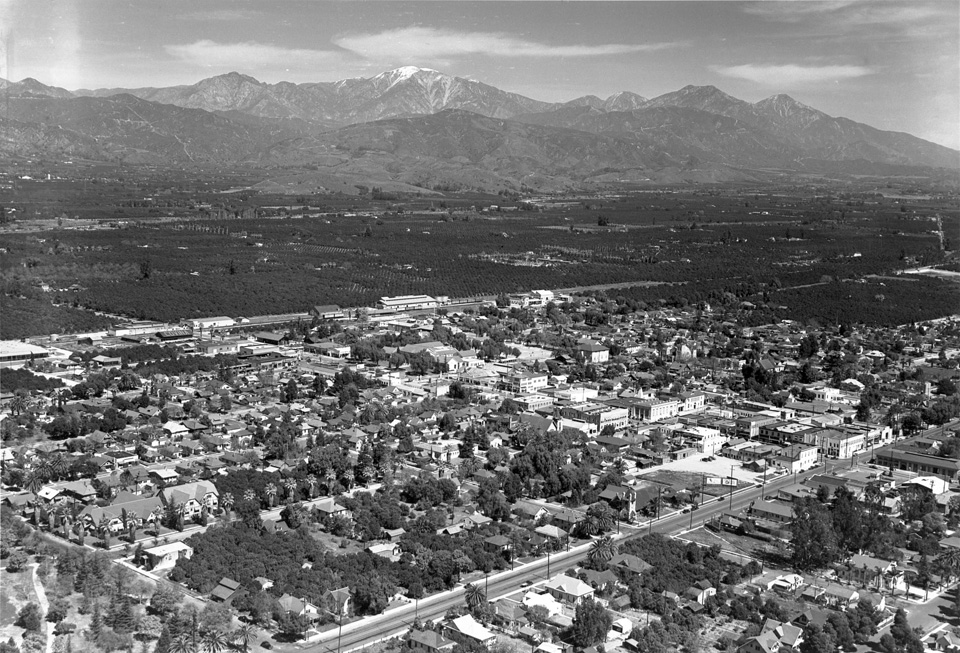
Covina, 1940

It's amazing the things you can find on the 'net, even when you're not really looking for them. Case in point: this 1940 aerial view of Covina–my home town–14 years before I was born there:


Originally uploaded by A Box of Pictures, and contributed by J. David Rogers. The full-res version of the photo is viewable here.

Let's go exploring!


Sunday, March 28, 2010

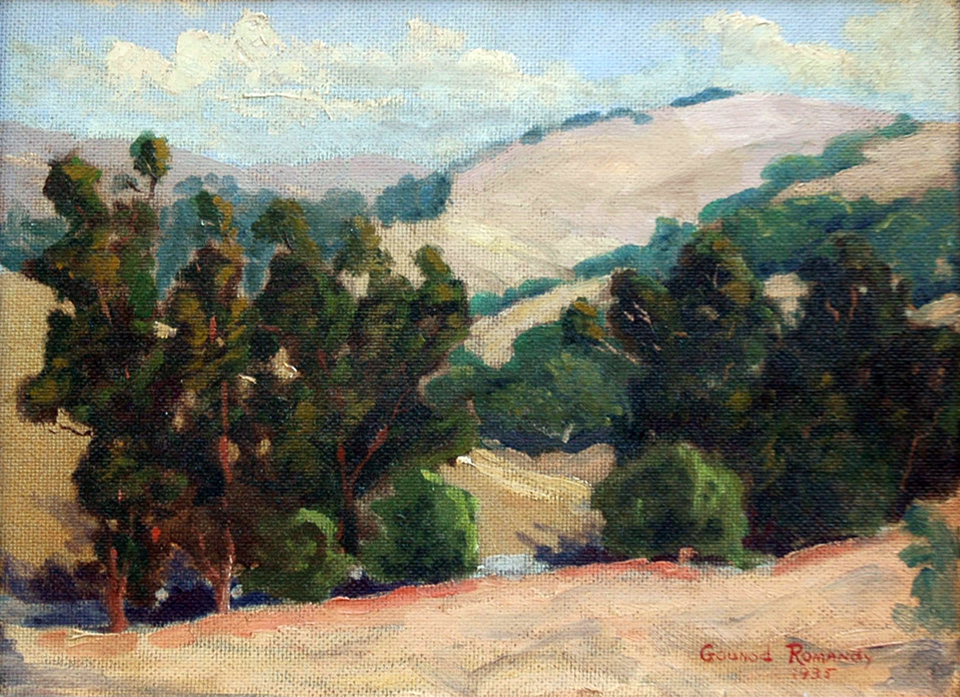
Gounod Romandy's "Hills of Covina, California" (1935)

I found this painting on eBay recently. It's entitled "Hills of Covina, California," and it was painted by noted California impressionist artist Gounod Romandy (1893-1942) in 1935.

It's only about a mile from our old Covina home. The painting was actually done about 25 years before we lived there, but the vista remained relatively unchanged until the 1970s, when this little dale began to be developed. Back when me and my buddies had those hills all to ourselves, they were alive with coyotes, jackrabbits, pheasants, tarantulas, even the occasional rattlesnake. Today, the hills are completely covered with houses.

How amazing to see an impressionist interpretation of our hills in their natural state. I can even recollect what the place would have smelled like on a beautiful summer's day like this, and call to mind the sound of a gentle breeze blowing through those tall grasses and trees. It truly was a wonderful place to grow up.


Friday, January 11, 2008

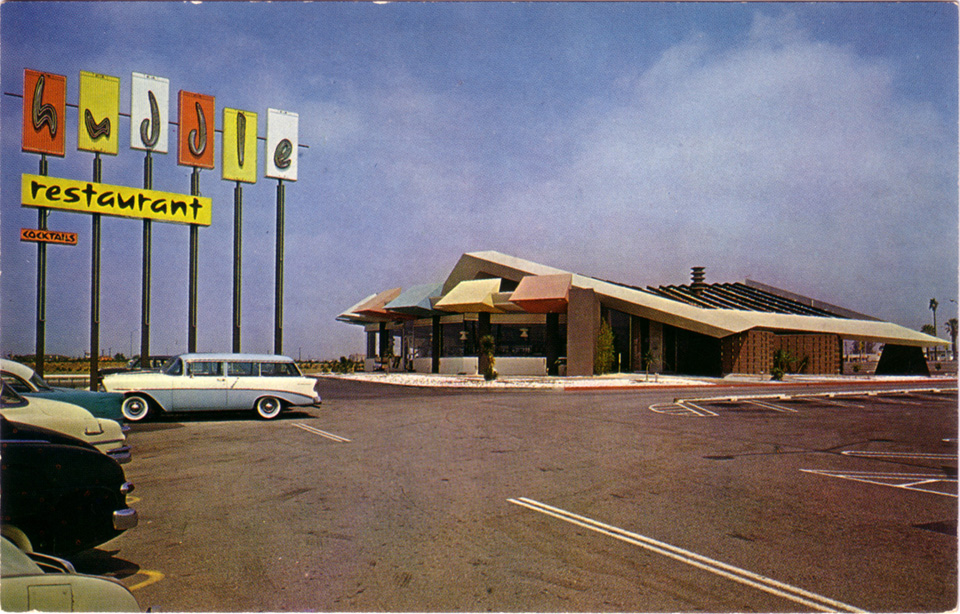
The Huddle

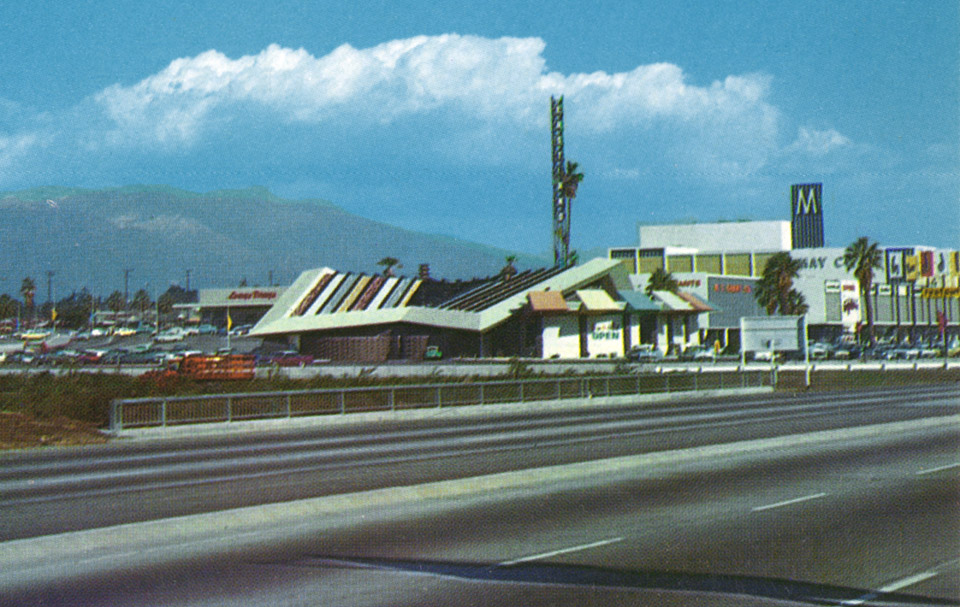
The classic "googie"-style coffee shop used to reside in the parking lot of Eastland Center in West Covina, California, close by the neighborhood where I grew up. Opened in 1957, Eastland was then only the sixth shopping mall in the Southland, and the first to be built adjacent to a freeway. The Huddle was down from the mall by the side of the westbound San Bernardino Freeway (US-99, I-10), right at the Citrus Avenue offramp.

(More on The Huddle restaurant chain.)

A familiar sight to any Covinan on their way home from L.A. in the 1960s...


Friday, November 9, 2007

My Hills, Then & Now

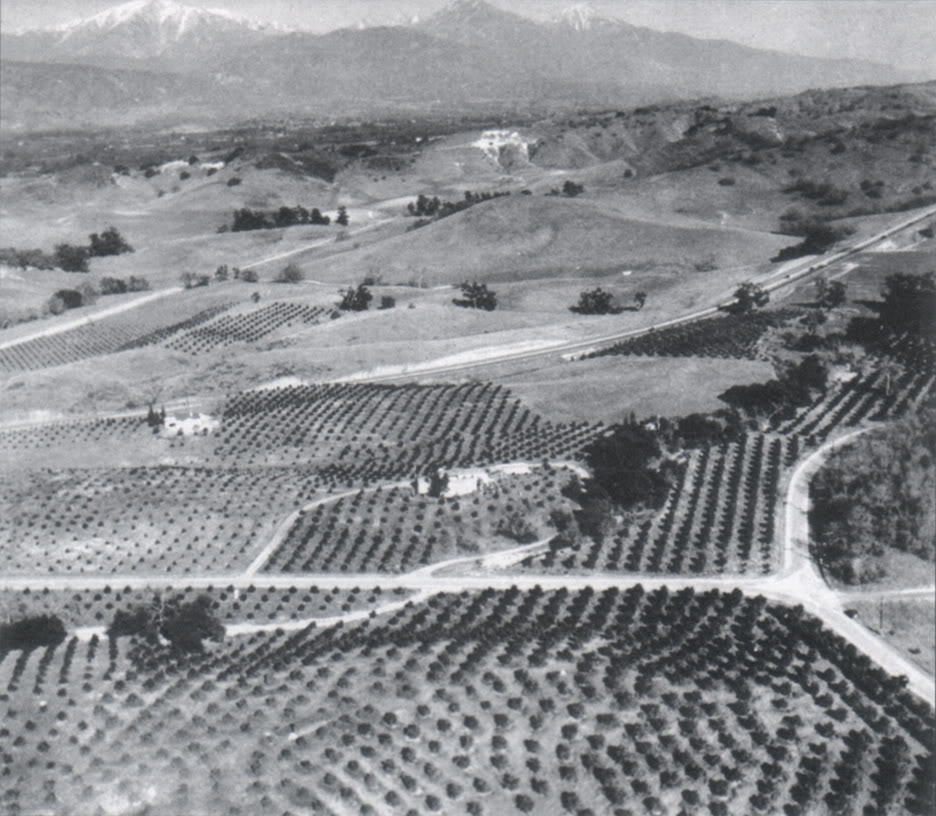
Last week, quite unexpectedly, a lifetime's dream of mine came true. I've finally been able to see what the Covina hills I lived in as a child originally looked like before they became part of Los Angeles's spreading metastasis.

See that outcrop of white limestone on the hill in the background? That's what we kids called the "Chalk Mine." Down and to the right from the chalk mine can be seen a much smaller patch of white. In 1959, my family's house would be built just to the left of that. So these were my hills, circa 1935, about 20 years before I was born.

I'm just totally blown away by this image. The whole little valley I lived in–and everything around it–was entirely undeveloped, open rangeland. Nothing but wild grasses, chaparral, live oaks, walnuts and orange groves.

It is a vision of Heaven to me... a true Paradise Lost.

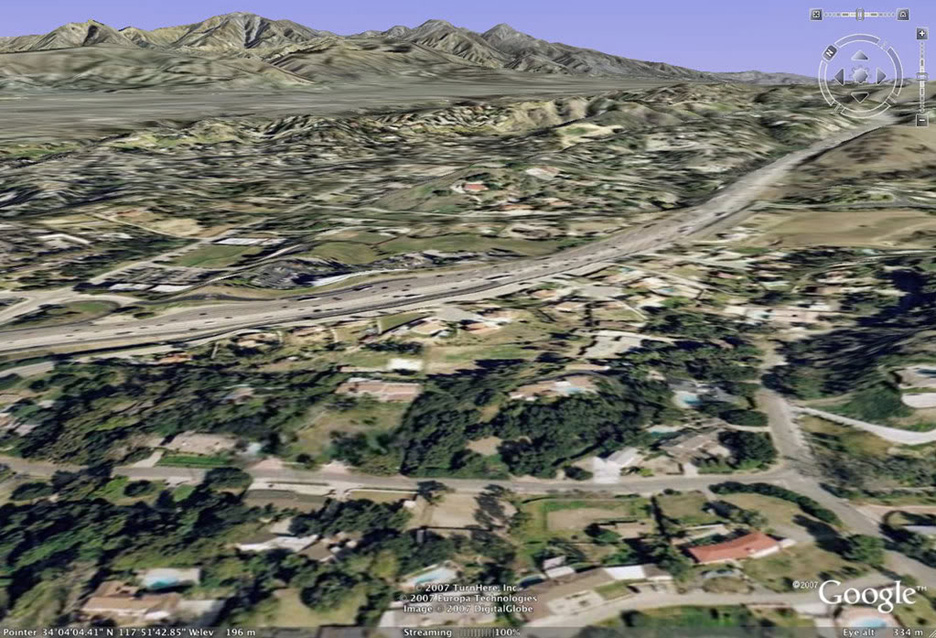
And here is the same scene today, courtesy of Google Earth. The then-newly-constructed Arroyo Avenue (U.S. Hwy. 99) in the old photo is now Interstate 10, and virtually all the formerly open spaces are now occupied by homes and businesses. It's become just another faceless L.A. suburb.

I'm grateful that I lived long enough to be able to see my hills the way they originally were. The chalk mine is long gone, but there's still a small refugium of undeveloped hills just past where my house was. Bulldozers may not have claimed it yet, but no coyotes howl, no jackrabbits scurry, no pheasants fly, no tarantulas crawl there anymore, like they did when I was little. It's all dead land now, fit only for humans.