Showing posts with label personal history. Show all posts

Friday, August 14, 2026

The 39 Freeway

Among the material I collected at City Hall during my interview with Mayor Frank Haven in January, 1971, was a then-current Chamber of Commerce road map of Covina.1 Of particular interest to me was the vicinity map on the reverse which showed a proposed freeway passing through the city limits of both Covina and West Covina.


This map detail shows only one of several possible routings that were under consideration at the time.

Thursday, August 13, 2026

Covina Town Center, 1968-1972

Probably not many people now remember (or maybe never even knew) that in the late Sixties, the City of Covina proposed a major redevelopment project that would have essentially wiped out the old downtown as we know it.

It was called the Covina Town Center, and had it gone through as planned, almost everything lying in the area bounded by San Bernardino Road, Second, Fourth, and even areas south of Puente would have either been demolished and repurposed, or expanded in some way.

The Town Center plan also called for condemning whole neighborhoods of single-family homes to be replaced by high-density housing and offices, rerouting thru traffic away from Citrus Avenue over onto Second while turning the main street itself into a pedestrian-friendly shopping mall, and all of it crowned by a new administrative Civic Center complex with a concert hall-sized Civic Auditorium.1


Source: Covina Chamber of Commerce.1 Click on the image to view an enlargement.

Despite vocal opposition, the Town Center proposal actually passed a vote of the City Council and was set to break ground in February, 1971. The month previous to that, I wrote a 19-page report on the project for my high school civics class, the research for which included an in-person interview with Mayor Frank Haven (in office 1968-1972), who was basically the Town Center's principal proponent.2

I was away at college when the Town Center plan was finally scrapped, so I never heard why none of it ended up happening, but I'm sure glad now that it died on the vine. (If anyone can fill me in on the details of why the proposal ultimately failed, I would surely appreciate it.)

References:

1 "Covina's New Town Center," Covina Chamber of Commerce, 1970, 2pp.
2 "Should the City of Covina Have a New Civic Center?," A Civics Project by Scott Shannon & Terry Dunn, January 20, 1971, 19+2pp.


Saturday, August 1, 2026

Covina Farms

Formerly located at 731 North Grand Avenue on the northwest corner with Edna Place, Covina Farms was a shopping staple for many local families for over a quarter century. It began as an open-air produce and meat market in August, 1955,1 and expanded to a full-service grocery in September of 1956.2 Long-time owners Ray and Sumiko Okura bought the store in November, 1957.3

My mom loved Covina Farms. She got all our meats there. Not only did they have the best quality in town, their butcher shop had lockers you could rent, then buy meat in bulk and store it in their deep freeze. The fresh fruit and vegetables couldn't be beat, either. My favorite part was the big newsstand where I'd read a Mad magazine or comic book while Mom shopped.

Mr. Okura passed away in February, 1977,4 and although I'm speculating here, that could have been what set in motion the eventual end of Covina Farms in July, 1981.5 Only a few short months later, Blake Paper Co. took over at 731 N. Grand6 and ran a successful business out of that location for many more years. The old building was finally torn down in 2013.7 A new Circle K store, gas station and car wash were constructed on the site and opened in 2021.7


I wish I had a picture of Covina Farms, but the best I can do is show you this old shopping bag that I found when I was closing up my parents' house in Covina in 1988. (Mom was quite the packrat.) It's the only memento I have of the friendly little local market where we shopped probably more times than any other.

References:

1 Covina Argus-Citizen, August 11, 1955, p.3.
2 Covina Argus-Citizen, September 13, 1956, p.31.
3 Covina Argus-Citizen, October 31, 1957, p.28.
4 Los Angeles Times, February 18, 1977, p.24.
5 Los Angeles Times, July 16, 1981, p.207.
6 Los Angeles Times, April 25, 1982, p.617.
7 Posted comments by Covina residents in the "I Grew Up in Covina" Facebook group.


Thursday, July 23, 2026

Ira Stanton and Kin

The other day, Dave Armbruster of the Covina Valley Historical Society asked if I could help with info about this photo. The caption read, "Ira Stanton Hauling Oranges," and Dave wondered what I could find out about the gentleman.


Built in 1913, the Covina Heights Groves, Inc., packing house was located on the SPRR line just east of the northeast corner of Front and First Streets.
Ira Stanton's brother, Pliny (b.1877), was Manager,1 and also co-owner of the Stanton grove,2 so perhaps Pliny took this picture of his brother atop their wagon.


I discovered a lot about Ira and his kinfolk, but three things stood out as noteworthy:

Monday, June 22, 2026

Citizen Casad

If you've followed my blog for any significant length of time, you know I enjoy collecting old Covina postcards and learning about the people who wrote/received them. Well, this may not be a postcard, but in terms of discovering someone, I really hit the jackpot here!


To see the Hollywood received postmark on the verso, click here.

The first thing I noticed about this old envelope was its fine-grade Irwindale postmark. (Irwindale in this case being the original Irwindale, i.e. turn-of-the-last-century West Covina, not the modern-day incorporated city to our northwest.) Then I pondered the fancy cursive that closely resembled my grandmother's, and deciphered the addressee's last name as "Casad." Ahh, that's a street in Covina/WC! Could this maybe be the person it's named after? Then, only minutes later, a quick newspaper search introduced me to Mr R. C. Casad, who has turned out to be one of the more remarkable historical Covina personages I've ever had the pleasure to meet.

In our Civics class at South Hills, I remember Mr. Douglas telling us that the framers of the Constitution intended that Congress be comprised of regular citizens elected by the community who would then come to the nation's capital for a two-year term and represent their constituents. Sounded great on paper, but of course, the system we ended up with was career politicians representing their party and themselves over and above anything else. Not so great...

Covina's Roland C. Casad, however, was a throwback to the Founders' ideal, and much more—a common man who sought not only to stand for his district, but who sincerely desired to improve the lives of all the people and bring prosperity to the entire country. To that end, he tirelessly ran for national elected office 11 times from 1932-1948, including 4 times for president.

Friday, May 8, 2026

Compromise Line Road

I hope my dozen or so regular readers will pardon me if I write about someplace other than Covina just once. ;-)

Although I was born and raised in Covina, I lived my first five years on East Foothill Boulevard in Glendora, so consequently, the history of our neighbor to the north is a natural area of interest to me.

The subject is not far out of bounds geographically, either, as both Covina and Glendora share partial origins in a historical Mexican land grant called Rancho San José Adición (aka Rancho Addition to San Jose) which just happens to be the broader topic of this article. Most of Covina's Charter Oak neighborhood lies within Adición's borders, so I'm not really straying too far afield here.

Anyway, even as a child, I had a keen interest in roads and maps which really took off after I discovered my dad's Renie Atlas around age 12 (same time as my interest in Covina history, hmm!). Probably not long after that, the name of one street in particular from my Glendora years aroused my curiosity: "Compromise Line Road." Always wondered what that meant. Somewhere in my early readings of local history, I did learn that it involved a dispute over a northern boundary of Rancho Addition to San Jose, but I never could find out much more than that.


Compromise Line Road in Glendora. Source: Renie Atlas of Los Angeles City and County, 1965 edition.


Recently I was contacted by an old classmate who asked about Compromise Line, and desiring to know more than the basics I'd heard long ago, I decided to do a deep-dive into the subject. Obvious first stop reference-wise was Donald Pflueger's Glendora (1951), but unfortunately his mention of Compromise Line Road was so nonspecific as to be no help at all. Then I searched the newspaper archive, and that was a similar dead-end.

Wednesday, April 1, 2026

Two Home Towns

Here's something I never thought I'd see: a postcard sent from McKinleyville—my home town of the last quarter-century—to the home town of my birth, Covina, back when both burgs were basically backwoods backwaters that no one ever heard of.


"Ethel" mailed this postcard to "Elvin Gilmore Esq." in Covina in 1909. The somewhat cringe novelty side can be viewed by clicking here.


Let's see if we can figure out the connection between these two home towns of mine!

Sunday, March 1, 2026

Covina Past at 100

For this blog's 100th post, I thought a little retrospective might be in order. There've been quite a few changes here at Covina Past since I created this account in 2012. Suffice it to say, it's a very different site now versus what it used to be.

Tuesday, December 30, 2025

Remembering Bob Ihsen, Mark Thiel and Dave Rogers

I was quite saddened to learn that Bob Ihsen passed away at his home this Christmas Day. He was 93. A beloved teacher of history at Covina High School for most of his career, Mr. Ihsen was also a founding member and long-time president of the Covina Valley Historical Society, and that's how he and I came to cross paths.


Mr. Ihsen in his native habitat. Photo by Marty Getz, used with permission.


Like Glenn Reed before him, Bob Ihsen was an invaluable source of knowledge about Covina history, and both men also enthusiastically encouraged my own research. Years ago, Mr. Ihsen gave me a stack of his own personal copies of the CVHS's newsletter—the Covina Citrus Peal—going all the way back to the turn of the century, and time and again these have proven to be useful references, indeed. For my efforts, Bob also awarded me a lifetime membership in the historical society, which was a great honor as you might imagine.


Unfortunately, because I live so far from Covina and am limited in my ability to travel, the only time I got to meet Mr. Ihsen in person was during my medical trip to the Southland in May, 2024. We met at Powell Camera where went through Mark Thiel's amazing collection of old Covina photographs, with each of us giving commentary on them when we saw someone or something worth noting. Afterwards, Bob and I went over to the Firehouse-Jail Museum, which I'd never had the opportunity to tour before. And when one visit to the museum proved to be not quite enough, he invited me back for another go-around a few days later! It was a real privilege to be able to spend all that quality time with Mr. Ihsen and the historical society's treasures from Covina's past.

Rest in peace, good sir. I'll do my best to keep the torch burning, and will always remember you fondly.

Addendum, 3/21/2026: I just found out today that Mark Thiel—owner of Covina's Powell Camera Shop—died only months after I met him and Bob Ihsen in May, 2024. I'm shocked. He was several years younger than me and he looked to be in the peak of health. I don't know how he passed yet, but I feel like it must have been sudden. To think I met both of these men not long ago at all and already both are gone.


I'd never known Mark prior to this and I immediately liked him. He had a deep knowledge of Covina history, and it was so great to be able to talk about it with someone who didn't need to have anything explained to them. He just knew and understood everything. Very rare, indeed. And he seemed genuinely excited to hear about the new findings I'd discovered, and the IDs I was able to make of previously unidentified pieces in his Tucker photography collection. Bob was, too, of course. And now, in almost no time at all, I've lost both of them.

So now I have to wish RIP to Mark, as well. I'm truly regretful I didn't get a chance to know him better. I have a feeling that, had I not decided to leave the LA area in the early '80s, Mark and I would have met long ago via the Historical Society and become really close friends. Even if that never happened, though, I'm at least grateful that I got to meet him at all.

Addendum, 5/2/2026: And yet another death I'm only just learning of: J. David Rogers passed away on August 23 of last year.


Dave was one of my earliest inspirations when I started to study local history; in fact he was my first "go-to" person to get authoritative answers about just about anything. He helped me with information and pictures for many of my earliest blog posts, too, especially my article about Memorial Glen. I actually met Dave back in 1967 when we were junior highschoolers in the West Covina Model Rocket Society. One time he helped me search the hills near Galster Park for my treasured lost Aerobee, which unfortunately we never found. Then we lived our lives and crossed paths again 40+ years later when I got on Facebook. I'm just stunned realizing Dave is no longer here to enrich us with his stories and the meticulous work he did on local history.

All these losses in such a short period of time. It's sobering, really, and very sad.


Tuesday, November 18, 2025

Plaza Progress

Something more recent for a change!

The regional indoor shopping mall known today as Plaza West Covina is a half-century old this year. Originally called West Covina Fashion Plaza, its grand opening took place September 25, 1975.1

A couple weeks ago, I discovered a newly-available series of aerial photos on the UCSB Geospatial Collection website which appears to have been taken to document the yearly progress of the BKK landfill in the San Jose Hills. Far up near the top edges of these photos, however, were glimpses of the main West Covina shopping center which is the subject of this article, and they visually document in detail how the Plaza under its various names has evolved over time.


All photos courtesy of UCSB Geospatial Collection; captions and credits below. Click on the image above to view an enlargement.

1973: The last year of the original West Covina Plaza shopping center, which first opened in October, 1956.2

1974: Construction of the new indoor mall.3

1975: The completed West Covina Fashion Plaza.4 The west wing of the old Plaza was demolished, temporarily sparing the building formerly occupied by J. C. Penney.

1977, 1992: The east wing of the old Plaza was kept open for business until its demolition commenced in Fall, 1991.5,6

1995: This configuration has remained relatively unchanged to the present day,7 except that the building formerly occupied by Tower Records and Desmond's before that was demolished in 2009.

More dates, photos and factoids below!

Sunday, May 18, 2025

Coffee Ranch Days

When I first read Donald Pflueger's "Covina" at age 12, I thought the most interesting parts were the author's descriptions of the valley before and during its settlement. One statement in particular captivated me: how, in the early 1880s, when the Methodist Church in the foothills at the top of Citrus Avenue rang its bell on Sunday mornings, "its clear notes could be heard all over the valley."1 That same valley when I first knew it was already home to a quarter-million people, so a stillness of that sort was almost incomprehensible to me. Like another world, it seemed... and indeed it was...

Perhaps the best-known settlers from those early times were the families of José Julian and Pedro Antonio Badilla (aka Badillo), who emigrated from Costa Rica to America in 1876. The brothers had high ambitions. They wanted a coffee plantation big enough to supply the whole United States!2 So what was their new land like when they arrived here?


Wheat harvest on Baldwin land in Rancho La Puente. Although best known for their coffee venture, the Badillas were famously successful raising wheat in 1878.3
Photo courtesy Covina Valley Historical Society and Powell Camera Shop.


Monday, May 5, 2025

A Dedication

Occasionally someone asks how my interest in Covina history originated. I had an abiding fascination with "old things" in general as far back as I can remember, but the specific seeds of curiosity about my home town's past were actually planted by teachers at Barranca School: in particular, Mr. Miller in 3rd grade (1962-1963), and Mrs. Shipley in 6th (1965-1966).

Photos of Mr. Reed Karl Miller and Mrs. Charlotte A. Shipley

Saturday, December 28, 2024

Birth Plate

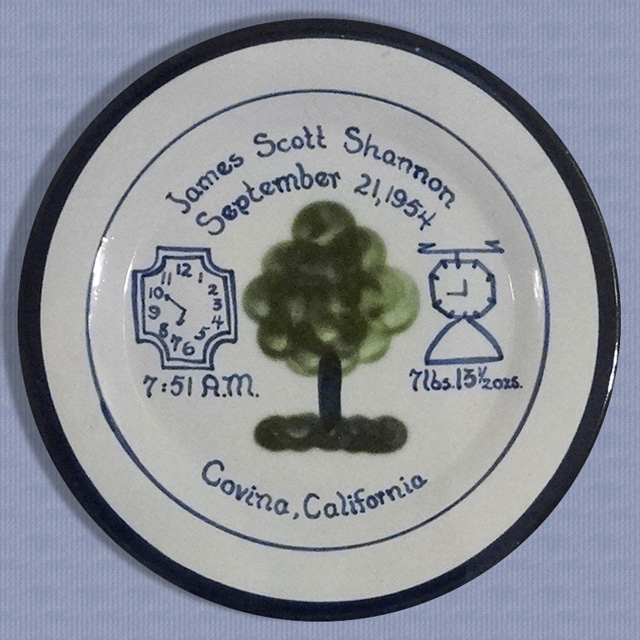
This commemorative plate was gifted to me when I was born. It is one of my most treasured possessions, and also my most personal Covina collectible. Except for my years away at college, it has been on display in a place of honor everywhere I've dwelt my whole life, and as such, it's an everyday reminder of my ultimate roots in the town of my birth.

2024 was a year of difficult losses for me, but in the end, I decided I should not add to those losses by killing off the one thing I love that I have the power to keep alive. So I will resume posting here, even though doing so carries with it neither reward nor recognition. It's a thankless job, but someone has to do it!


Saturday, November 2, 2024

Founder Finds

I have a peculiar trait that I call "detritophilia." Whenever I find myself in a place with a long history of human habitation, I will visually scan disturbed pieces of ground looking for discarded bits of everyday life from times past. It's a kind of urban archeology except I don't do any digging. I simply look for objects that are lying on the surface, waiting in plain sight for my trained eye to spot.

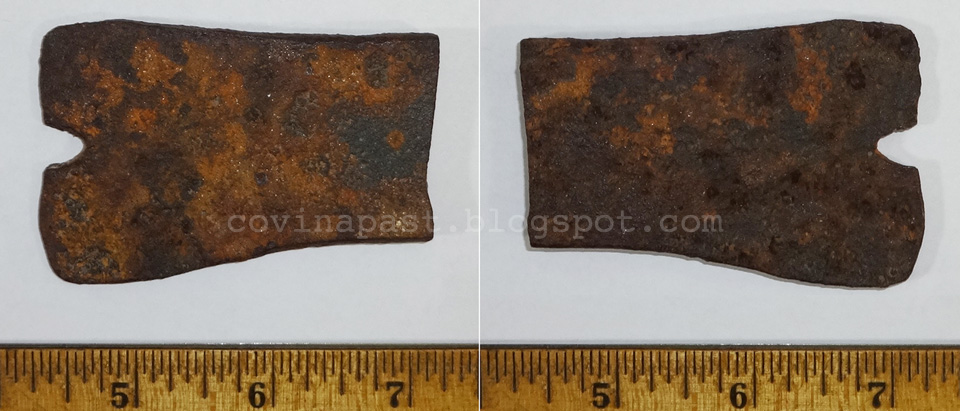
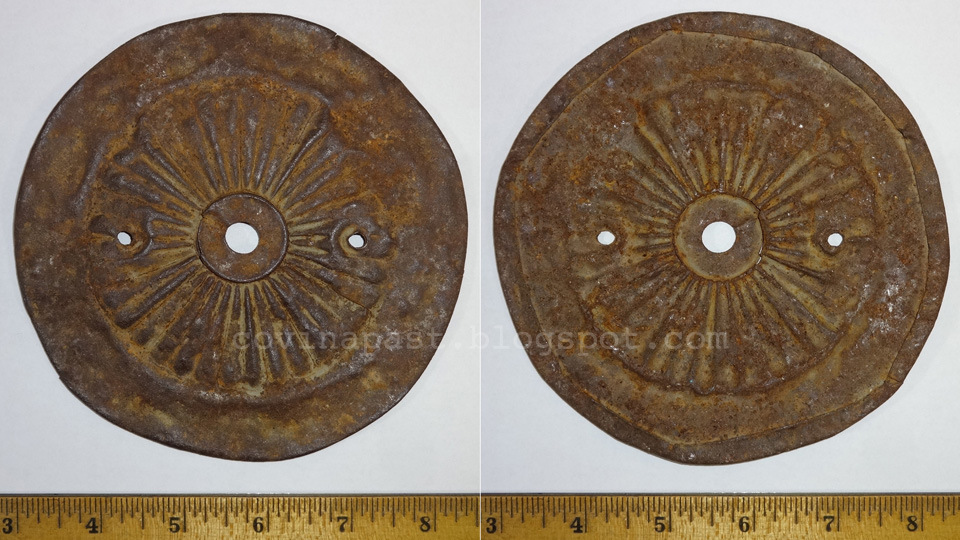
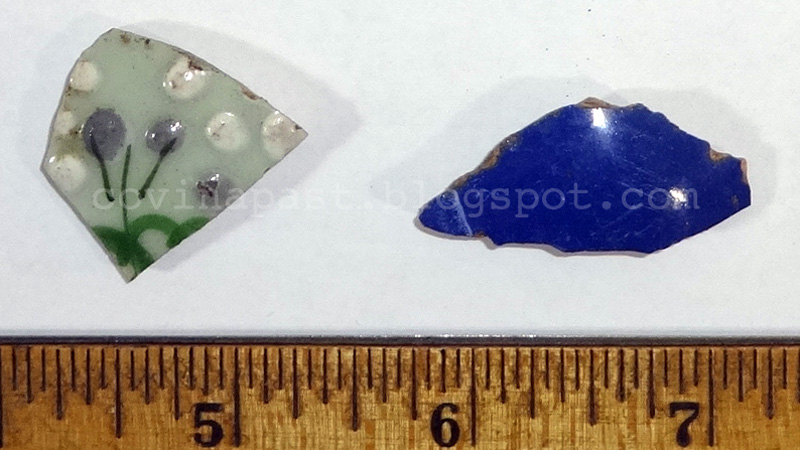
Anyway, in 1988, I made multiple trips to Covina to clean out our family home and prepare it for sale. One day while returning from Azusa with packing materials, I decided to kill some time and explore the vacant lot at San Bernardino Road and Hollenbeck where the Phillips House once stood (and the Julian Badilla house before that). Here are the four pieces of historical detritus that I collected that day.


Photo by J Scott Shannon. Scale in inches.

This was pretty easy to identify as the broken off end of an iron prying bar. Upon closer inspection, though, I noticed its shape was distinctly asymmetrical, which suggested to me that it was forged by hand.


Photo by J Scott Shannon. Scale in inches.

This object baffled me for the longest time. My best guess was some sort of wall or ceiling fixture. It wasn't until recently that Michael Schoenholtz suggested that it might be the reflective portion of a candle sconce, and I now think he's exactly right. This, too, appears to be quite old, and hand-hammered. Note in particular how crudely the edges on the reverse side are formed.


Photo by J Scott Shannon. Scale in inches.

Two pottery fragments: the one on the left apparently of glazed porcelain, and the other, glazed red clay pottery. Not much to say about them, except that they're almost certainly pieces of some sort of tableware, and that one's fancy in design and the other is plain.

So, how old are these objects? Obviously they can't be dated precisely, but because the plot of land where they were found was not built upon until 1876, that gives us their earliest likely origin date.

Additionally, the apparent hand-made quality of the metal items makes it reasonable to assume that they are from a time when tools and other hardware were made by and purchased from local blacksmiths rather than being mass-manufactured and sold in stores. Store-bought goods probably became more common after 1890, so that's my best guess for the upper end of the age range.

So, if these items date from the period 1876-1890, they could have belonged to either Julian Badilla or Joseph Phillips. However, I tend to think the cruder-made metal objects are from the Badilla era. That candle sconce, in particular, looks more like a fixture on the wall of a simple farmhouse than the imported mahogany paneling of a mansion.

These finds are all to be donated to the Covina Valley Historical Society.


Tuesday, February 6, 2024

Covina Orange Boxes

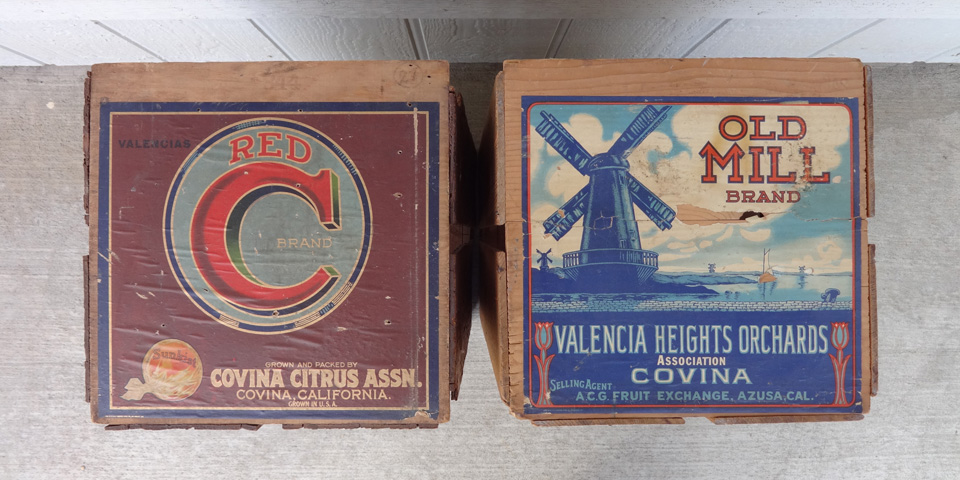
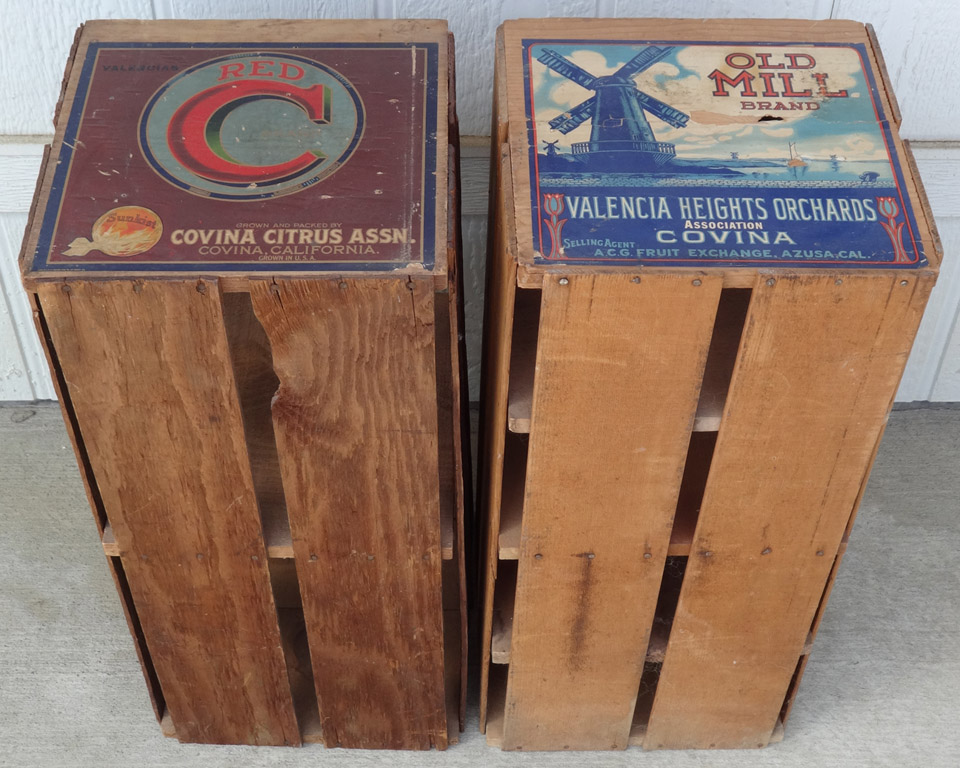
Thought I'd show off my Covina orange crates (which were actually referred to as "boxes" back in the day). Although exhibiting some wear, the labels are in overall good shape for their age, and the boxes themselves are still sound enough to stack for display shelving.


Just eyeballing, the "Red C" appears to be the older of the two. Red C was a long-standing brand of the Covina Citrus Association which was established around 1895,1 though my guess is this particular box dates to the 1930s. The Valencia Heights Orchards Association was in business from around 1930 through the mid-Fifties,2,3 and I think its box here is from the post-WWII Forties.


I would still like to obtain a Covina orchard box, which were stouter in construction and had branded rather than applied paper labels, but the only one of those I ever saw for sale went for more than I could afford. I no longer recall exactly what I paid for my shippers, but for sure it was less than a hundred each. They have way more historical and sentimental value to me than that, though!


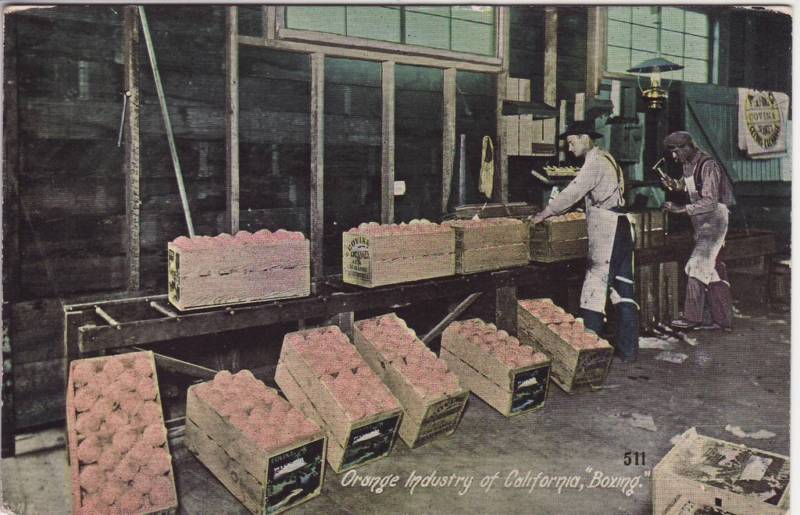
Scene inside the A.C.G. (Azusa-Covina-Glendora) Citrus Exchange, 1910s.


References:

1 Covina Argus, October 5, 1907, p.12.
2 Covina Citizen, November 19, 1931, p.6.
3 Covina Argus-Citizen, January 30, 1953, p.7.


Friday, March 31, 2023

Covina Present

Because I live 700 miles away, I don't get to visit Covina very often. Last week, however, I was in L.A. for some eye appointments, and while in the area I spent an afternoon driving and walking around my old home town.

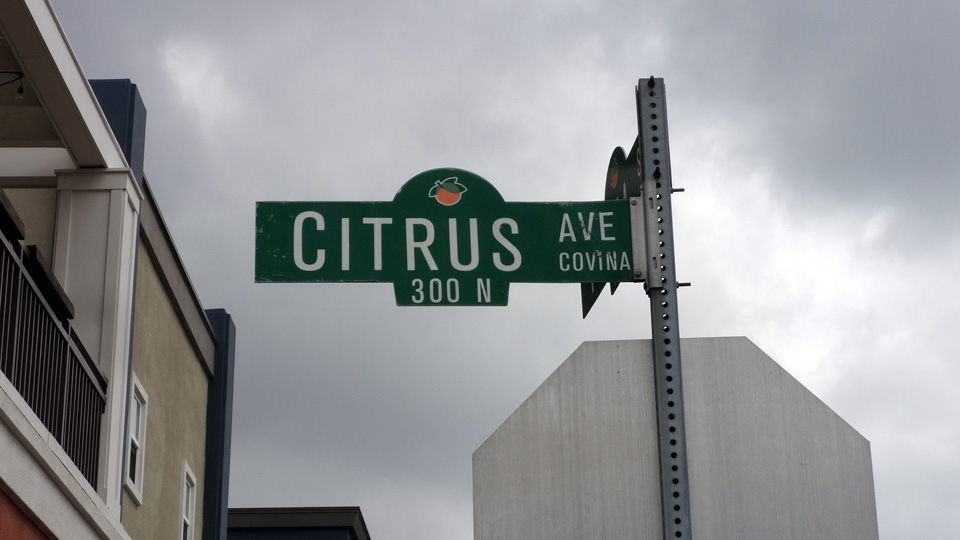
The last time I was here, Citrus Avenue had been transformed into an outdoor dining area which shall we say was not exactly conducive to sightseeing. So I was pleased to now see that the main street had returned to normal; or at least normal for Covina in this day and age.


All photos © J Scott Shannon.


Friday, May 6, 2022

Old Covina Glass

I know I said a while back that I was done collecting Covina antiques, but bottles were one of my earliest specialties, and I simply can't resist temptation when it comes to old Covina glass.

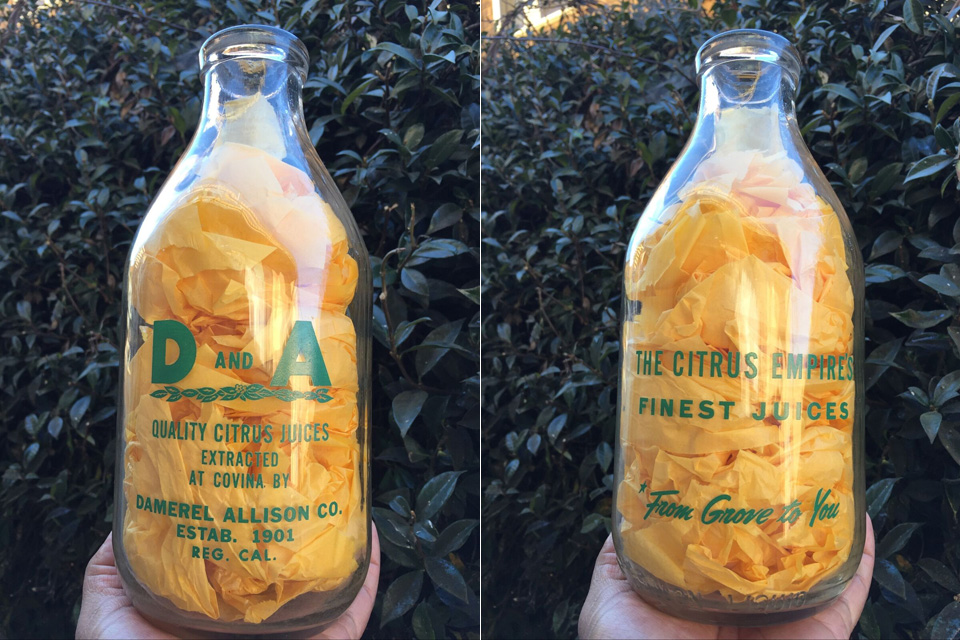
So, given that affinity, what would a local history nut like me most like to acquire? A Covina orange juice bottle, of course! You might think they'd be relatively common, but it's taken me forever just to find one. And here it is: a beautiful, like-new half gallon juice bottle from the Damerel-Allison Company of Covina that dates from 1946-1950.


Photos by Jose Lomeli.


A case could be made that Damerel-Allison invented bottled orange juice. Founded in 1901, D-A pioneered storage and refrigeration techniques that made it possible to reliably mass produce orange and other fruit juices for the regional consumer market. D-A also achieved market advantage by controlling its entire supply and distribution chain all the way from the grove to the grocer's shelf. After WWII, Damarel-Allison opened the largest and most thoroughly automated frozen juice concentrate facility in the United States. In 1950, D-A was acquired by a division of the California Fruit Growers Exchange, whose consumer products brand name was... Vita-Pakt! Under that name, the company would remain a staple of Covina's economy for another half-century.

Tuesday, November 2, 2021

Covina Hills Road

Looking back, I realize that Covina Hills Road was the likely origin of my fascination with olden times. We moved to the Ranchos when I was 5, and even at that young age, I noticed that, taking Rowland towards home, the instant we passed Grand onto Covina Hills Road, the scene changed from modern suburbia to cowboy days. Along almost its whole length were sights to behold that looked frankly ancient to me. Maybe this had been a stagecoach road, or an old indian trail, but no matter who I asked or what library books I read, no one could ever tell me anything about Covina Hills Road that came even close to answering all the questions I had about it. A lifetime would pass before I was able to discover the road's forgotten story myself...


Corner of CHR and Via Verde, San Dimas, June 26, 2010. Photo © J Scott Shannon.

Known by a variety of names over the years, today's Covina Hills Road began its existence in early 1895 as a mile-long access road to the headquarter buildings of the McCarthy Company's Hollenbeck Ranch partition southeast of town.1


Survey map from August, 1895,1 showing the new Hollenbeck Ranch road (yellow) as an extension of Rowland Avenue in the Phillips Tract.
Courtesy Los Angeles Dept. of Public Works.


The year previous, however, a committee of the Pomona Board of Trade together with officials and supervisors of Los Angeles County had already recommended creation of a road extending all the way over the San Jose Hills to give Pomona a more direct route to the San Gabriel Valley and points west.2 At the time, travelers from Pomona wanting to go to Covina had to divert around the hills: either north via Lordsburg (La Verne) and San Dimas, or west via the Old Spanish Trail (today's Valley Blvd.) then north on Pass and Covina Road. If they could cross directly over the hills, though, it would take at least five miles off the trip,3 which in the days before automobiles could mean an hour of time saved.

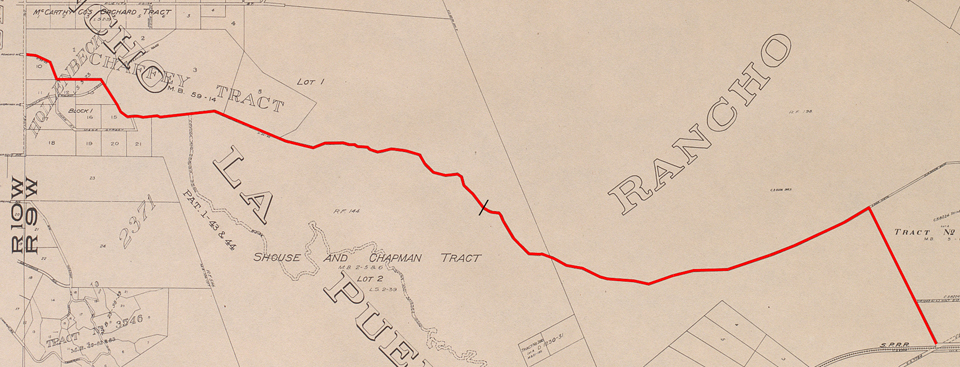
The route as surveyed in the summer of 1895 passed through the Phillips Ranch4 on the east over what we now call Kellogg Hill, then through Hollenbeck Ranch lands on the Covina side.3 After the rights-of-way were obtained and obstacles to construction overcome, work on the Pomona County Road was completed in four months in early 1896 for a total cost of $1,100.5


The original as-built alignment of the Pomona Road (red). Since 1933, the road has ended at the point indicated by the black slash.


Tuesday, April 6, 2021

Farewell, Glenn

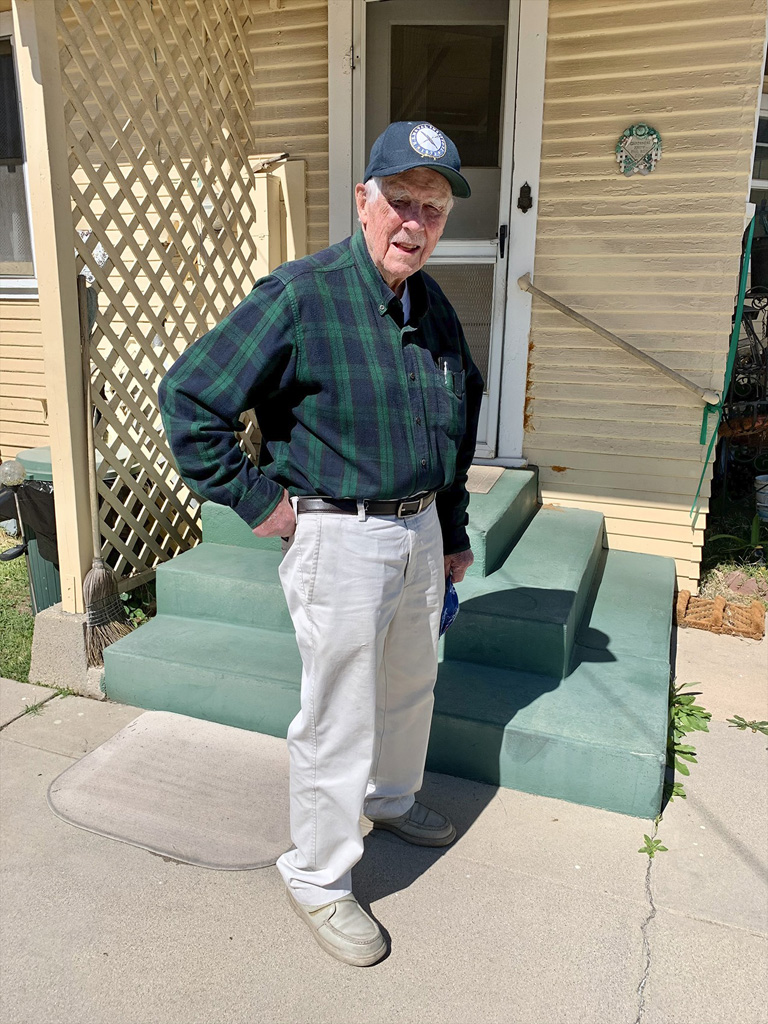
I am shocked and saddened to learn that fellow historian Glenn Reed passed away suddenly earlier today. One of the last native Covinans born in the 1920s, he lived in the same house on San Bernardino Road for all his 92 years.

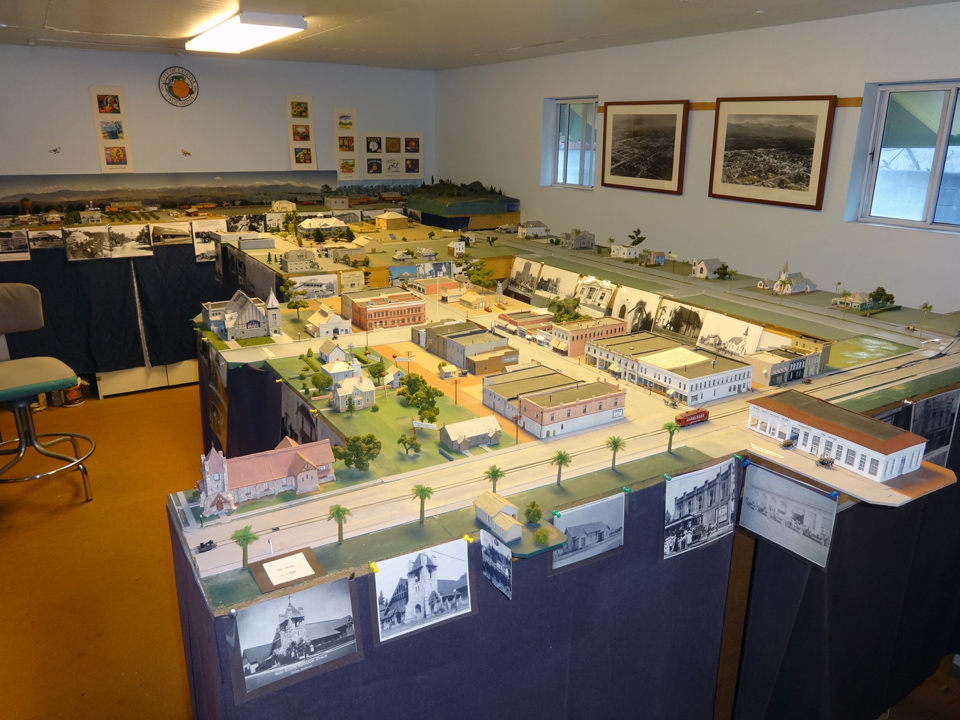
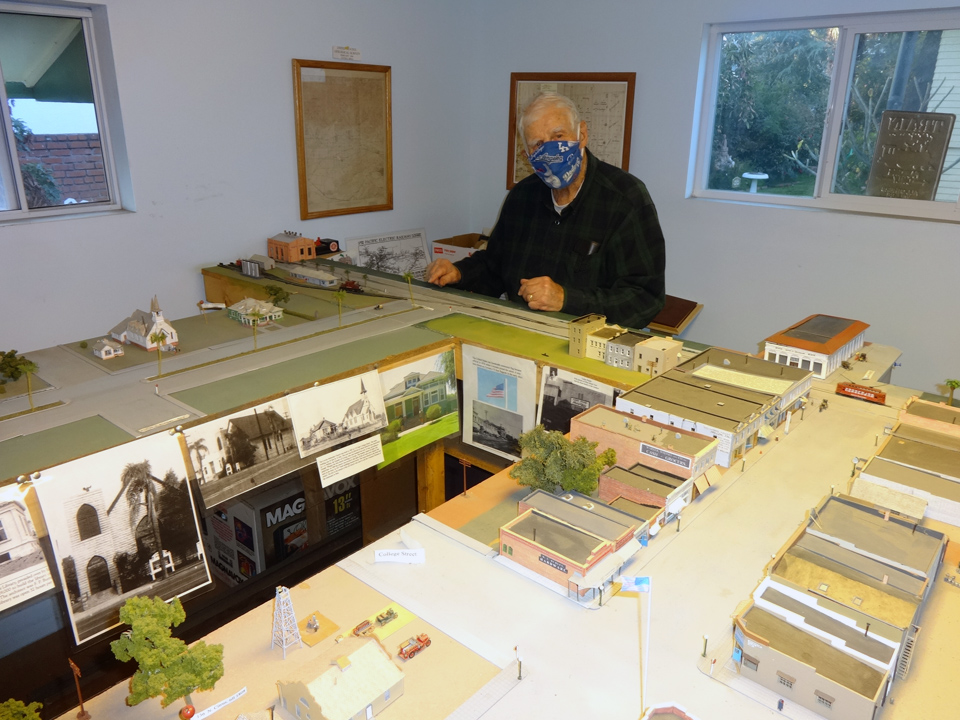
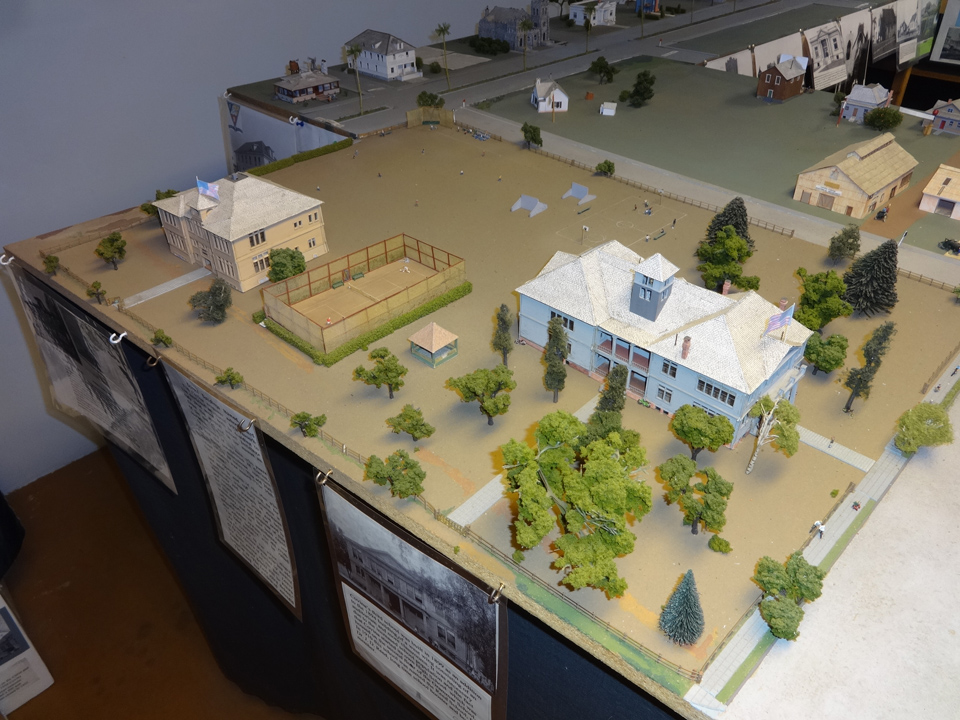
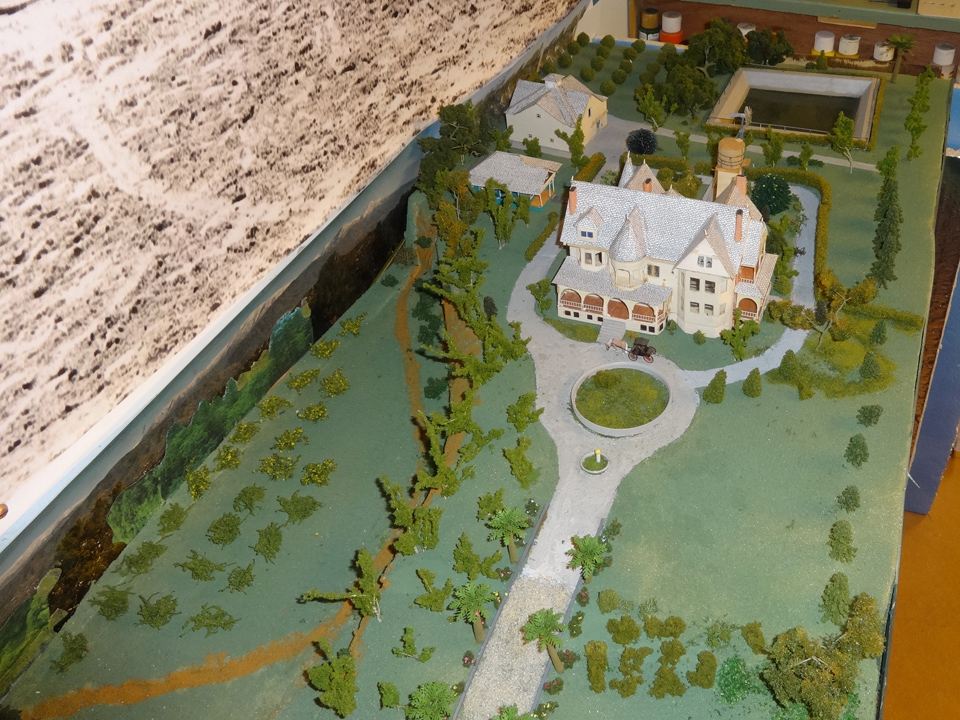
After corresponding with Glenn in email since I began this blog, I met him in person for the first time only 37 days ago. He gave me a personal tour of his labor-of-love scale model of historical Covina: an honor I'd looked forward to for years. I was due to return to Los Angeles this very week, and was looking forward to visiting him again to continue our conversation we'd barely begun on February 28, but fate determined that was not to be.

A few photos from my all-too-brief visit:


Glenn Reed's personal homage to his home town and its history.


Mr. Reed introducing me to his miniature world, February 28, 2021.


Model of the Grammar School and Covina's first High School from the San Bernardino Road side.


Just look at the detail here. Mr. Reed told me he wouldn't have been able to complete this model of Mountain View without my assistance.


Glenn Reed on his back stoop, just as I remember him. Photo courtesy Marty Getz.

I'm still trying to process this news. Glenn was a good friend and colleague–a primary inspiration for my work here–and I don't know at this point how I'm going to be able to continue this blog without him.


Thursday, November 14, 2019

Covina Souvenir Spoon

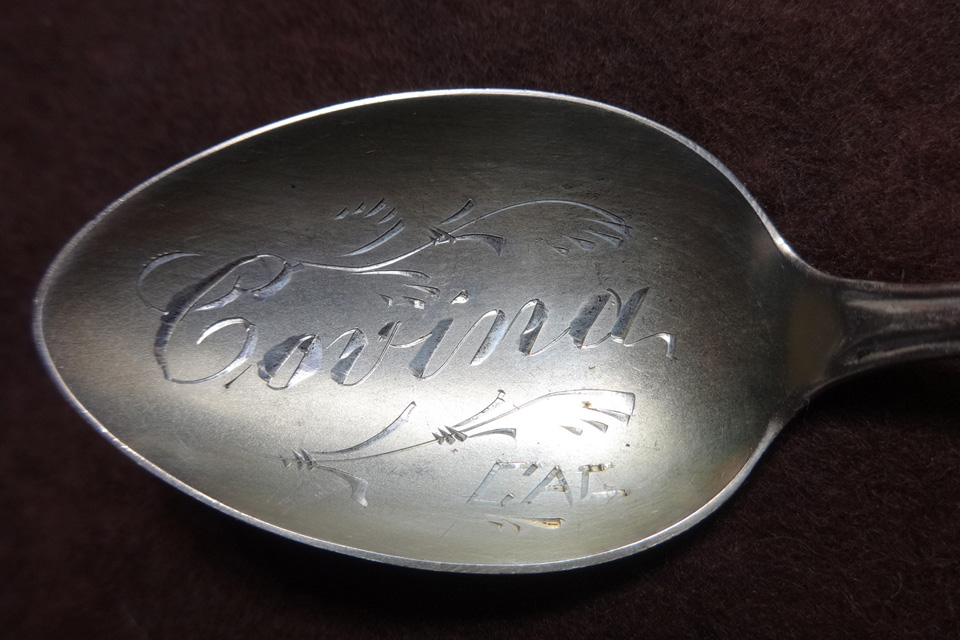
I recently acquired this Sterling silver souvenir spoon, hand-engraved with 'Covina CAL' on the bowl. I'm told it dates to the 1910s.


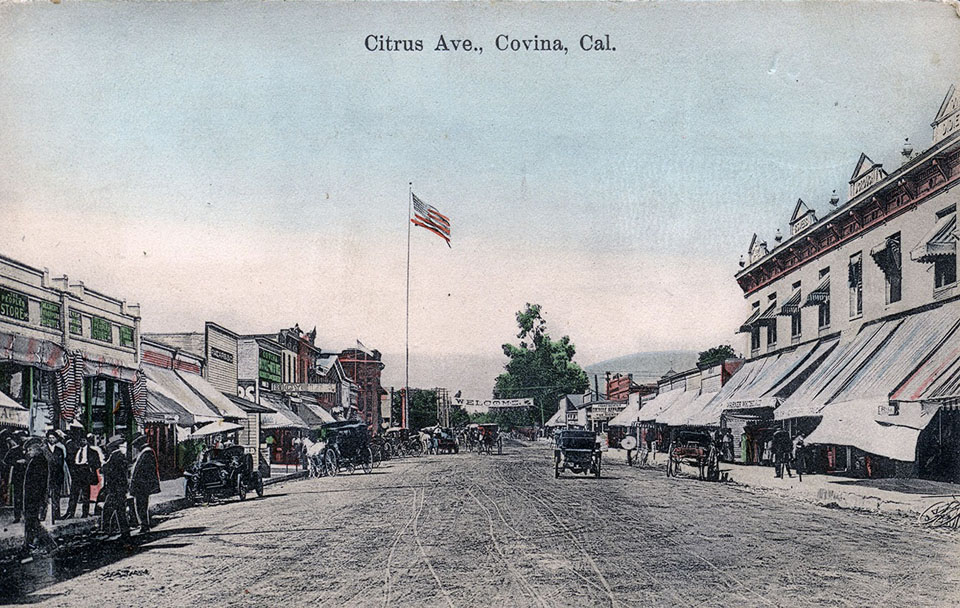
If it is from that period, it might very well have been bought at The Peoples Store on Citrus. This is exactly the kind of knickknack they sold. Clapp's Pharmacy is another possibility. Both carried souvenirs and curios in addition to their regular goods.


"The Peoples Store" can be seen over at the far left edge.

I was really happy to find the spoon. I saw one just like it 10+ years ago but failed to score it. I think my Covina antique collection is complete now. This was kind of the Holy Grail for me.