Showing posts with label homes. Show all posts

Saturday, March 7, 2026

The Hollenbeck Palms

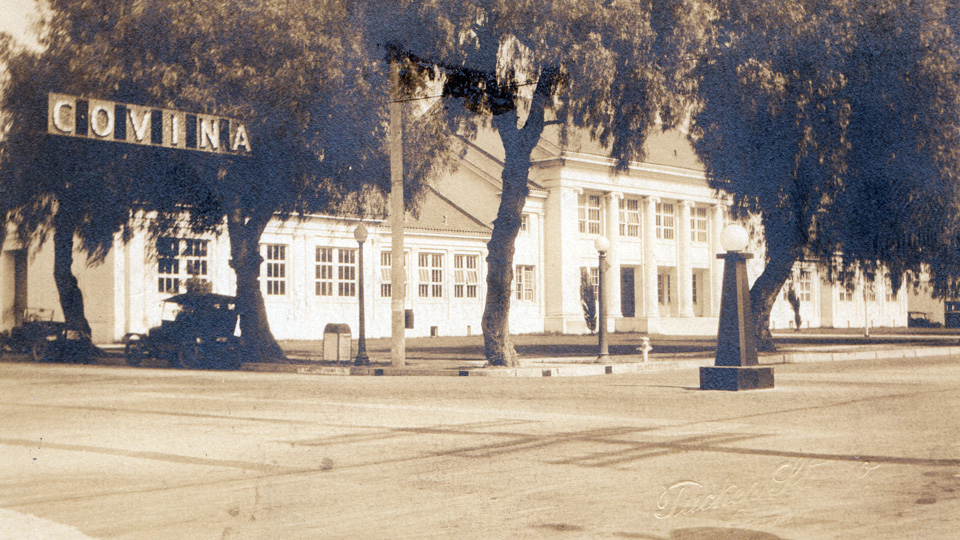
Recently, I added this very early C. W. Tucker photo postcard to my Covina ephemera collection.


Click on the image above to view a clean enlargement.

Although the view looks very different today, and the palms are way taller now, I doubt someone who grew up in Covina would have too much difficulty recognizing where this picture was taken.

But, just in case not, we are looking north on Hollenbeck Avenue from only a few feet north of its intersection with Badillo Street.

And the year? Well, let's play history detective and see what we can come up with!

Tuesday, January 13, 2026

Italia

You're about to make the acquaintance of a remarkable woman who, as you'll see, merits a far more prominent place in Covina history than the mere footnotes she's been relegated to in the past...

As has often been the case, my initial inspiration for an article was a postcard. This particular specimen first attracted my interest because of the handwritten inscription indicating the house owned by Mr. Clapp, the druggist, from whose store came this antique medicine bottle: the subject of one of my earliest posts here.


View looking southwest along the west side of the 200 block of North Second Street, Covina, c.1908. "Rose" mailed this hand-colored M. Rieder postcard from Lordsburg (La Verne) on January 2, 1908. Click image to view an enlargement.


The Clapps were an important family in early Covina, and I'll have more to say about them later, but the actual main character in my present story is Mrs. Clapp's mother—Mrs. Italia Cook—who lived in the big house at far right.

The published histories barely mention Italia, but she was easily the most propertied and most philanthropic woman in Covina at the turn of the last century, and now here, at long last, this pioneer-era force of nature is going to get the full recognition she's due.

Tuesday, September 23, 2025

Original Covina Landowners

While digging into old real estate records earlier this month, I decided to make a map showing the names of the first owners of every parcel in the Phillips Tract. Whenever I found an original title conveyance by trustee James F. Houghton, I made a note of the grantee and the date in the corresponding square on Eaton's survey.


Earliest owners of lots in the Phillips Tract. Click image to view an enlargement. A legend for the colors displayed can be found there.


Why would I go to the trouble of doing that, you might ask? Well, it was primarily to fact-check a similar cartographic record in the collection of the Covina Valley Historical Society, the accuracy of which I have since come to question.

Saturday, November 2, 2024

Founder Finds

I have a peculiar trait that I call "detritophilia." Whenever I find myself in a place with a long history of human habitation, I will visually scan disturbed pieces of ground looking for discarded bits of everyday life from times past. It's a kind of urban archeology except I don't do any digging. I simply look for objects that are lying on the surface, waiting in plain sight for my trained eye to spot.

Anyway, in 1988, I made multiple trips to Covina to clean out our family home and prepare it for sale. One day while returning from Azusa with packing materials, I decided to kill some time and explore the vacant lot at San Bernardino Road and Hollenbeck where the Phillips House once stood (and the Julian Badilla house before that). Here are the four pieces of historical detritus that I collected that day.


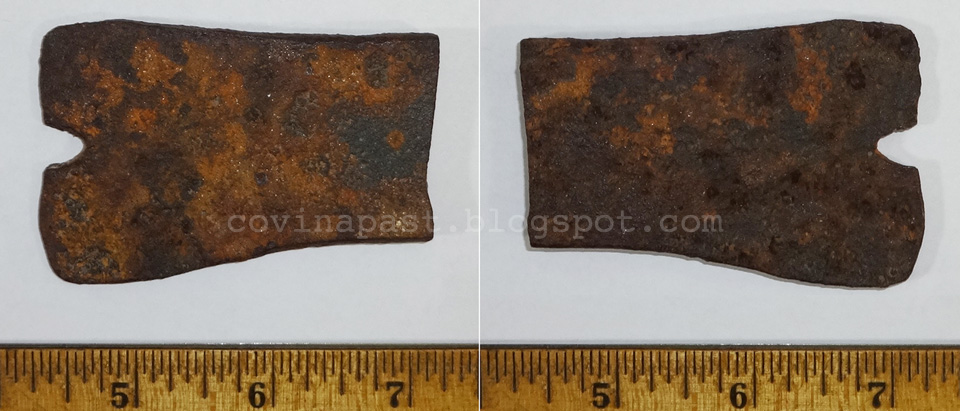
Photo by J Scott Shannon. Scale in inches.

This was pretty easy to identify as the broken off end of an iron prying bar. Upon closer inspection, though, I noticed its shape was distinctly asymmetrical, which suggested to me that it was forged by hand.


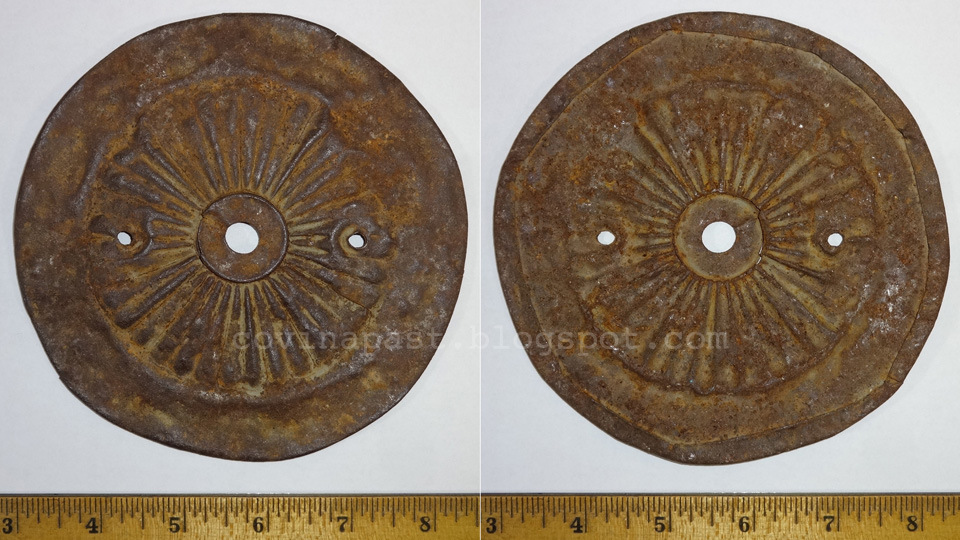
Photo by J Scott Shannon. Scale in inches.

This object baffled me for the longest time. My best guess was some sort of wall or ceiling fixture. It wasn't until recently that Michael Schoenholtz suggested that it might be the reflective portion of a candle sconce, and I now think he's exactly right. This, too, appears to be quite old, and hand-hammered. Note in particular how crudely the edges on the reverse side are formed.


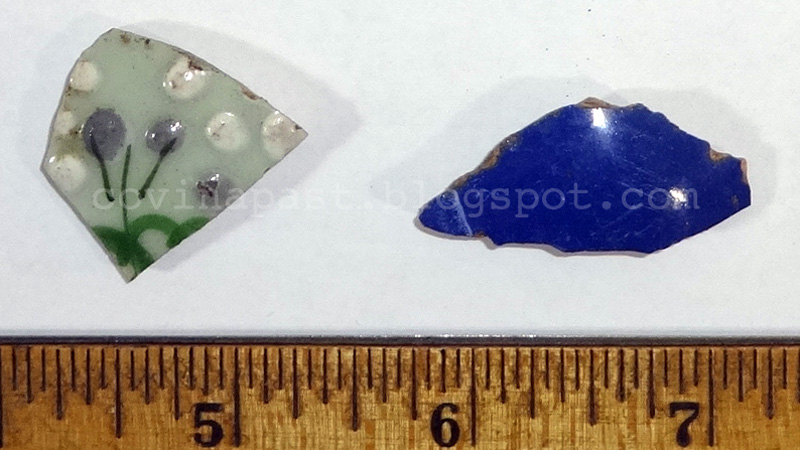
Photo by J Scott Shannon. Scale in inches.

Two pottery fragments: the one on the left apparently of glazed porcelain, and the other, glazed red clay pottery. Not much to say about them, except that they're almost certainly pieces of some sort of tableware, and that one's fancy in design and the other is plain.

So, how old are these objects? Obviously they can't be dated precisely, but because the plot of land where they were found was not built upon until 1876, that gives us their earliest likely origin date.

Additionally, the apparent hand-made quality of the metal items makes it reasonable to assume that they are from a time when tools and other hardware were made by and purchased from local blacksmiths rather than being mass-manufactured and sold in stores. Store-bought goods probably became more common after 1890, so that's my best guess for the upper end of the age range.

So, if these items date from the period 1876-1890, they could have belonged to either Julian Badilla or Joseph Phillips. However, I tend to think the cruder-made metal objects are from the Badilla era. That candle sconce, in particular, looks more like a fixture on the wall of a simple farmhouse than the imported mahogany paneling of a mansion.

These finds are all to be donated to the Covina Valley Historical Society.


Sunday, October 6, 2024

The Founder's House

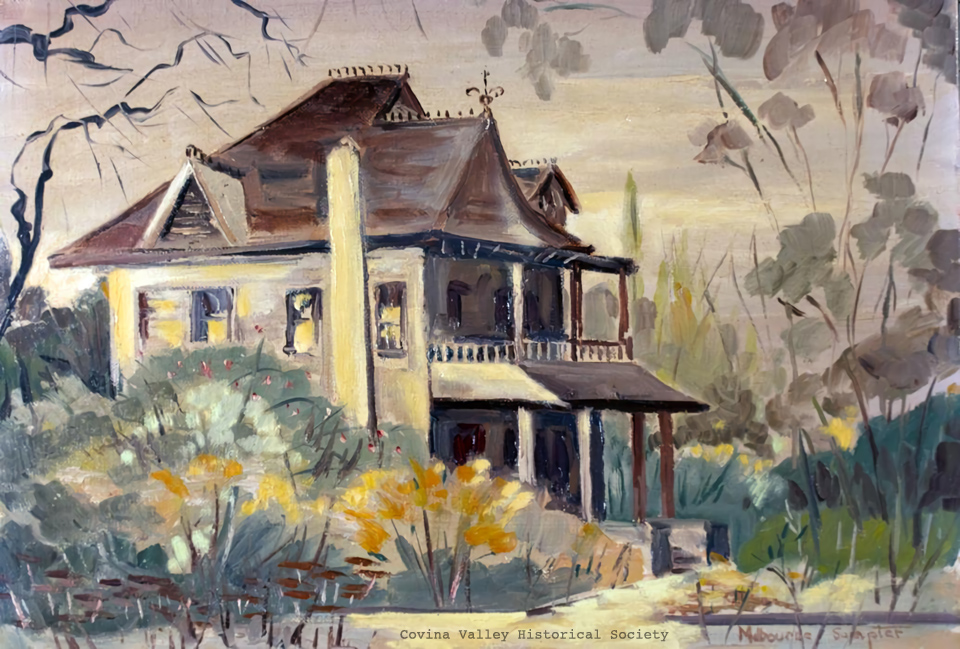
In the early 20th century, the citizens of Covina all recognized this ornate manse formerly standing at the southwest corner of San Bernardino Road and Hollenbeck Street as the house of the city's founder: Joseph S. Phillips (1840-1905). Despite its past status as a local landmark, over time its origins became obscured, and confusion has arisen in recent years about exactly whose house this was.


Painting by Melbourne Sumpter, image courtesy Glenn Reed/Covina Valley Historical Society.


Two specific facts about the place are undisputed:

• The first house on that site was built by pioneer José Julian Badilla after he and his elder brother Pedro bought the land in 1876.1,2,3

• In 1882, after Joseph Phillips agreed to buy 2,000 acres of then ex-Badilla land from J. Edward Hollenbeck (1829-1885), Phillips moved into Julian Badilla's former home.1,3,4

Most latter-day historians have also presumed that this two-storey Queen Anne Victorian is the same house built by Julian Badilla.1,4 However, could it be that Phillips replaced the original structure with a home of his own? Fact is, we don't know for certain one way or another, because there is no surviving record of who actually built the old landmark, or when.

In this article, I will attempt to answer the "who and when" with information that is now available, specifically maps that were published in the 1870s and 1880s, modern-day photographic and descriptive evidence, logical deduction and parsimony.

Tuesday, September 20, 2022

Mountain View in Color

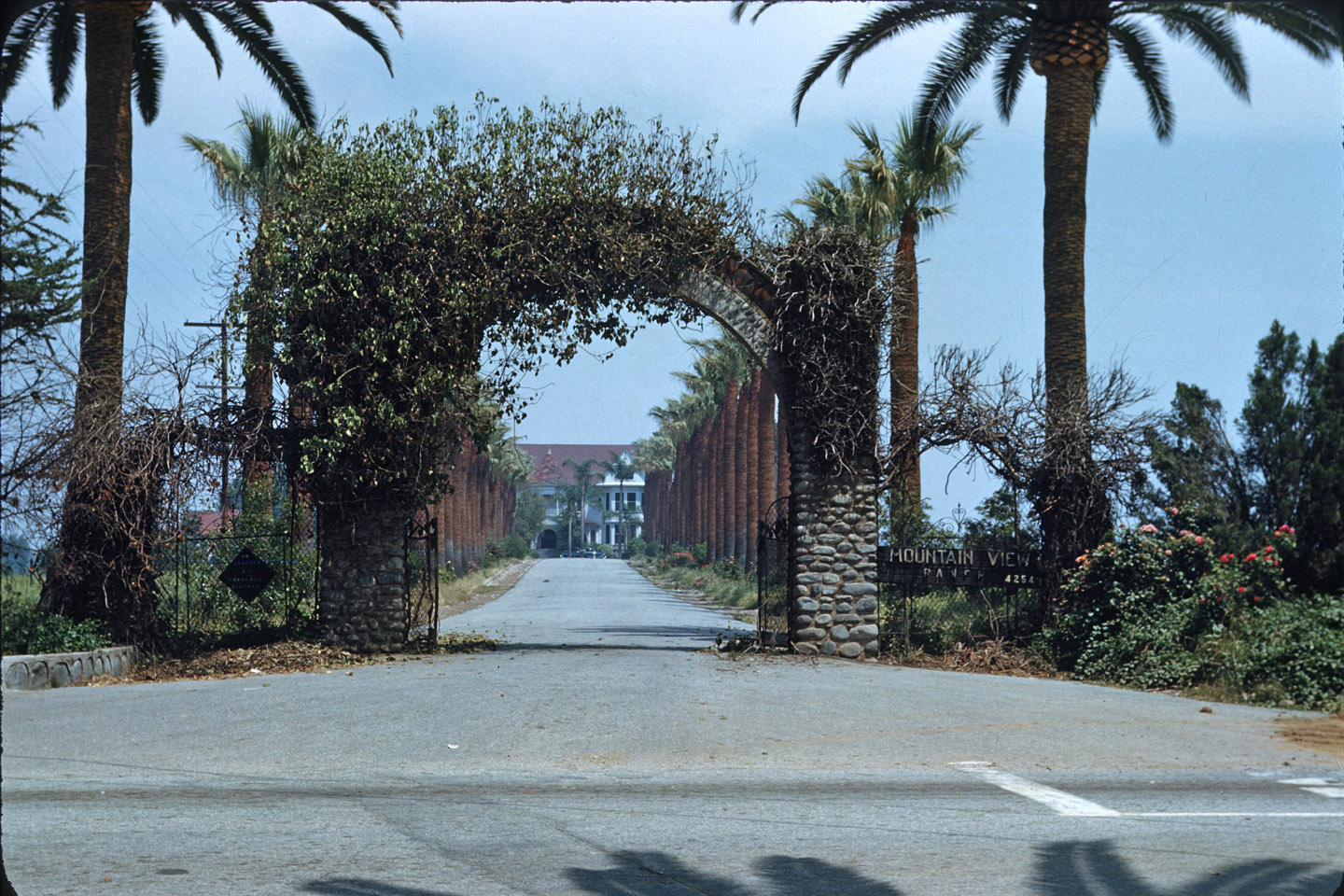
Awhile back, after reading my previous post about the Ruddock Mansion, Marilee Johnson sent me these remarkable never-before-seen color photos of the estate. The three pictures below were taken by her grandfather–Bruce Ward Macy–while Marilee and her family lived at Mountain View Ranch from 1952-1954.


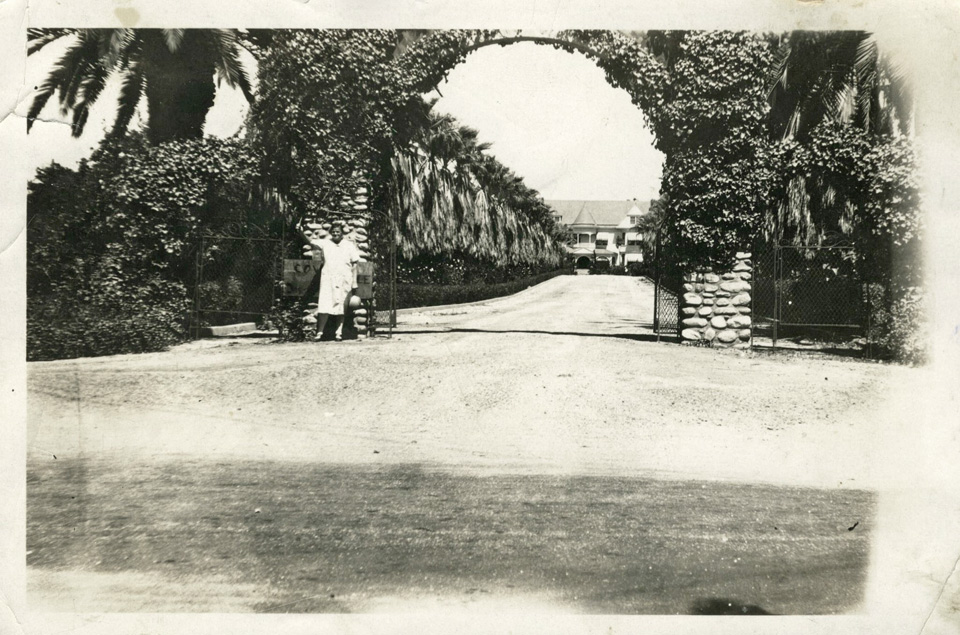
The entrance to Mountain View Ranch, Grand Avenue at San Bernardino Road, Covina, California, May, 1952.
Photo by Bruce Ward Macy, ©Marilee Johnson, All Rights Reserved. Click on image to enlarge.

Saturday, September 25, 2021

Covina 1907

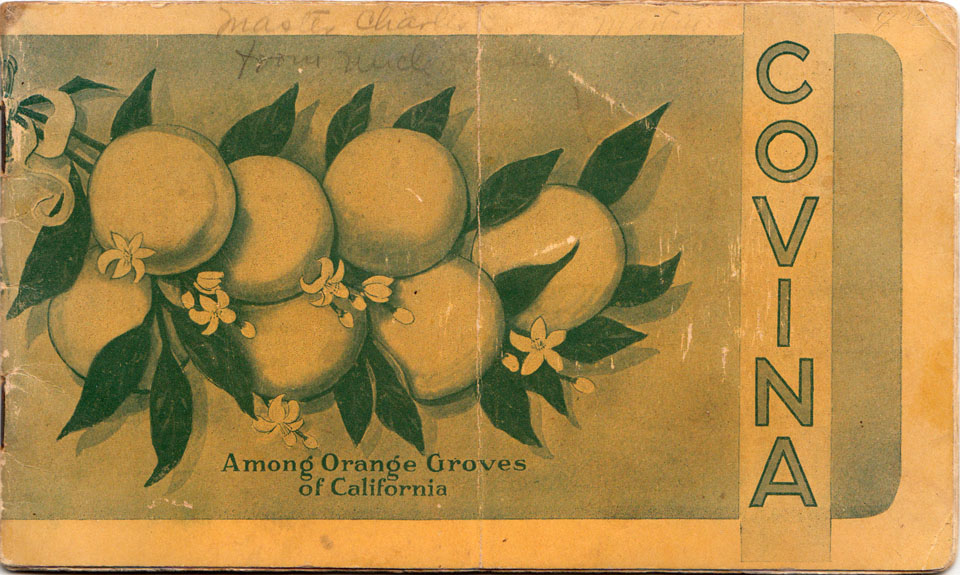
This promotional booklet was put out by the Covina Valley Farmers' Club in March, 1907.1 Some of these images (all by Tucker Studios) are quite rare; a few likely never published elsewhere before or since. Its 12 photos are presented here in the same order they appear in the booklet. (Click on any of the black-and-white pictures to view an enlargement.)


I believe the faded pencil inscription reads "Master Charles ... Martin / from Uncle Archie"


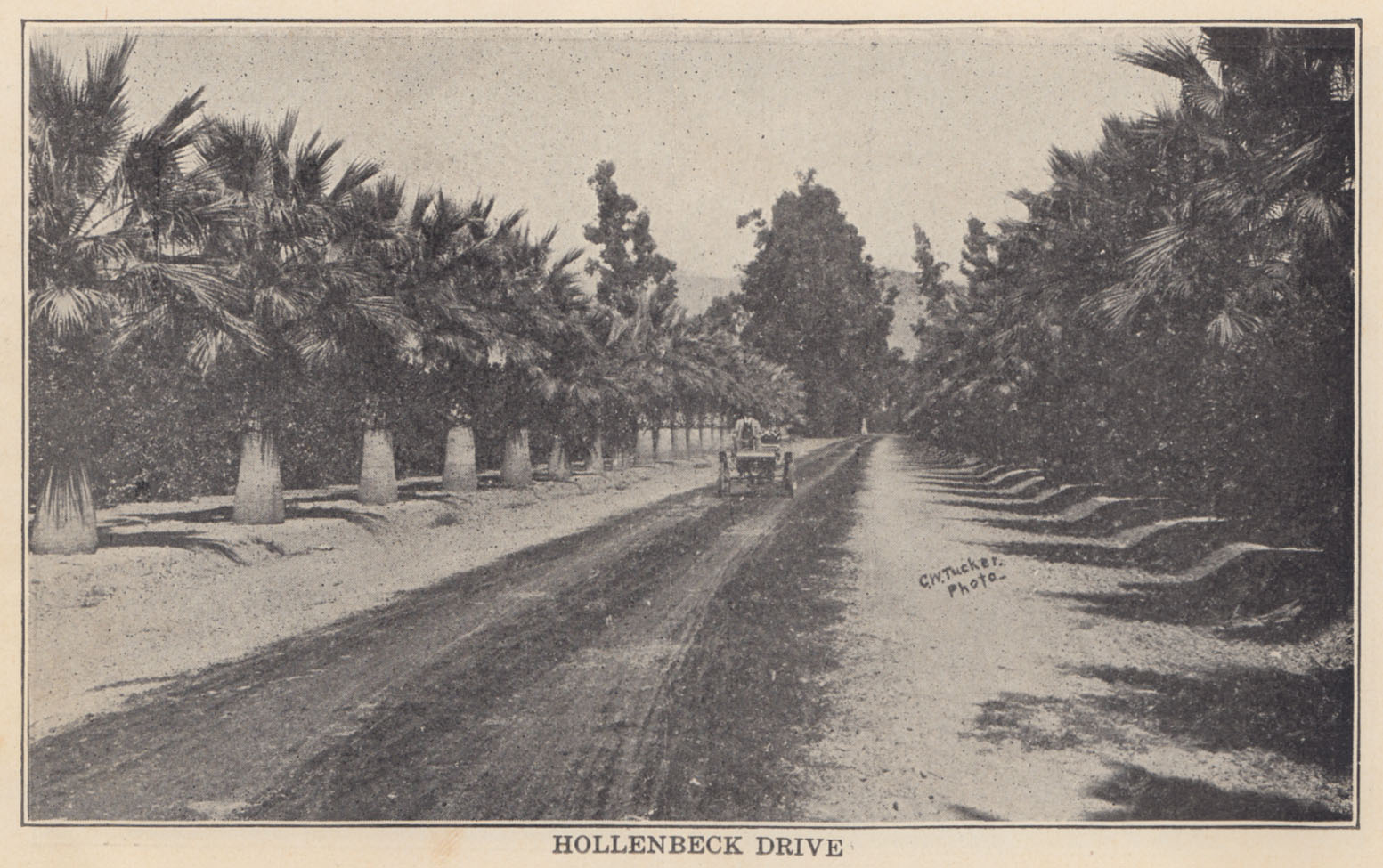
I've always liked this picture of Hollenbeck back when the palms were young. Donald Pflueger says this is Hamilton Temple driving his 1901 Oldsmobile;2 one of the first automobiles in Covina.


Tuesday, April 2, 2019

The San Bernardino Road

San Bernardino Road is one of Los Angeles County's oldest historical highways. An important transportation link in pioneer times, today's city of Covina would not have come into existence without it.

In 1810, when California was still part of the Spanish Empire, the friars of Mission San Gabriel built a chapel and supply station 45 miles to the east. The chapel was dedicated to San Bernardino de Siena, which, in the decades to come, would lend its name to a new city, and to the mission trail that originally connected the inland estancia to the mother church and to Los Angeles beyond.
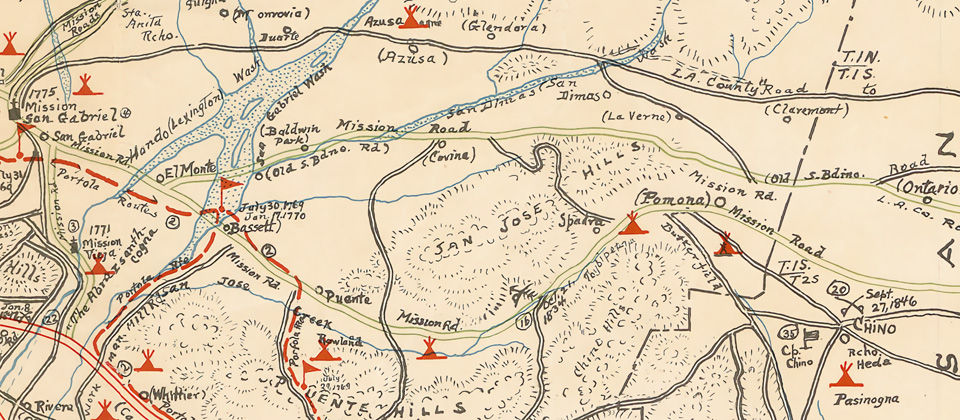

Detail from the Kirkman Map (1937) of historical sites in Los Angeles County, showing the future location of Covina (center) on the "Old S.Bdino. Rd."


It seems likely, however, that the trace which became known as the San Bernardino Road existed even before Mission San Gabriel was founded. The Gabrielinos which populated the valley prior to European settlement were said to have used it to transport logs from the San Bernardino Mountains to build the mission. The Anza expedition is known to have traversed the trail in 1774, as did Jedediah Smith and his party in 1826 and 1827.1

By 1842, when the San Bernardino Road was established as the northern boundary of Rancho La Puente,2 it was already the main east-west travel and freighting route between Los Angeles and what was then called the Azusa Valley.1 The old thoroughfare was upgraded to a county road in 1879,3 when it was widened and straightened to its current alignment.

In 1882, recognizing it as an ideal location for a townsite, Joseph S. Phillips bought 2,000 acres of land on the south side of the stage road and founded Covina there three years later.2,4

Many early "firsts" in the Covina area took place along the much-traveled track.2

  • The first general store: Goldsmith's "Four Corners" mercantile, just west of today's Orange Avenue, 1865.
  • The first community center and church: Grange Hall, on the south side, 500 feet west of today's Vincent Avenue, 1870s.
  • Covina's first schoolhouse, corner of Citrus Avenue, 1883.
  • First irrigation reservoir–foundational to Covina's citrus industry–west of Grand Avenue, 1886.
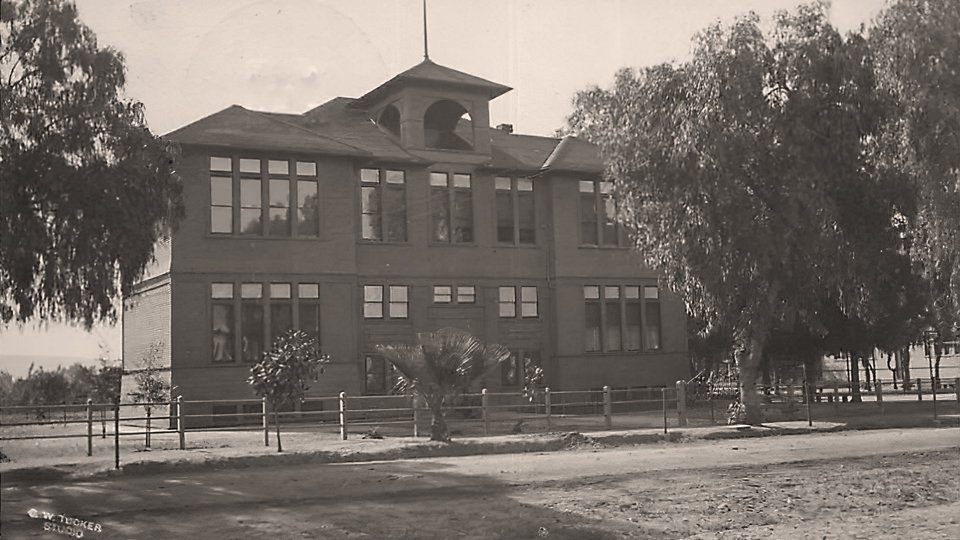
  • The city's first high school (pictured below): on San Bernardino Road behind the grammar school, 1903.

Some of the earliest houses in the lower Azusa Valley were built along San Bernardino Road. The most historically notable were the two homes built by the Badilla brothers in 1876,5 just west of today's Hollenbeck Avenue, and Thomas S. Ruddock's Mountain View (1891) at San Bernardino Road's intersection with Grand Avenue.4
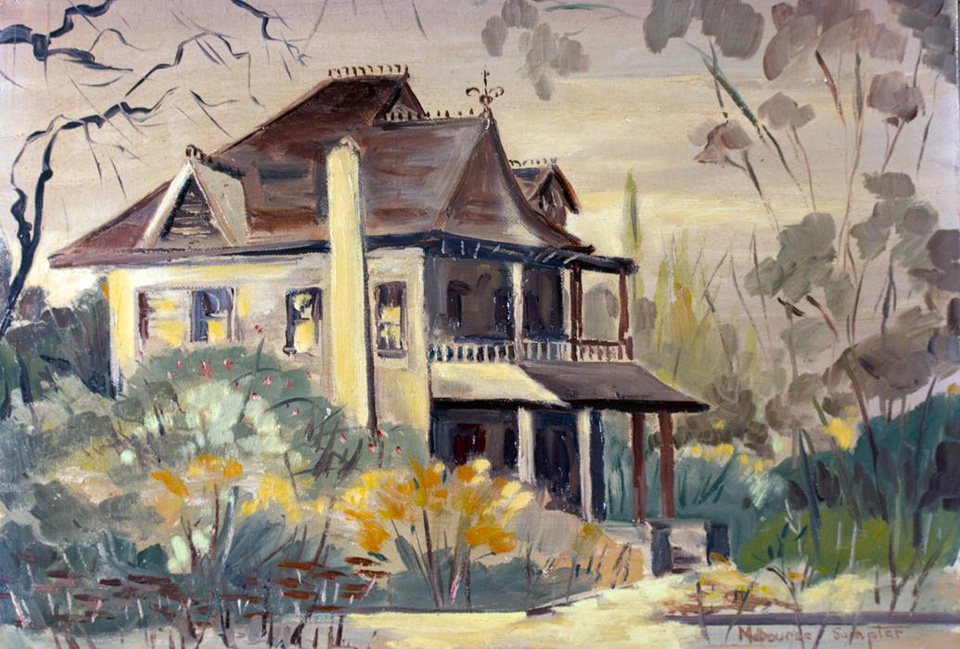

Covina's founder–J. S. Phillips–lived in this Queen Anne manse on the southwest corner of San Bernadino Road and Hollenbeck.
Painting by Melbourne Sumpter, image courtesy Glenn Reed/Covina Valley Historical Society.
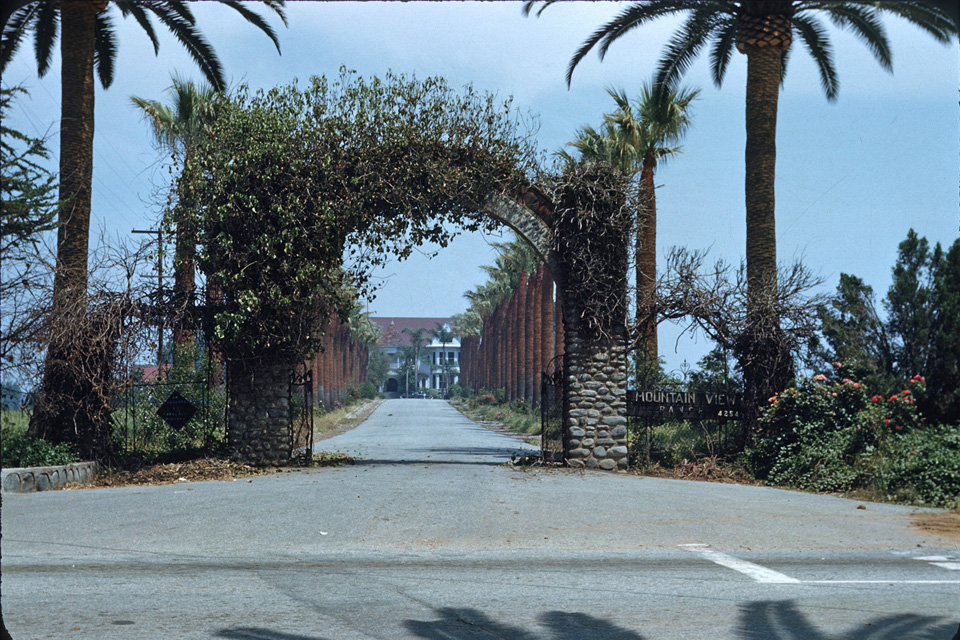


The entrance to Mountain View at the eastern end of San Bernardino Road, 1952. This driveway is now the palm-lined stretch of Wingate Street in Charter Oak.
Photo by Bruce Ward Macy, courtesy Marilee Johnson.


Before the establishment of Mountain View, the San Bernardino Road continued east in a meandering diagonal line up to Mud Springs south of San Dimas, then down past the Casa Primera de Rancho San José in Pomona on its way to its namesake destination.
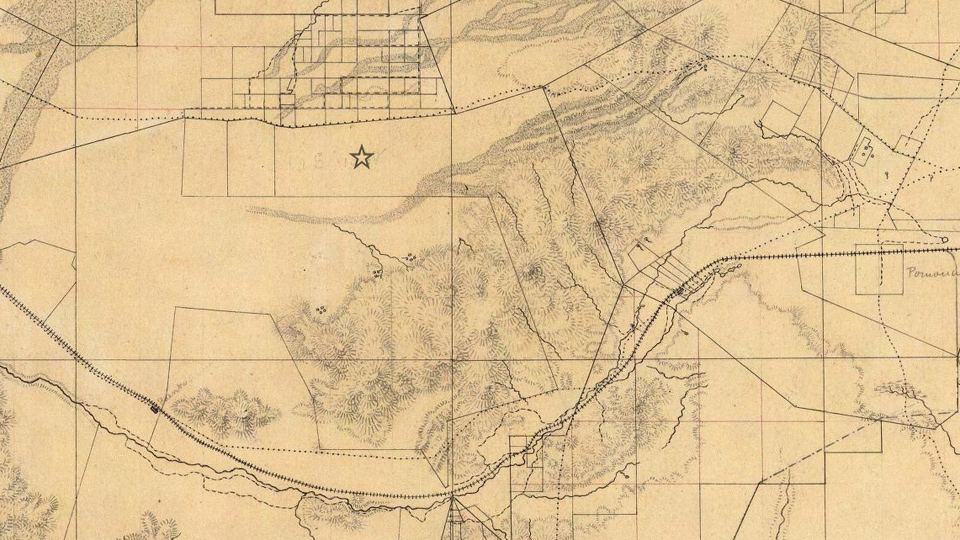

This topographical map from 1880 shows the original track of old San Bernardino Road (upper dotted line). The star shows the future location of Covina.
The dotted line to the south is another mission road, later to become Valley Blvd. Source: David Rumsey Map Collection.
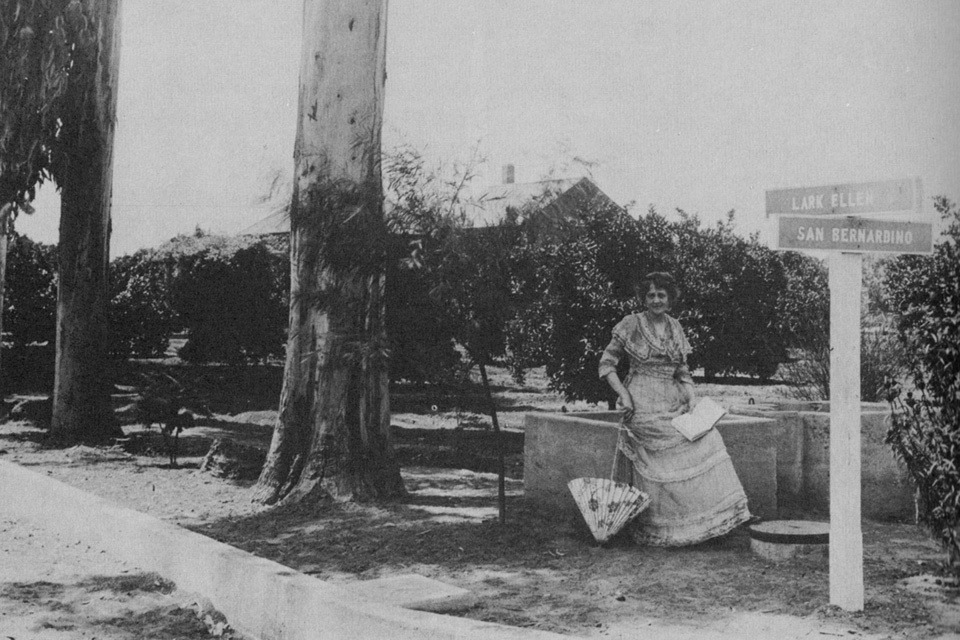


Opera singer "Lark Ellen" Beach Yaw also lived on San Bernardino Road, at the intersection of the street that still bears her name.
Image source: Covina, by Donald Pflueger, 1964.
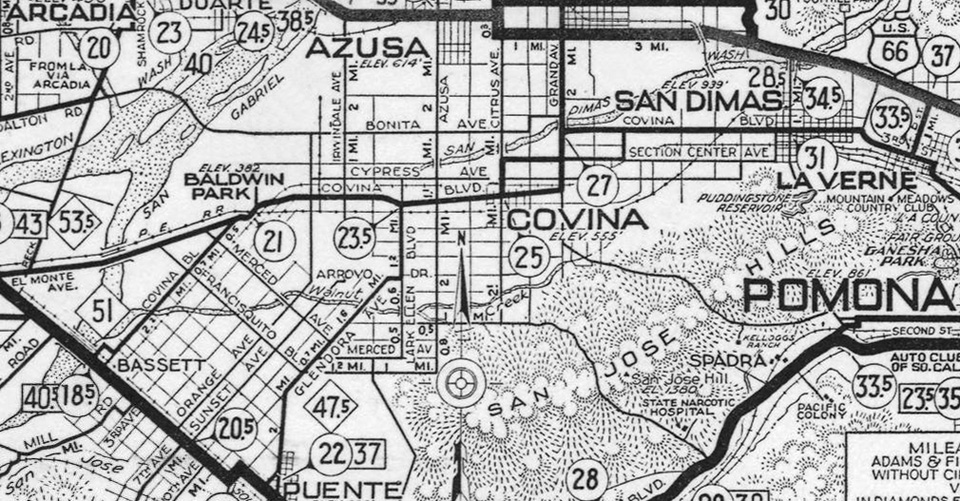


From 1911-1933, San Bernardino Road was part of a 14-mile-long thoroughfare called Covina Boulevard which ran from Bassett to San Dimas,
as shown on this AAA strip map from 1931. (Today's Covina Blvd. was called Section Center Ave. during this period.)


The Covina Grammar School at the southeast corner of San Bernardino Road (then named Covina Boulevard) and Citrus Avenue, mid-1920s. Tucker Studio photo.


Now well over 200 years old, almost all traces of the original San Bernardino Road have been erased, however the portion of it that passes through Covina today is one of the few remaining stretches that preserves the 1879 alignment of the historic Spanish mission trail.
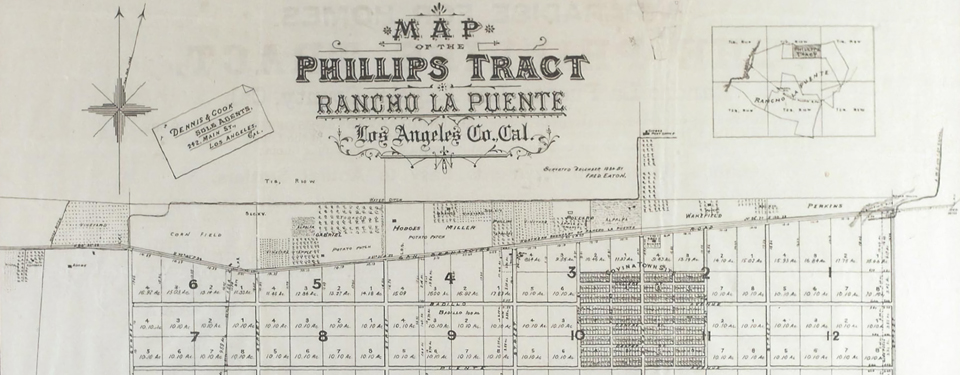

The familiar odd angles of old San Bernardino Road are easily recognized in this detail of the first map of Covina, 1885.
Courtesy Glenn Reed/Covina Valley Historical Society.

References:

1 Head, Harriett R., San Bernardino Road Linked with Southern California History. Covina Argus, January 31, 1930, p.2.
2 Pflueger, D. H. 1964. Covina: Sunflowers, Citrus, Subdivisions. Castle Press, Pasadena, California, 372pp.
3 Los Angeles Herald, June 4, 1879.
4 Hall, B. A. 2007. Images of America – Covina. Arcadia Publishing, San Francisco, California, 127pp.
5 _______. 2012. Covina History Changes. The Citrus Peal, Covina Valley Historical Society, p.9.


Saturday, September 29, 2018

Covina, 1895

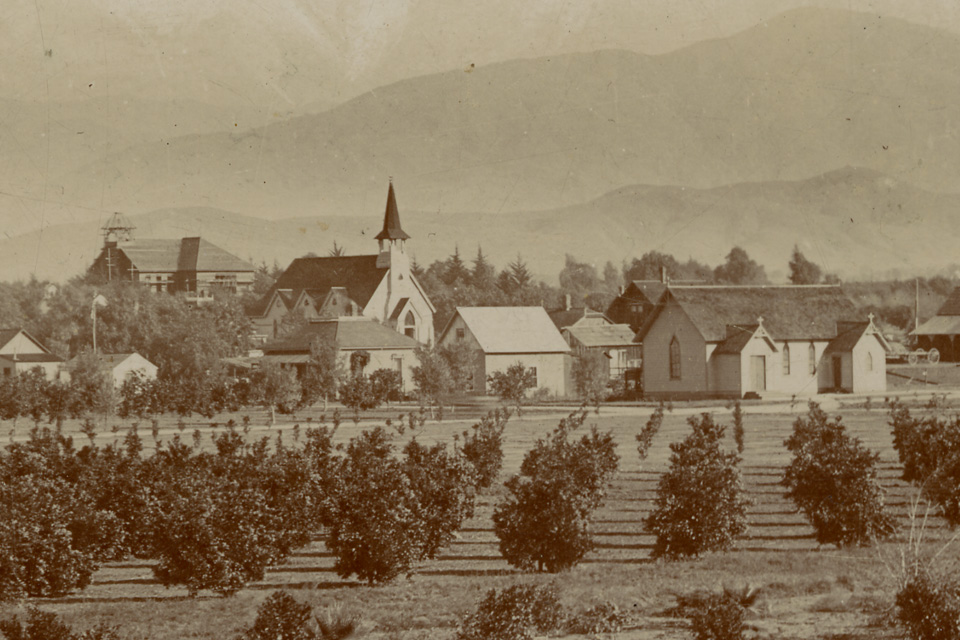
This is the oldest-known photograph of Covina. It was taken in winter, 1894, when the town was only 9 years old. The vantage point is the roof of the home of Mr. Lambert L. Ratekin at 237 South Fourth Avenue. The view is to the northeast, showing Fourth Avenue and the alley between Center and Dexter Streets in the foreground, and in the middle distance, Badillo Street passes from left to right just past the young orange groves.


Courtesy California State Library. Click on image for enlargement.

The photo is also noteworthy for depicting the very first house ever built in Covina.


The Samuel Allison residence (1885), at 160 West Badillo Street.

The image can be dated precisely because the school that we know was built in 1894 (at left, below) can be seen here currently under construction.


Historically-important buildings from l. to r.: the Covina Public School (1894), the Methodist Church (1888) on College Street, and the Episcopal Church (1893) at Badillo and Third.

What the school looked like upon completion:

Wednesday, March 7, 2018

The Ruddock Mansion

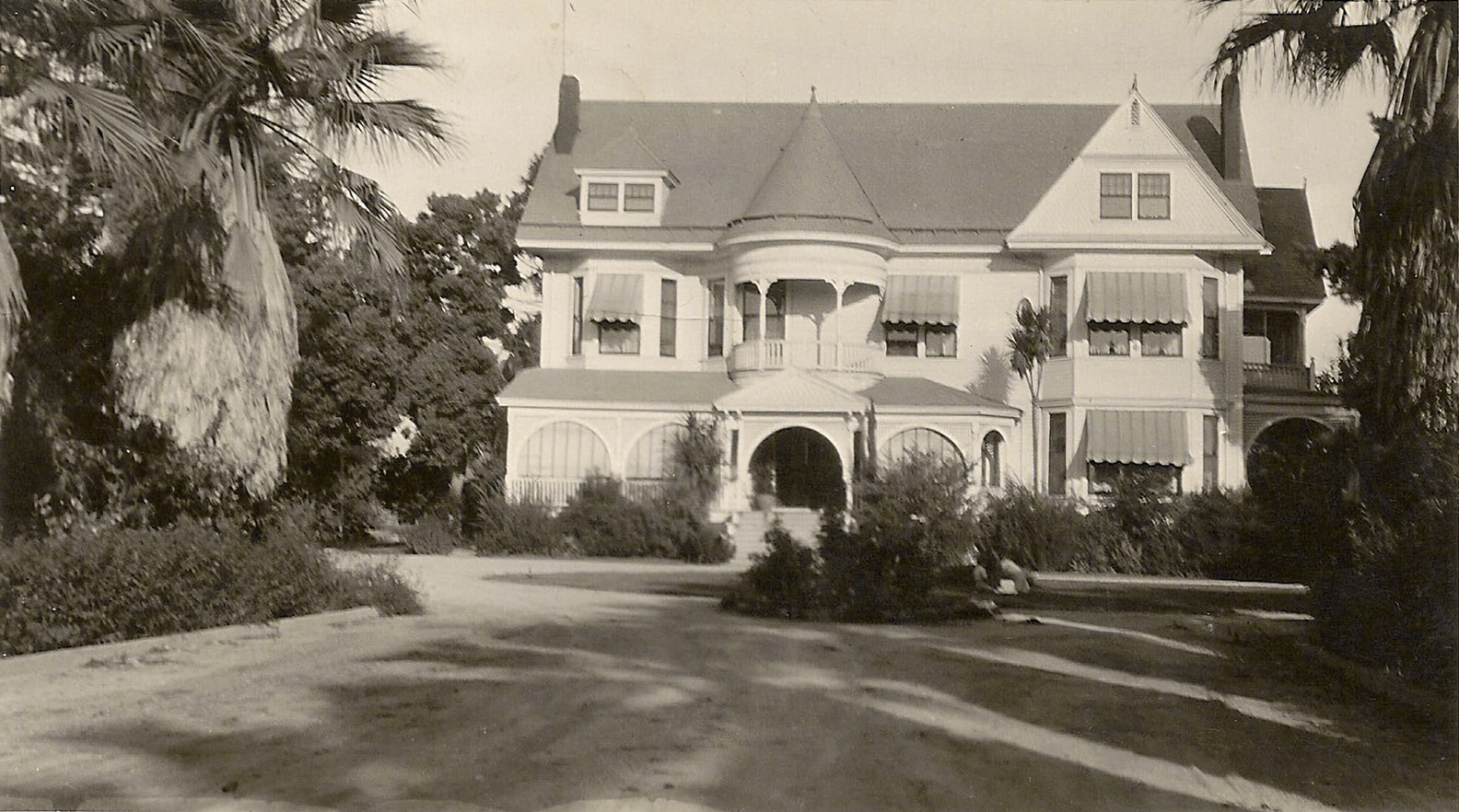
"Mountain View" was the winter home of Chicago lumberman Charles Homer Ruddock (1848-1929) and family.1,2 In March, 1888, Charles's father, Thomas Sanderson Ruddock, had purchased 204.6 acres of Hollenbeck Ranch land from Moye Langley Wicks:3 a huge parcel which lay east of Grand Avenue and the new town of Covina. However, the elder Ruddock died suddenly in Los Angeles on January 17, 1890,4 so he didn't live to see the grand estate that his son built and completed there in 1891.5

In pioneer times, the extravagant 3-story Queen Anne-style mansion1 was the showpiece of the entire Azusa Valley (as the Eastern San Gabriel Valley was called back then).6 According to Covina historian Barbara Ann Hall, Mountain View...

...had 11 7 bedrooms, 5 4 bathrooms, and 7 8 fireplaces of Belgian tile and rosewood. A stained-glass window looked down upon the staircase. There were stained-glass chandeliers in the ballroom. Surrounding the mansion were stables, a carriage house, a bunkhouse, servants' quarters, and a caretaker's cottage. The 800-foot 650-foot drive was lined with palm trees and roses.1

In 1910, Mountain View was sold to Conrad C. Kohlmeier,7 and through his son, William, portions of the former Ruddock lands stayed in the Kohlmeier family into the 1940s.

Ironically, for all its local fame in bygone days, few photographic images of Mountain View were known to have survived. Recently, however, I made the acquaintance of Mary Elarton Kidd–whose great aunt was one of the last residents of Mountain View–and she has shared with me many photos of the ranch which have never before been seen by the public.

To the best of my knowledge, this is the most detailed picture in existence of Covina's lost Victorian treasure. It shows Mountain View not long after John and Mary Chrastka bought the 27-acre mansion property in 1927.8


The Ruddock Mansion, 1891-1956. Photo courtesy Mary Kidd. Click image to enlarge.

The entrance to Mountain View, formerly located at 522 North Grand Avenue9 at the eastern end of San Bernardino Road. The mansion itself was located immediately east of the intersection of today's East Wingate Street and South Westridge Avenue.


Photo courtesy Mary Kidd.

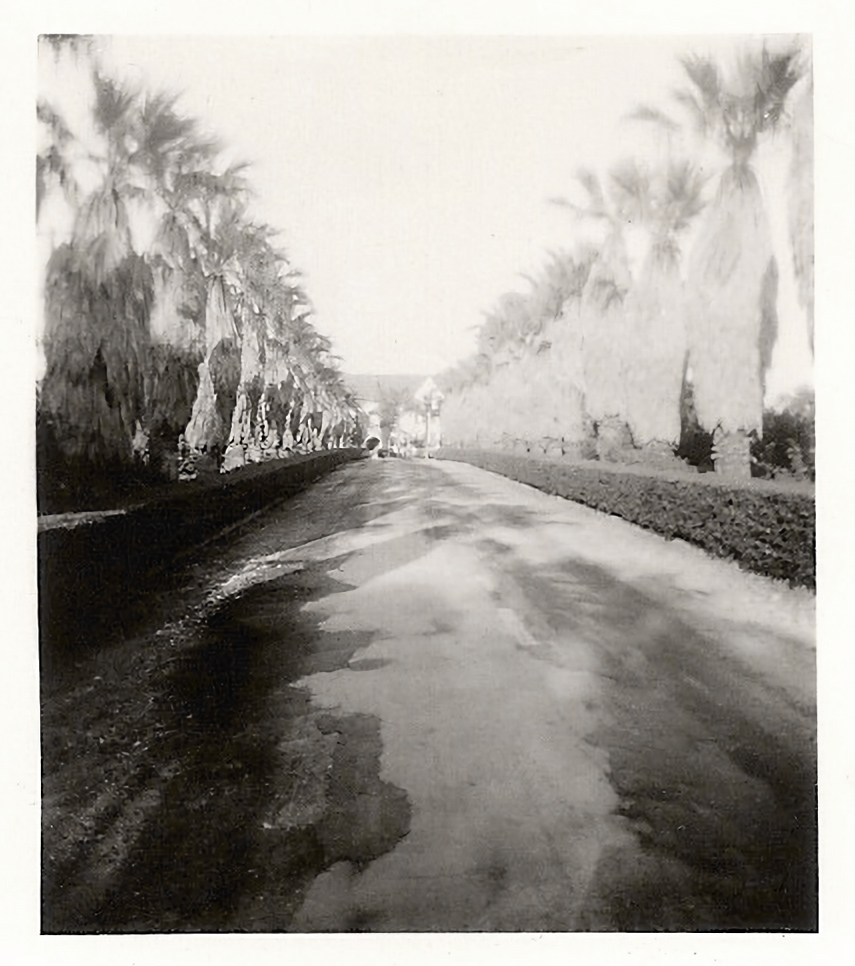
Planted over 130 years ago, the Washingtonia filifera fan palms that still stand today along East Wingate Street are among the oldest trees in Covina (together with the palms that line Hollenbeck Street). Here they are in the 1940s, when they were already six decades old.


Photo courtesy Mary Kidd.

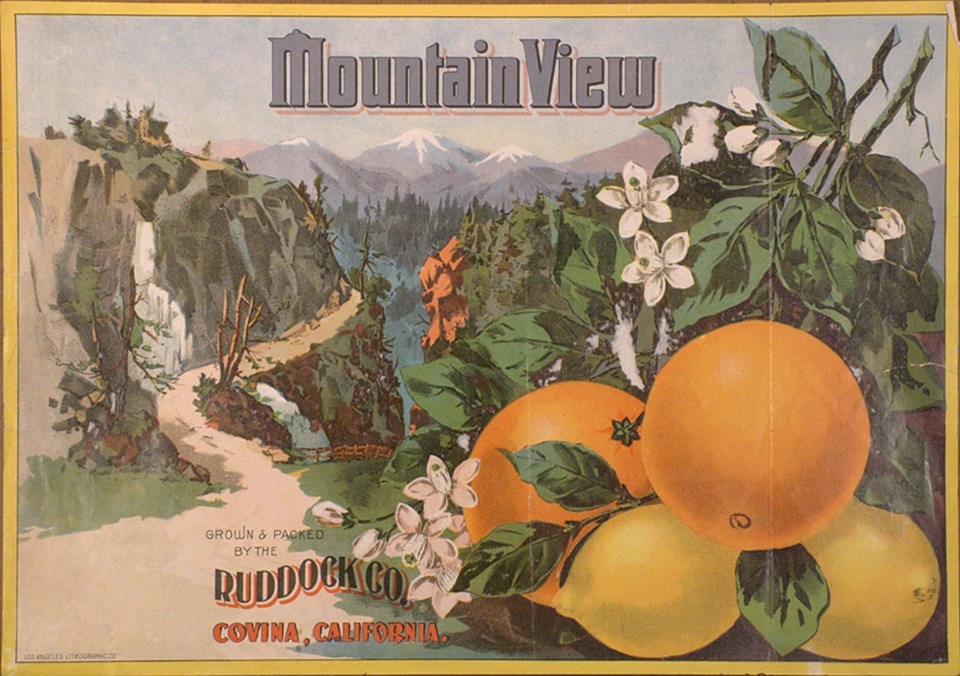
A Ruddock Company citrus crate label:


Image courtesy Calisphere.

Continuing on:

Sunday, August 16, 2015

The Oldest House in Covina

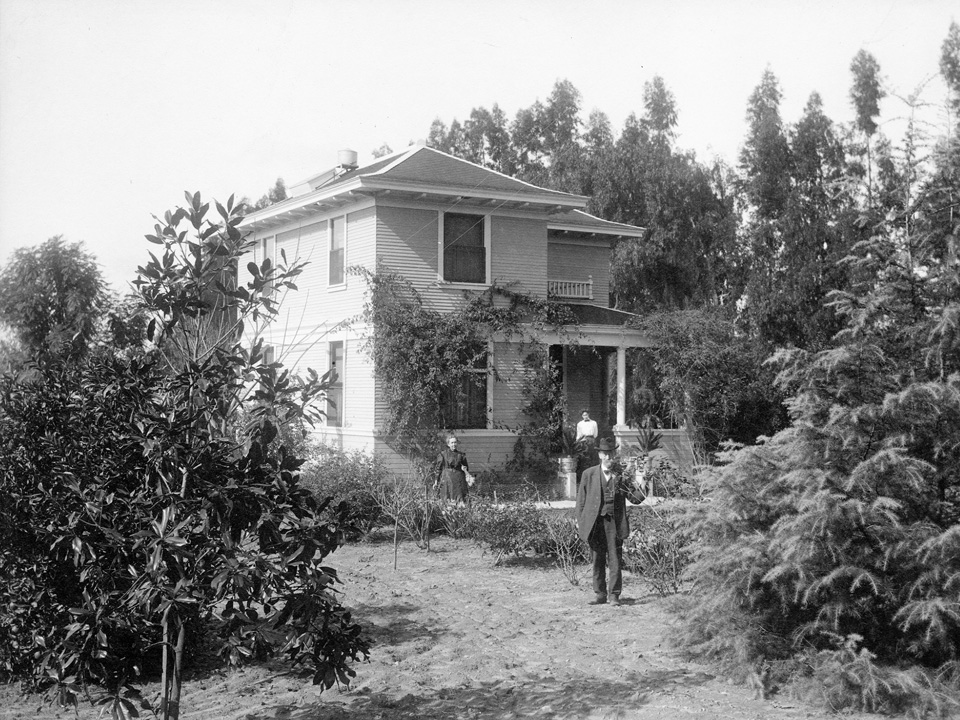
In an earlier post, I told of my search for the oldest building in Covina. That turned out to be 111 North Citrus. Constructed in 1885, it was one of the very first structures erected in pioneer-era Covina.

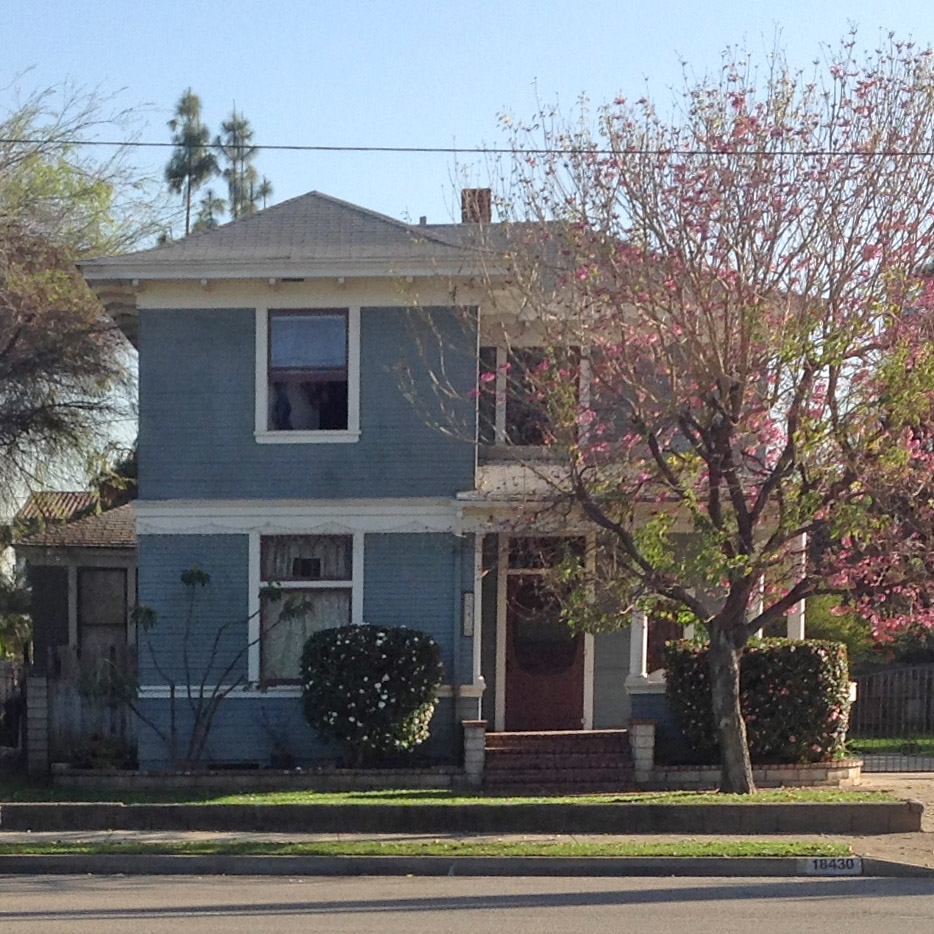
So, what is the oldest residential structure in the Covina area? It's the historic Thomas Griswold House at 18430 East Covina Boulevard. It was originally located at the southwest corner of Citrus Avenue and Cypress Street, kitty-corner across Citrus from his brother Eugene's house. According to Thos. Griswold's great-grandson, Jack Milliken, the deed for that property was recorded in September, 1885, so the house would likely have been built soon after. Mr. Milliken believes it was moved to its present location sometime in the 1940s, however an article in the March/April 1993 issue of The Glendoran (p.71) states that the move actually took place in 1951.

Then:


Image courtesy Covina Valley Historical Society c/o Powell Camera Shop.

Now:


Photo by Jack Milliken, used with permission.

There are two homes from 1887 within the Covina city limits, but only the one at 16731 Cypress Street still looks like a 19th century house. Unfortunately, the remodeled one at 311 Italia Street just happens to be the oldest existing house located within the original Phillips Tract. Given that historical distinction, it's a real shame that it no longer looks anything like it must have when it was built.

If you're curious to find out when a particular structure was constructed, that information can be found on the built:LA interactive property map. It can be a little difficult to locate things at first, because the streets are not labeled, but if you mouseover a particular property, it will show its address in a box in the upper left corner, and (in most cases) the year it was built.


Thursday, June 11, 2015

Casa Mirasol

Local history has changed a little! Likely unbeknown to almost everyone, it turns out one of the buildings of the old Baptist Seminary in the Covina Hills still stands today.

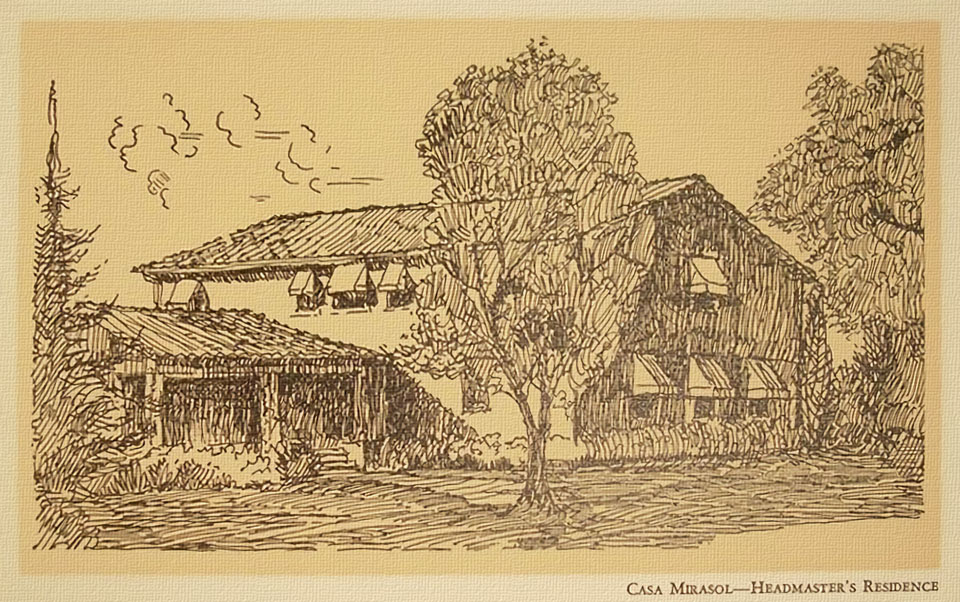
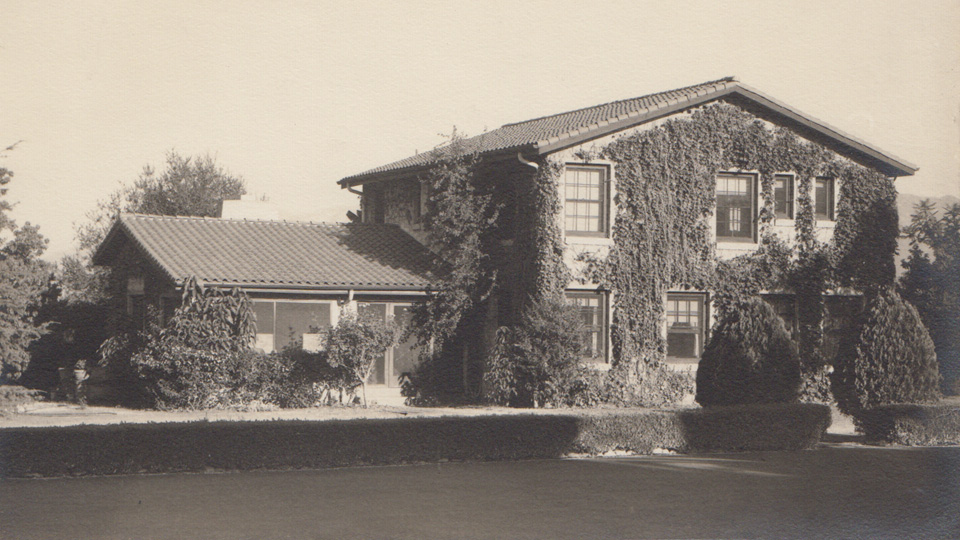
Now a private home, this lone survivor was originally the residence of the Headmaster of the California Preparatory School for Boys.

As this student-made drawing from 1936 indicates, the house in its Cal Prep days was known as "Casa Mirasol." According to Assessor's Office records, it was built in 1929.

In 1942, Dr. Gottfried de Purucker moved his branch of the Theosophical Society to the Covina Hills campus, and Casa Mirasol became his home. After the California Baptist Theological Seminary acquired the property in 1951, it was used as the Dean's residence.


Casa Mirasol in 1942

The old school campus was important in Covina's history, and part of my own history, as well. One can only speculate why this building alone was spared demolition, but I'm happy to know it's still with us.


Wednesday, May 21, 2014

Covina Valley Panorama, 1930

Recently, I found this amazing panoramic photograph showing Covina and its environs prior to development.


'Dick' Whittington Studio, photographer. Courtesy of The Huntington Library, San Marino, CA. Link to full-res image.

I realize it doesn't look very amazing at this size, but below are some labeled enlargements which point out what is what in the photo.