Showing posts with label churches. Show all posts

Friday, January 16, 2026

Lysle Writes Home

Once upon a time, a young man named Lysle C. Ummel1 visited Covina, and while he was here, he bought four picture postcards of the place and sent them back to relatives in Fremont, Nebraska.

Lysle must have mailed them all together in an envelope, because they have no postmarks and thus are not readily datable. However, various clues in the photo of Citrus Avenue made it possible for me to determine that particular picture was taken in 1919.

The familiar view below looking north on Citrus from Badillo. Lysle went on to become an electrical engineer,2 so that perhaps explains his pointing out the precise location of the Edison office at the time.


Click on the image to view an enlargement (and click here to view Lysle's message on the verso).

So how did I figure out the year? Let's start out with that blade sign on the Chapman-Workmen building at left. Turns out that "Winder & Jones" were in business at that location from 1919 to 1926,3 so that narrowed the range of possible dates right away. The Covina Theatre isn't there across the street yet, so that narrows things even further to 1919-1921.4 But the clincher was the license plates, as 1919 was the last year between 1919 and 1921 that California plates were white.5

Here are the other two postcards with white borders, which I feel safe in assuming are also from 1919.

Tuesday, January 13, 2026

Italia

You're about to make the acquaintance of a remarkable woman who, as you'll see, merits a far more prominent place in Covina history than the mere footnotes she's been relegated to in the past...

As has often been the case, my initial inspiration for an article was a postcard. This particular specimen first attracted my interest because of the handwritten inscription indicating the house owned by Mr. Clapp, the druggist, from whose store came this antique medicine bottle: the subject of one of my earliest posts here.


View looking southwest along the west side of the 200 block of North Second Street, Covina, c.1908. "Rose" mailed this hand-colored M. Rieder postcard from Lordsburg (La Verne) on January 2, 1908. Click image to view an enlargement.


The Clapps were an important family in early Covina, and I'll have more to say about them later, but the actual main character in my present story is Mrs. Clapp's mother—Mrs. Italia Cook—who lived in the big house at far right.

The published histories barely mention Italia, but she was easily the most propertied and most philanthropic woman in Covina at the turn of the last century, and now here, at long last, this pioneer-era force of nature is going to get the full recognition she's due.

Sunday, May 18, 2025

Coffee Ranch Days

When I first read Donald Pflueger's "Covina" at age 12, I thought the most interesting parts were the author's descriptions of the valley before and during its settlement. One statement in particular captivated me: how, in the early 1880s, when the Methodist Church in the foothills at the top of Citrus Avenue rang its bell on Sunday mornings, "its clear notes could be heard all over the valley."1 That same valley when I first knew it was already home to a quarter-million people, so a stillness of that sort was almost incomprehensible to me. Like another world, it seemed... and indeed it was...

Perhaps the best-known settlers from those early times were the families of José Julian and Pedro Antonio Badilla (aka Badillo), who emigrated from Costa Rica to America in 1876. The brothers had high ambitions. They wanted a coffee plantation big enough to supply the whole United States!2 So what was their new land like when they arrived here?


Wheat harvest on Baldwin land in Rancho La Puente. Although best known for their coffee venture, the Badillas were famously successful raising wheat in 1878.3
Photo courtesy Covina Valley Historical Society and Powell Camera Shop.


Saturday, May 25, 2024

Second Street Park

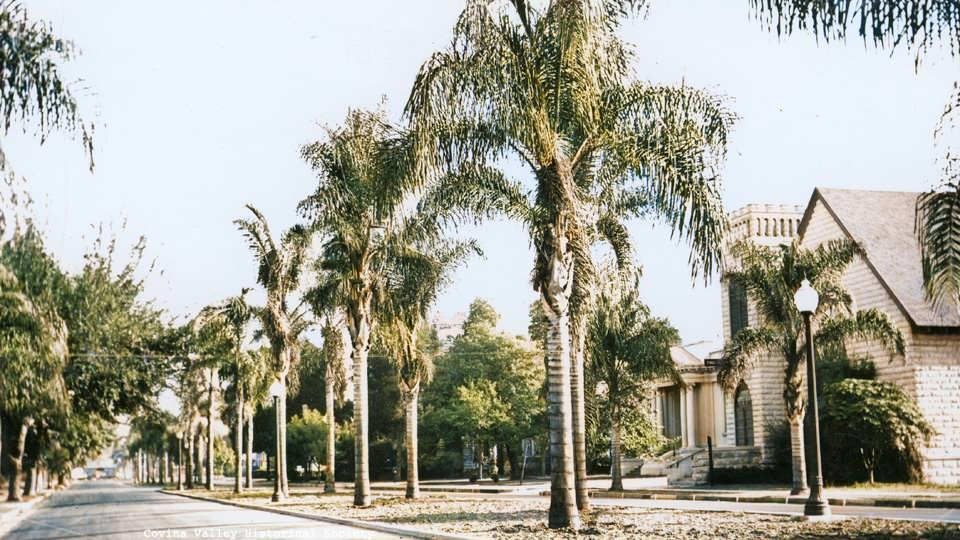
For the past eight decades, Covina's Second Street has been a rather bleak expanse of asphalt, but look how pretty it used to be! From 1923-1949, Second had a 16-foot-wide median strip1,2 running from San Bernardino Road south to Badillo that was graced by 48 Queen palms (Syagrus romanzoffiana). They called it "Second Street Park."3


Looking north on Second Street from College Street, c.1940. Photo courtesy Covina Valley Historical Society c/o Powell Camera Shop.

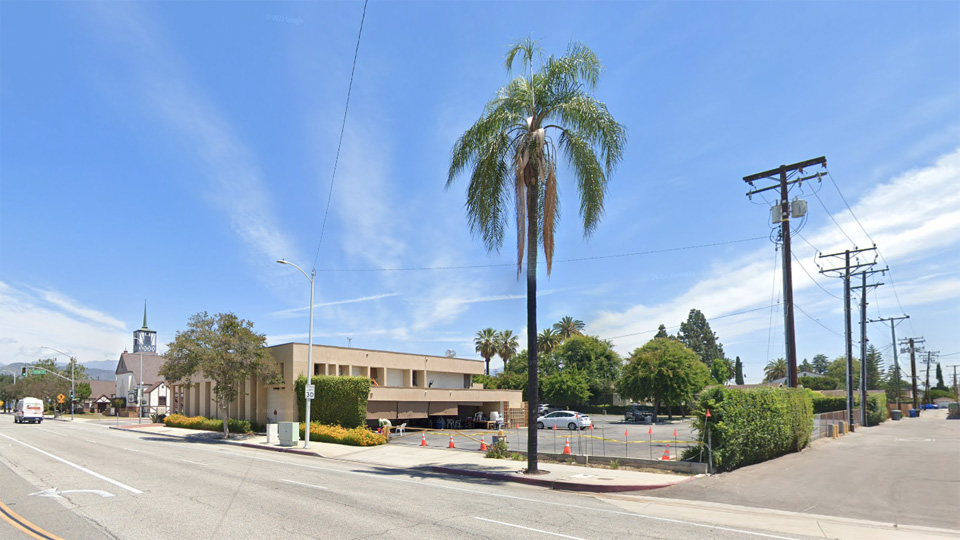
So why was this visually-appealing landscaping done away with? You guessed it: parking.2 Initially, the palms were replanted along the sidewalks and elsewhere,3 but eventually all but one of them were removed. This single, solitary palm at the northeast corner of the Badillo alley is now all that remains of old Second Street Park.


Source: Google Street View.

Kind of sad, isn't it? Wouldn't it be nice if Covina were to re-beautify Second in the 21st century? I can hardly think of another major street in town that is more in need of aesthetic improvement.

References:

1 Covina Argus, July 28, 1922, p.1.
2 Covina Argus-Citizen, April 4, 1947, p.8.
3 Covina Argus-Citizen, June 18, 1948, p.1.


Sunday, March 10, 2024

Covina's Early Churches

During Spanish and Mexican rule, the Catholic Franciscan Misión de San Gabriel Arcángel (1771) was the sole religious institution in the region. After statehood, however, the overwhelming majority of area settlers were members of Protestant denominations, and the first of those to form congregations in what was then called the Upper Azusa Valley were the Methodists in 1872, followed by the Baptists in 1873.1

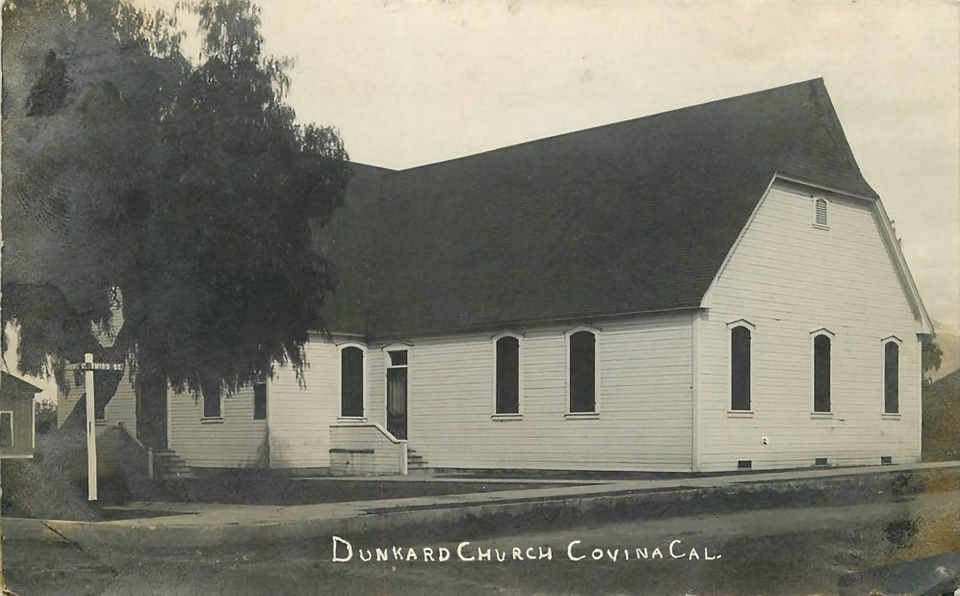
The German Baptists in particular played a significant role in the early history of Covina. In 1883, they proposed to purchase the entire Phillips Tract in the Lower Azusa Valley for the purpose of establishing a religious colony. Even though the deal eventually fell through, a fair number of Brethren remained in the area, and in 1886,1 they began construction of the first dedicated church building in the new townsite of Covina.

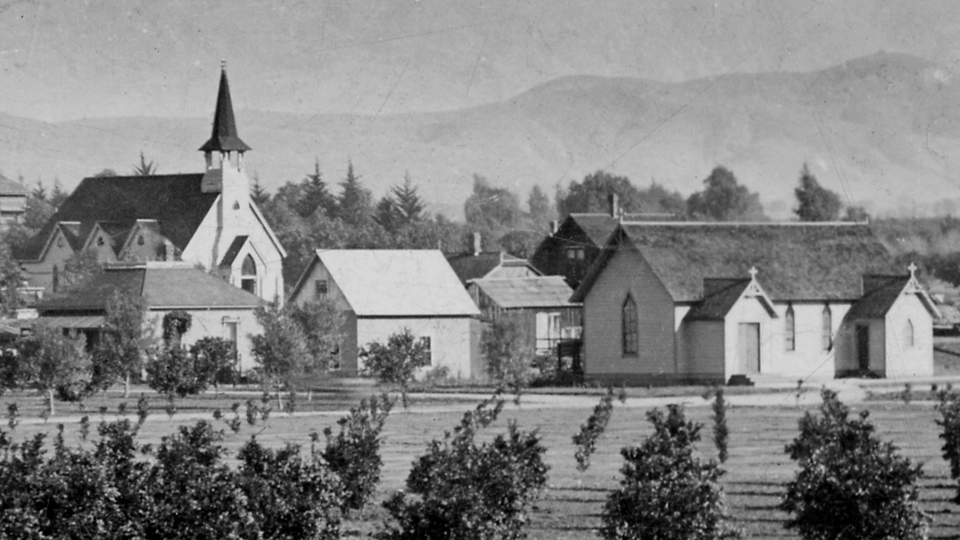
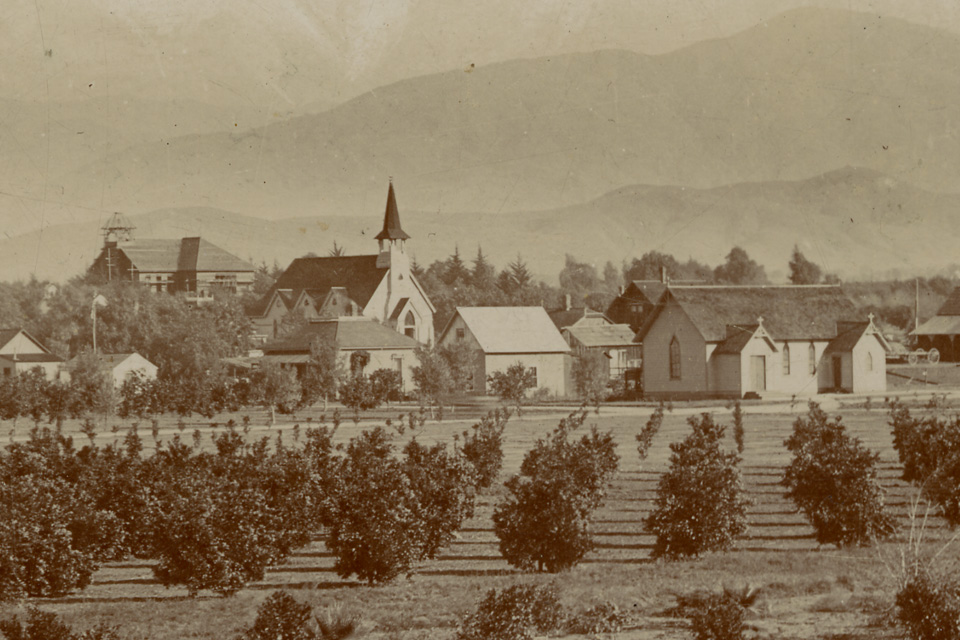
The local Methodist and Episcopal congregations soon followed suit with their own pioneer churches; in 1888 and 1891 respectively.1


The early Methodist and Episcopal Churches in Covina, 1894. Source: California State Library.


Tuesday, December 12, 2023

Who Really Named Covina?

Back in 2018, the late Glenn Reed told of finding new information about how Covina originally got its name: a previously unknown contemporary account that the elder historian believed credible enough to make the following statement:

I think that is a better story for the naming of Covina than any that I have heard, and besides, it is an account from someone alive at the time; I am accepting it.1

And now, it just so happens that I've found corroborative evidence for that alternate take on Covina history.

First, though, let me quote the traditional story that's been retold in virtually every recounting of the city's past: that it was Joseph Phillips' surveyor Fred Eaton who authored the name.

...Mr. Eaton observed that because of the embracing mountains and hills the subdivision seemed to lie in a cove. He noted, too, the productive vineyards that had been planted by the settlers. From cove and vine he formed the word "Covina," cove of vineyards, and it struck him that this would be a good name for the new town.2


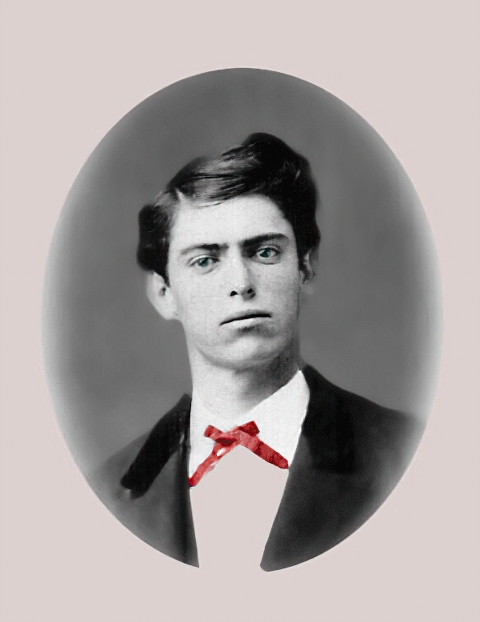
Frederick S. Eaton in the mid-1880s when the Phillips Tract was surveyed. He was elected City Surveyor of Los Angeles in 1885.3,4
Image source: Hal Eaton on Find a Grave.


It is factually true that the first time the word "Covina" ever saw print was on the original plat map of the Phillips Tract. But is there actual documentary proof that Eaton was the true author of the name? Or could this be a case of a tale that's been told so many times that people simply assume it's a historical fact?

It turns out, however, that there are other long-forgotten stories of how Covina was christened, and one of those is backed with documentary evidence: that the name originated with a group of German Baptist Brethren, and that their original spelling was "Covena"5...

Saturday, September 25, 2021

Covina 1907

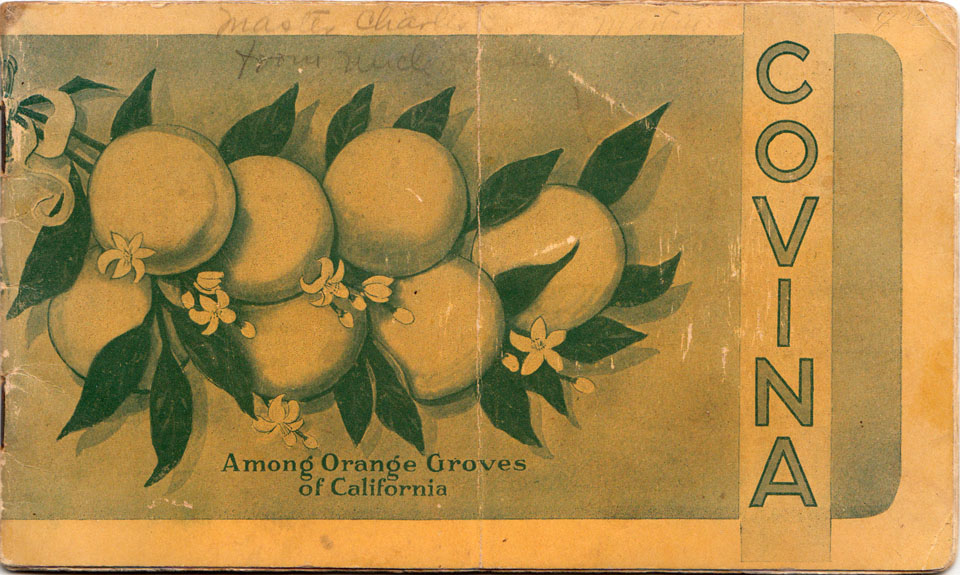
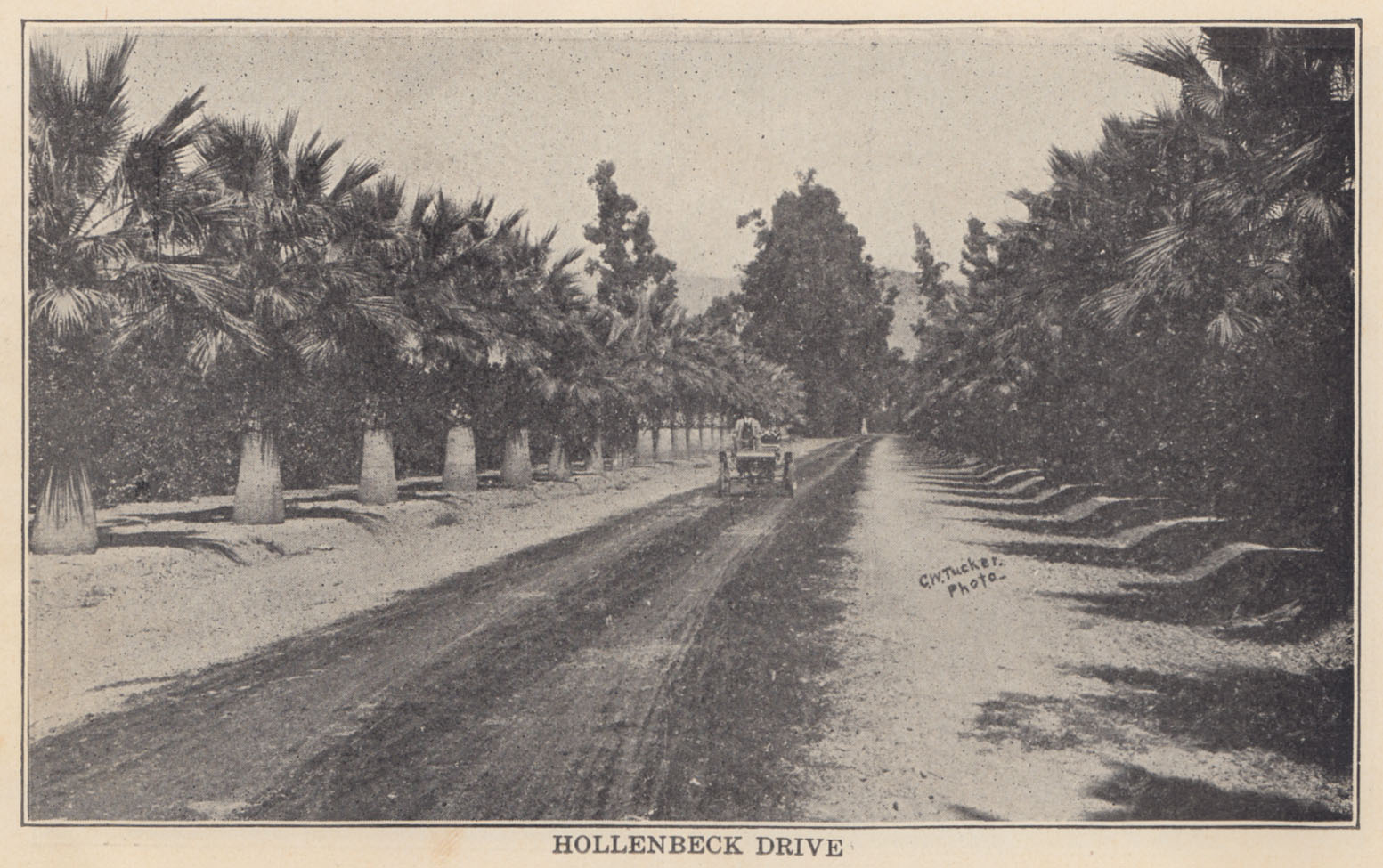
This promotional booklet was put out by the Covina Valley Farmers' Club in March, 1907.1 Some of these images (all by Tucker Studios) are quite rare; a few likely never published elsewhere before or since. Its 12 photos are presented here in the same order they appear in the booklet. (Click on any of the black-and-white pictures to view an enlargement.)


I believe the faded pencil inscription reads "Master Charles ... Martin / from Uncle Archie"


I've always liked this picture of Hollenbeck back when the palms were young. Donald Pflueger says this is Hamilton Temple driving his 1901 Oldsmobile;2 one of the first automobiles in Covina.


Saturday, September 29, 2018

Covina, 1895

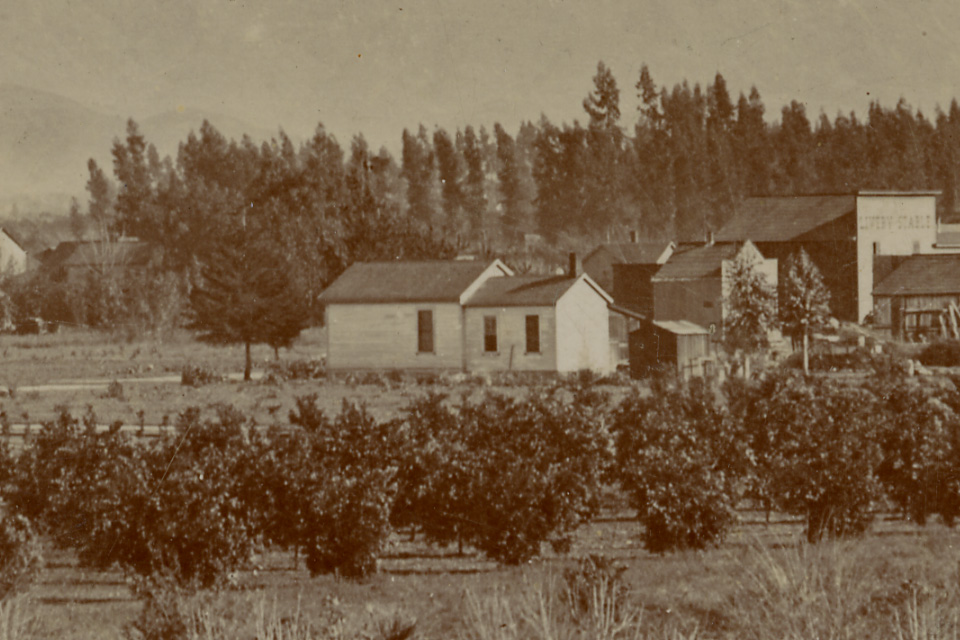
This is the oldest-known photograph of Covina. It was taken in winter, 1894, when the town was only 9 years old. The vantage point is the roof of the home of Mr. Lambert L. Ratekin at 237 South Fourth Avenue. The view is to the northeast, showing Fourth Avenue and the alley between Center and Dexter Streets in the foreground, and in the middle distance, Badillo Street passes from left to right just past the young orange groves.


Courtesy California State Library. Click on image for enlargement.

The photo is also noteworthy for depicting the very first house ever built in Covina.


The Samuel Allison residence (1885), at 160 West Badillo Street.

The image can be dated precisely because the school that we know was built in 1894 (at left, below) can be seen here currently under construction.


Historically-important buildings from l. to r.: the Covina Public School (1894), the Methodist Church (1888) on College Street, and the Episcopal Church (1893) at Badillo and Third.

What the school looked like upon completion:

Wednesday, June 20, 2018

The Naming of Covina

...by guest author Glenn Reed

Recently Karl Blackmun, one of our new members gave us a copy of his great grandmother's memoirs of her life in Covina in the early days. Her name was Clara Margaret Eckles (1874-1966). She married Carl Warner, best known in Covina as the younger brother of Elwin Perle Warner, long time prominent Covina grocer. Her memoirs paint a picture of life in this area before 1900 and relates some of her contacts with such early residents as Antonio Badilla, Lucky Baldwin, and Joseph Phillips.

Of particular interest is her account of how Covina received its name. Most of us have heard that the name came from the location, as a cove between the San Gabriel Mountains and the San Jose Hills at least partly filled with vines. After all, Baldwin Park was for many years called Vineland until the residents changed the name in order to curry the favor of Lucky Baldwin.

Here is the story in the words of Clara Eckles:

The Dunkard Brethren were colonizing Covina, only that wasn't its name yet. One day Phillips called father over to do some surveying and to give some advice. It seemed the colony of Brethren wanted to name their section, "Los Covinas." They thought it was Spanish for "The Little Cove." "Los" was the only Spanish part of it, and Mr. Phillips didn't want to hurt their feelings by pointing out their mistake. Besides, there wasn't any cove present! So a compromise name was suggested, that of "Covina," the leaders were consulted, and the town named before it had time to catch its breath.

I think that is a better story for the naming of Covina than any that I have heard, and besides, it is an account from someone alive at the time; I am accepting it. More of Clara's memoirs later.

This article was originally published in the June, 2018 issue of "The Covina Citrus Peal," the official newsletter of the Covina Valley Historical Society, and is reproduced here with the permission of the author, Covina historian Glenn Reed.


German Baptist Brethren church on Third at Puente, circa 1920.