Showing posts with label citrus avenue. Show all posts

Thursday, August 13, 2026

Covina Town Center, 1968-1972

Probably not many people now remember (or maybe never even knew) that in the late Sixties, the City of Covina proposed a major redevelopment project that would have essentially wiped out the old downtown as we know it.

It was called the Covina Town Center, and had it gone through as planned, almost everything lying in the area bounded by San Bernardino Road, Second, Fourth, and even areas south of Puente would have either been demolished and repurposed, or expanded in some way.

The Town Center plan also called for condemning whole neighborhoods of single-family homes to be replaced by high-density housing and offices, rerouting thru traffic away from Citrus Avenue over onto Second while turning the main street itself into a pedestrian-friendly shopping mall, and all of it crowned by a new administrative Civic Center complex with a concert hall-sized Civic Auditorium.1


Source: Covina Chamber of Commerce.1 Click on the image to view an enlargement.

Despite vocal opposition, the Town Center proposal actually passed a vote of the City Council and was set to break ground in February, 1971. The month previous to that, I wrote a 19-page report on the project for my high school civics class, the research for which included an in-person interview with Mayor Frank Haven (in office 1968-1972), who was basically the Town Center's principal proponent.2

I was away at college when the Town Center plan was finally scrapped, so I never heard why none of it ended up happening, but I'm sure glad now that it died on the vine. (If anyone can fill me in on the details of why the proposal ultimately failed, I would surely appreciate it.)

References:

1 "Covina's New Town Center," Covina Chamber of Commerce, 1970, 2pp.
2 "Should the City of Covina Have a New Civic Center?," A Civics Project by Scott Shannon & Terry Dunn, January 20, 1971, 19+2pp.


Friday, April 24, 2026

Covina in the Aughts

Citrus Avenue again, only this time about a half-century earlier. This photo was fairly easy to date, and very precisely, too.


Looking north on Citrus Avenue from Badillo Street, Covina, January, 1907. Clarence Tucker, photographer.
Click on the image to view an enlargement. Photo courtesy Covina Valley Historical Society and Powell Camera Shop (RIP).


Even before looking anything up, on the basis of a past search, I knew this picture had to be taken between 1903-1909 due to the presence of Franz Richter's bicycle repair shop in the far distance near Citrus's intersection with College. But, the obvious clincher was the banner hanging over the middle of the street. It reads:

Thursday, April 23, 2026

Citrus Avenue in the Fifties

Here we have two nice, detailed mid-century views of Covina's busy Citrus Avenue. The photos are undated, but examining certain clues, I think I can come up with some pretty good educated guesses as to when they were taken.

In this first one, the newest car I see is that 1952 Ford Convertible just left of center. That model was introduced in Fall, 1951. However, the photo has to have been taken later than September, 1952, because that's when Faye's Maternity Shop to the left of the Ford opened at 111 North Citrus,1 and that place does look essentially brand new here. So, 1952 seems like a safe bet for this view.


Looking north on Citrus Avenue from Badillo Street, Covina, 1952.
Click on the image to view an enlargement. Photo courtesy Covina Valley Historical Society and Powell Camera Shop (RIP).

(As an aside, I like how several kids evidently felt comfortable leaving their bikes parked on the street while they went to a show at the theater.)

Saturday, March 7, 2026

The Hollenbeck Palms

Recently, I added this very early C. W. Tucker photo postcard to my Covina ephemera collection.


Click on the image above to view a clean enlargement.

Although the view looks very different today, and the palms are way taller now, I doubt someone who grew up in Covina would have too much difficulty recognizing where this picture was taken.

But, just in case not, we are looking north on Hollenbeck Avenue from only a few feet north of its intersection with Badillo Street.

And the year? Well, let's play history detective and see what we can come up with!

Friday, January 16, 2026

Lysle Writes Home

Once upon a time, a young man named Lysle C. Ummel1 visited Covina, and while he was here, he bought four picture postcards of the place and sent them back to relatives in Fremont, Nebraska.

Lysle must have mailed them all together in an envelope, because they have no postmarks and thus are not readily datable. However, various clues in the photo of Citrus Avenue made it possible for me to determine that particular picture was taken in 1919.

The familiar view below looking north on Citrus from Badillo. Lysle went on to become an electrical engineer,2 so that perhaps explains his pointing out the precise location of the Edison office at the time.


Click on the image to view an enlargement (and click here to view Lysle's message on the verso).

So how did I figure out the year? Let's start out with that blade sign on the Chapman-Workmen building at left. Turns out that "Winder & Jones" were in business at that location from 1919 to 1926,3 so that narrowed the range of possible dates right away. The Covina Theatre isn't there across the street yet, so that narrows things even further to 1919-1921.4 But the clincher was the license plates, as 1919 was the last year between 1919 and 1921 that California plates were white.5

Here are the other two postcards with white borders, which I feel safe in assuming are also from 1919.

Tuesday, January 13, 2026

Italia

You're about to make the acquaintance of a remarkable woman who, as you'll see, merits a far more prominent place in Covina history than the mere footnotes she's been relegated to in the past...

As has often been the case, my initial inspiration for an article was a postcard. This particular specimen first attracted my interest because of the handwritten inscription indicating the house owned by Mr. Clapp, the druggist, from whose store came this antique medicine bottle: the subject of one of my earliest posts here.


View looking southwest along the west side of the 200 block of North Second Street, Covina, c.1908. "Rose" mailed this hand-colored M. Rieder postcard from Lordsburg (La Verne) on January 2, 1908. Click image to view an enlargement.


The Clapps were an important family in early Covina, and I'll have more to say about them later, but the actual main character in my present story is Mrs. Clapp's mother—Mrs. Italia Cook—who lived in the big house at far right.

The published histories barely mention Italia, but she was easily the most propertied and most philanthropic woman in Covina at the turn of the last century, and now here, at long last, this pioneer-era force of nature is going to get the full recognition she's due.

Friday, December 12, 2025

"The Man Who Built Covina"

He died the same day as the famous singer Lark Ellen, and his death announcement was set right next to hers headlining the front page of the town paper. In his time, he was lauded as "the man who built Covina,"1 but his name—and most of his life's work—was subsequently lost to history.

Edward Aaron Hubbard was born in Fairfield, Illinois, on June 2, 1880. He initially plied his building trade in Lyons, Kansas, before coming to Covina in 1922.1 Not long after setting up shop here, he was commissioned to construct his first and most enduring commercial edifice: the bank building on the northeast corner of Citrus and College that's been a downtown landmark for many generations of Covinans.


The new home of the First National Bank of Covina opened for business in March, 1924.2
Photo courtesy Covina Valley Historical Society.

Thursday, June 26, 2025

Post-War Postcard

Time for another episode of vintage Covina photo sleuthing! Got ahold of another uncommon postcard of Citrus Avenue recently for which I hoped to pinpoint a date.


Post-war view north on Citrus Avenue from its intersection with Center Street.
Click on image for a larger view.


It's unused, so there's no postmark to give us a ballpark estimate. Just eyeballing the cars, though, I could tell it was from the Forties, but when, exactly?

Sunday, May 18, 2025

Coffee Ranch Days

When I first read Donald Pflueger's "Covina" at age 12, I thought the most interesting parts were the author's descriptions of the valley before and during its settlement. One statement in particular captivated me: how, in the early 1880s, when the Methodist Church in the foothills at the top of Citrus Avenue rang its bell on Sunday mornings, "its clear notes could be heard all over the valley."1 That same valley when I first knew it was already home to a quarter-million people, so a stillness of that sort was almost incomprehensible to me. Like another world, it seemed... and indeed it was...

Perhaps the best-known settlers from those early times were the families of José Julian and Pedro Antonio Badilla (aka Badillo), who emigrated from Costa Rica to America in 1876. The brothers had high ambitions. They wanted a coffee plantation big enough to supply the whole United States!2 So what was their new land like when they arrived here?


Wheat harvest on Baldwin land in Rancho La Puente. Although best known for their coffee venture, the Badillas were famously successful raising wheat in 1878.3
Photo courtesy Covina Valley Historical Society and Powell Camera Shop.


Saturday, August 24, 2024

Citrus Avenue, 1938

Looking north on Citrus Avenue...

...from Workman Avenue:


...from Badillo Street:


...and from College Street:


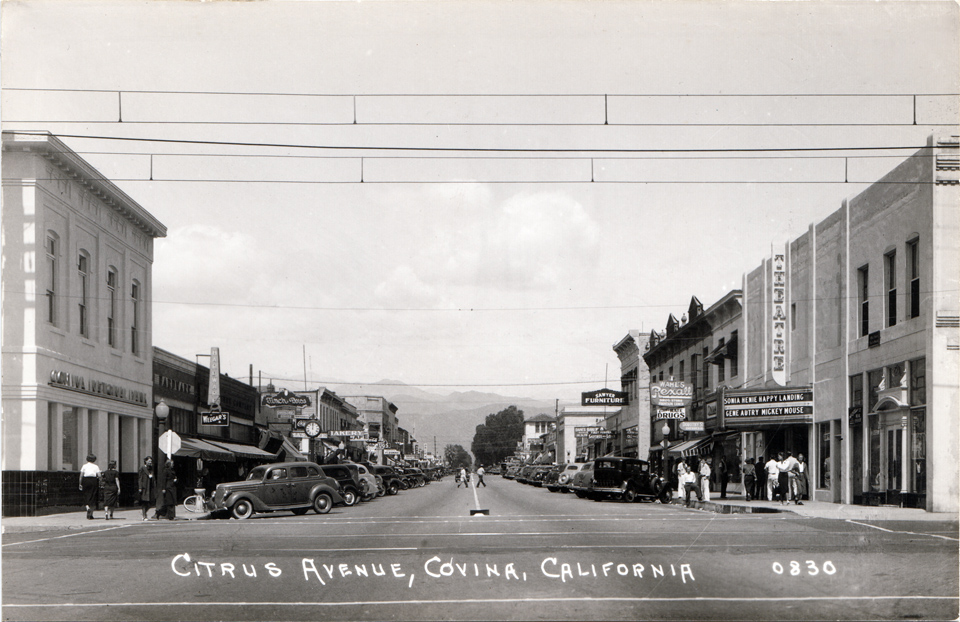
The 200 block of North Citrus was the grocery and retail center of Covina in 1938, with Safeway, Alpha Beta and Cornet on the west side and J. J. Newberry adjoining Bank of America across the street.


But when?

Saturday, May 4, 2024

Covina's Old Neighbors

The localities described below would have been household names to Covinans during the the town's first half-century, but most are unfamiliar today.


USGS map from 1908 showing Covina and environs in the early 20th century. (Note the original alignments of roads in the area of present-day West Covina.)
Click on the image for an enlargement.

Wednesday, January 31, 2024

The KKK in Covina

The rumors you may have heard are true: the Ku Klux Klan was indeed active in Covina a century ago.

In his 1964 history,1 Donald Pflueger tells of one well-attended KKK event (p.102). He quotes the Covina Argus of August 8, 1924:

Several hundred people gathered at the city park last Saturday night to listen to a program put on by the Ku Klux Klan. Seats had been provided and the audience was kept interested from the opening band concert until the close of the lecture given by Realm Lecturer Lackey, from the Imperial Palace at Atlanta, Georgia.

Pflueger continues:

Apparently it was an audience of curiosity seekers, because the organization made little progress among Covina’s citizenry. Nonetheless, Covina was one-hundred percent white; Mexicans lived in Irwindale and elsewhere. No one seriously questioned the “White Race Only” sign on the city’s plunge.

Thursday, December 28, 2023

Custer's

It was a household name to just about everybody who lived, worked or grew up in Covina in the latter half of the 20th century, but the story behind the store and its familiar landmark location has largely been lost to history.

It all started with Reginald F. Buller (1840-1913):1 a banker and former state senator from Idaho who retired to southern California in 1908.2 Although he initially intended to settle in Covina, his only enduring contribution to the city turned out to be the erection of a business block at 126 N. Citrus Avenue: the address of the gift shop known to later generations of Covinans as "Custer's."


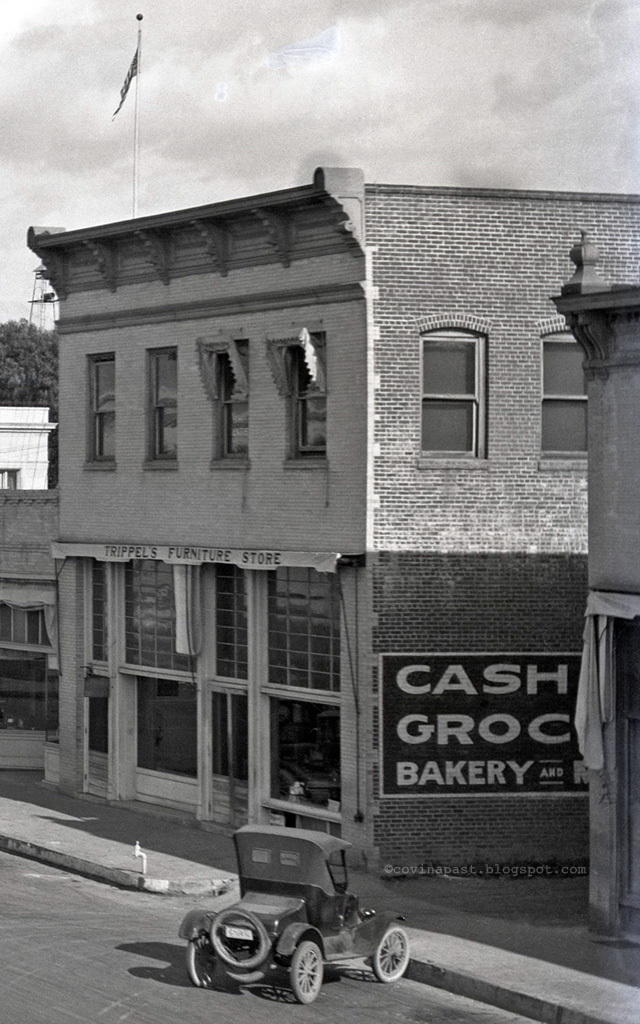
The Buller block was still as-built with its crowning cornice when this photo was taken in 1925.
Click image for an enlargement.


Buller bought the land for his planned 2-storey commercial structure in May, 1908.3 The parcel was originally the site of the 1891 Warner Brothers grocery,4 and its successor company would become the new building's primary tenant. Pioneer contractor Clarence Allison constructed the Buller block in early 1909,5,6 and Warner, Whitsel & Co. opened their new store to great local fanfare that June.4


The Warner, Whitsel & Co. grocery store in the Buller Building (left) c.1910.


Only ten years later, however, Warner-Whitsel announced it had been unable to renew its lease with Buller's estate, so the grocery moved two doors south to the Webb Building at 118 N. Citrus.7 Thenceforth, from 1921 until after the Second World War, the Buller Building would be occupied by a series of furniture stores: Gillett's (1921),8 Trippel's (1922),9 Scofield's (1928)10 and Sawyer's (1936).11

Meanwhile, on September 7, 1909, just up the street at 142 N. Citrus,12 a Mr. J. H. Shafe opened the book and stationery store that would eventually become Custer's.13 In 1911, it changed hands and its name to the Covina Book Store,14 and then again in 1921 to the Covina Book and Art Shop.15 Under that name, it passed through a series of owners until 1928 when it was bought by Clyde C. Custer (1899-1955),16 son of pioneer undertaker William Q. Custer (1860-1936).17

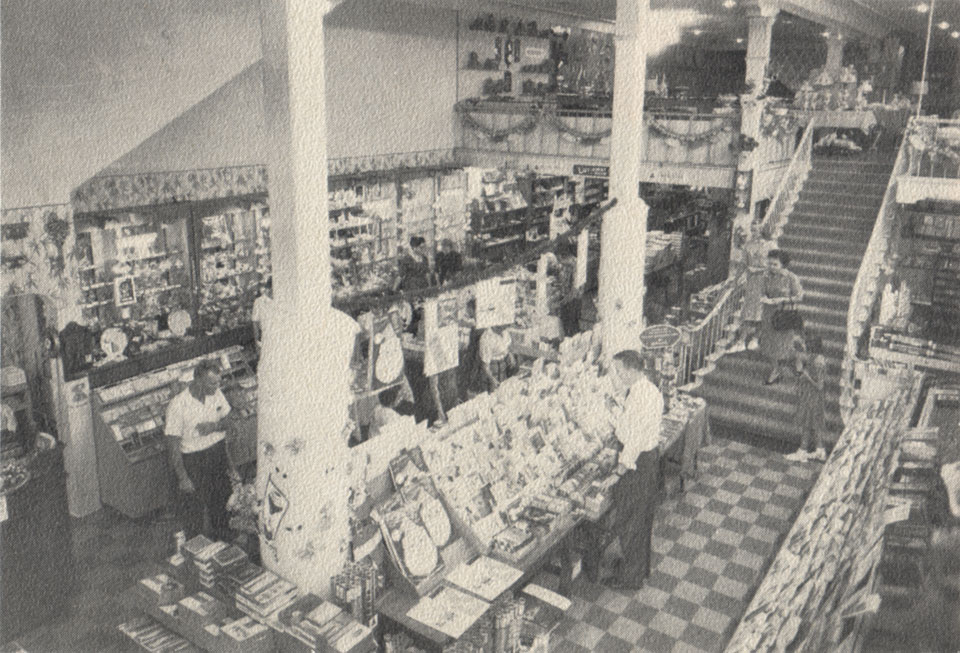
After Warner, Whitsel & Co. closed for good in 1928,18 Clyde Custer moved the Covina Book and Art Shop into the grocery's former space at 118 N. Citrus.19 Then, in February, 1945, he bought 126 N. Citrus,20 and moved his business there in the second week of March, 1946, renaming it Custer's Gift and Stationery Store.21 After Mr. Custer died in 1955,22 it continued to be operated under the family name well into the early 21st century.


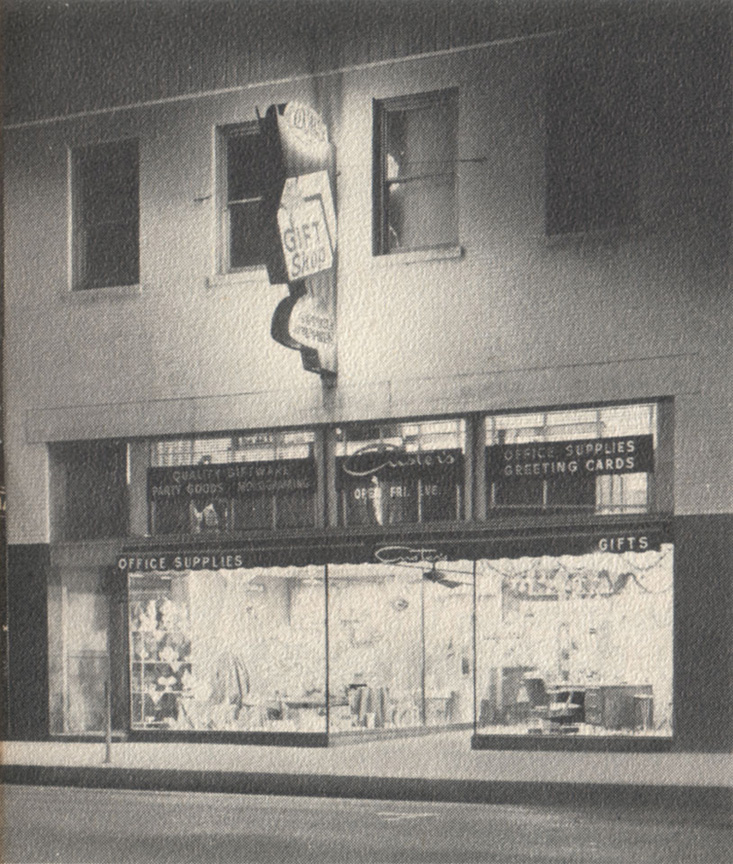
Custer's Gift & Office Supply, 1960.23


Fast forward into the future...

Thursday, December 7, 2023

Photo Sleuthing

Whenever I find a picture of old Covina that I've never seen before–like this one from a postcard–I enjoy trying to figure out exactly when it was taken.


Looking north on Citrus Avenue from its intersection with Badillo Street. The original canopy of the Covina Theatre can be seen at right.
Click on image for a larger view.


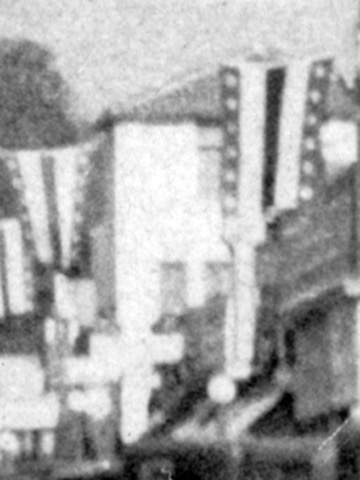
Just eyeballing the cars and the star-spangled bunting hanging over Citrus, my first thought was the photo might be from a 4th of July in the late 1920s. The postcard was mailed April 28, 1930, so obviously the photo couldn't have been taken any later than that.

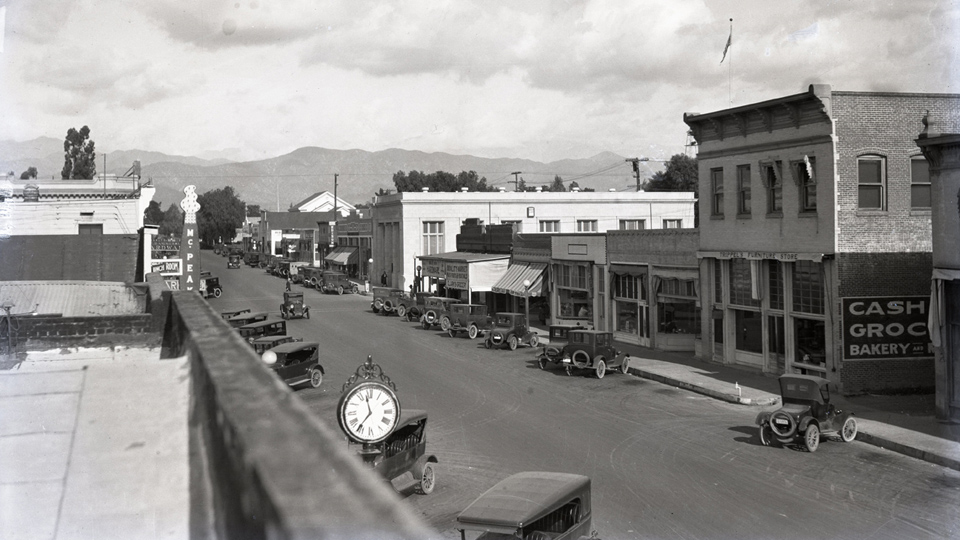
I also recognized signage seen in this earlier post showing Citrus Avenue in the mid-Twenties (below)–in particular the McPeake cigar sign at 125 N Citrus–so I knew I had to be looking at sometime between 1925-1929.


North Citrus Avenue in 1925.


Looking more closely, I noticed a distinctive roof line, just barely visible in the distance. Known as the Logan-Stead Building in my day, this was the earliest view of Citrus I could remember seeing it there.


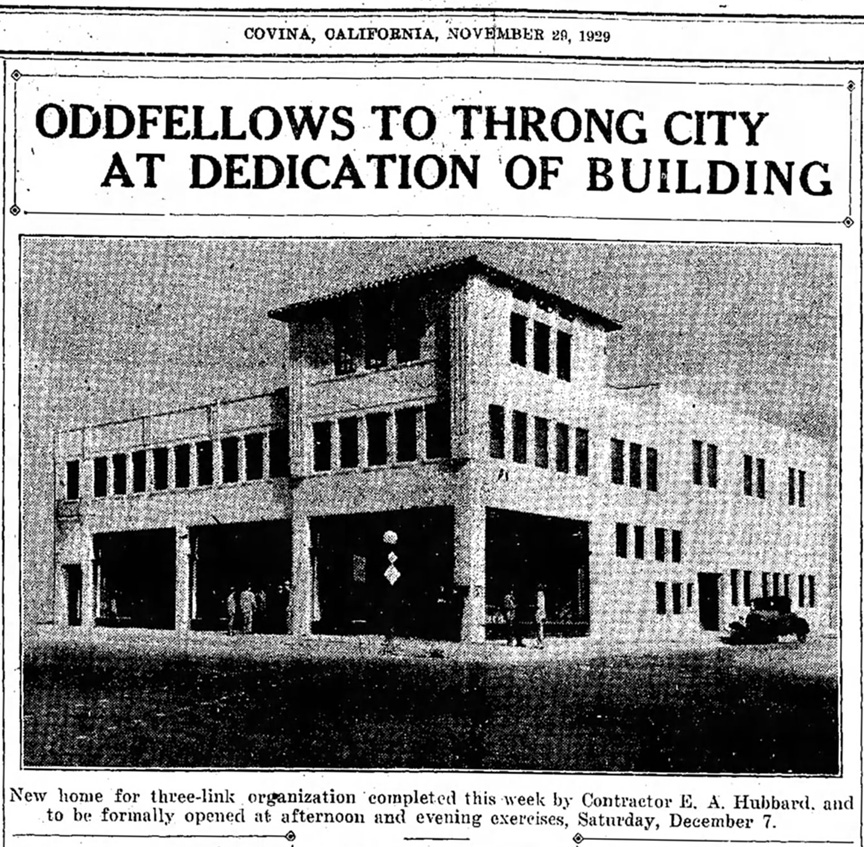
So when was it built? Searching the online archives of the Covina Argus, I found out that site-clearing for what was originally known as the Oddfellows Building had commenced in July, 1929,1 so that ruled out Independence Day of that year. Then I thought it might be Armistice Day–what we now call Veterans Day–but that didn't become a national holiday until 1938. So if it wasn't July 4th or Armistice Day, why all the patriotic decorations?

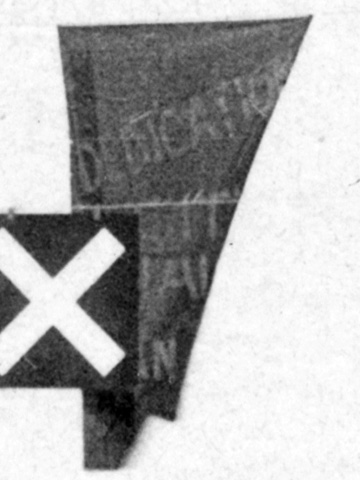
This called for a much closer look. Examining my 1200dpi scan, I could make out some diagonal LETTERS near the top of the center banner:


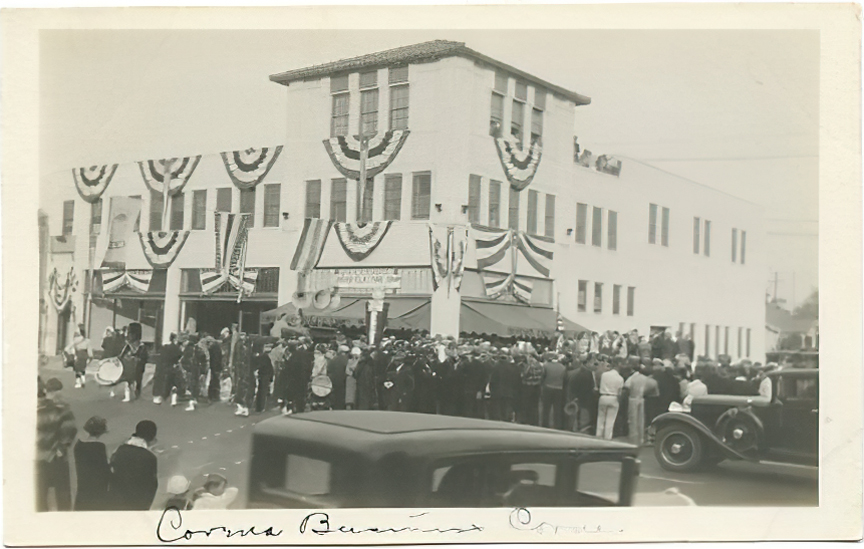
A-ha! Seeing "DEDICATION" there brought to mind one of the first photos of old Covina that I ever added to my digital collection, also of that same building:


No date on it, but it clearly shows the dedication ceremony of the new Oddfellows Building, and there, strung across Citrus, can be seen banners identical to those in the original postcard photo!

So now I feel virtually certain that my mystery picture was taken during the first week of December, 1929, immediately prior to the official opening of the Oddfellows Building on December 7:2 94 years ago today.


Covina Argus, November 29, 1929.


Some additional history on this once-important downtown edifice.

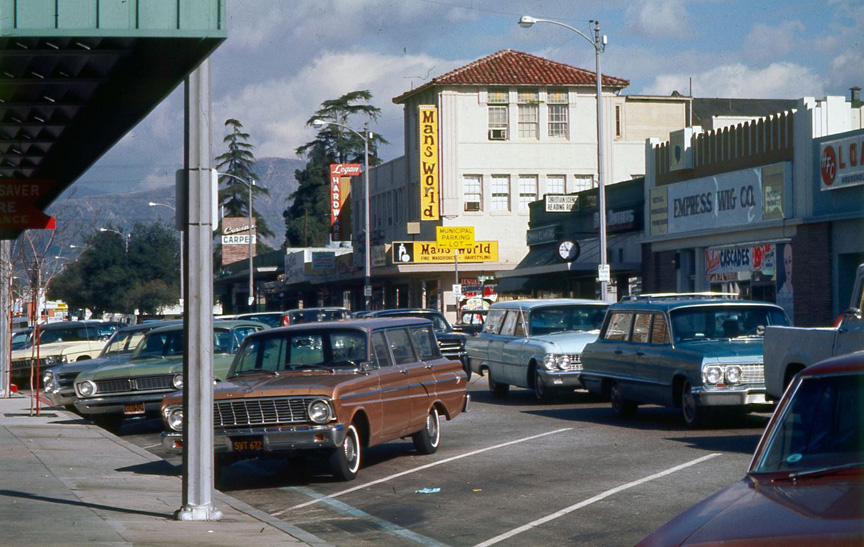
The Oddfellows Building was purchased by Thomas P. Logan and Sam Stead in 1941.3 For many years thereafter, it housed Logan Hardware and several other retail businesses, and was a meeting place for a number of fraternal organizations and service clubs.


The Logan-Stead Building in the mid-Sixties. Source: Facebook, I Grew Up In Covina; photographer unknown.


In its final years, the structure fell into disrepair and was ultimately abandoned. It was destroyed by arson and the site cleared in the early Nineties.4

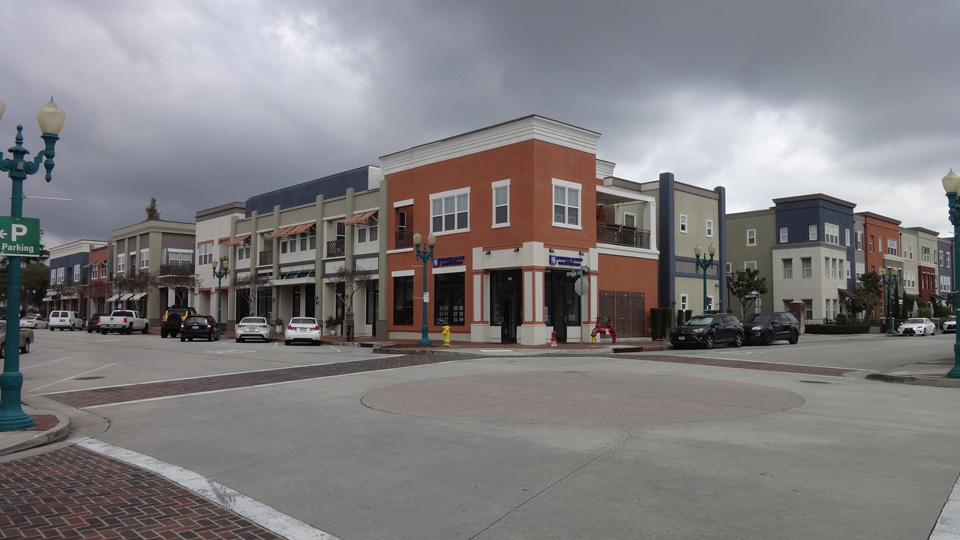
The northeast corner of Citrus and Italia today:


Photo by J Scott Shannon, March 20, 2023.


I really must apologize for the long hiatus. There were so many things I had in mind to write about Covina history this year, but the business of life has kept me almost continuously occupied. I hope to do better in 2024.

References:

1 Covina Argus, July 12, 1929, p.1.
2 Covina Argus, November 29, 1929, p.1.
3 Covina Argus-Citizen, November 29, 1946, p.1.
4 Bob Findley on the "I Grew Up In Covina" Facebook group.
Newspaper clipping courtesy Newspapers.com.


Friday, March 31, 2023

Covina Present

Because I live 700 miles away, I don't get to visit Covina very often. Last week, however, I was in L.A. for some eye appointments, and while in the area I spent an afternoon driving and walking around my old home town.

The last time I was here, Citrus Avenue had been transformed into an outdoor dining area which shall we say was not exactly conducive to sightseeing. So I was pleased to now see that the main street had returned to normal; or at least normal for Covina in this day and age.


All photos © J Scott Shannon.


Sunday, October 16, 2022

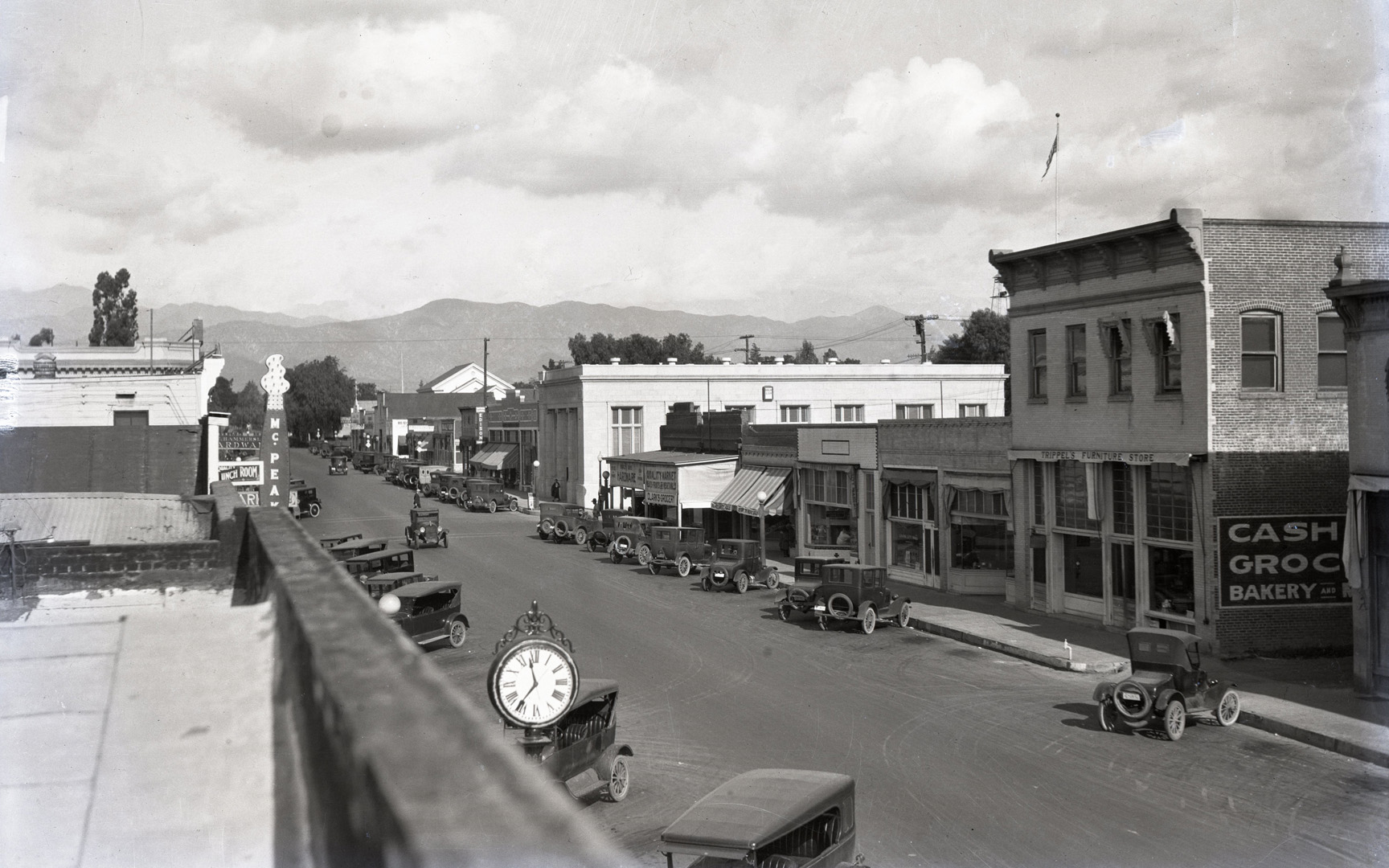
Old City Hall on Citrus

Another rare view of downtown Covina, this one from December, 1924-January, 1925. The vantage point is the roof of the Finch Building at 113 N. Citrus, looking northeast. Easy to tell it's wintertime, with new snow in the mountains. The date range can be deduced by the car license plates: about half of which are in the style of 1925 and the other half appear to be 1924, so it's probably close to the end of the year when plates would be in transition. It's also likely a weekday, as a customer can be seen exiting the First National Bank building on the northeast corner of Citrus and College, which opened in 1924.


North Citrus Avenue in Winter, 1925. Photographer unknown, but likely C. W. Tucker. Click image to enlarge.


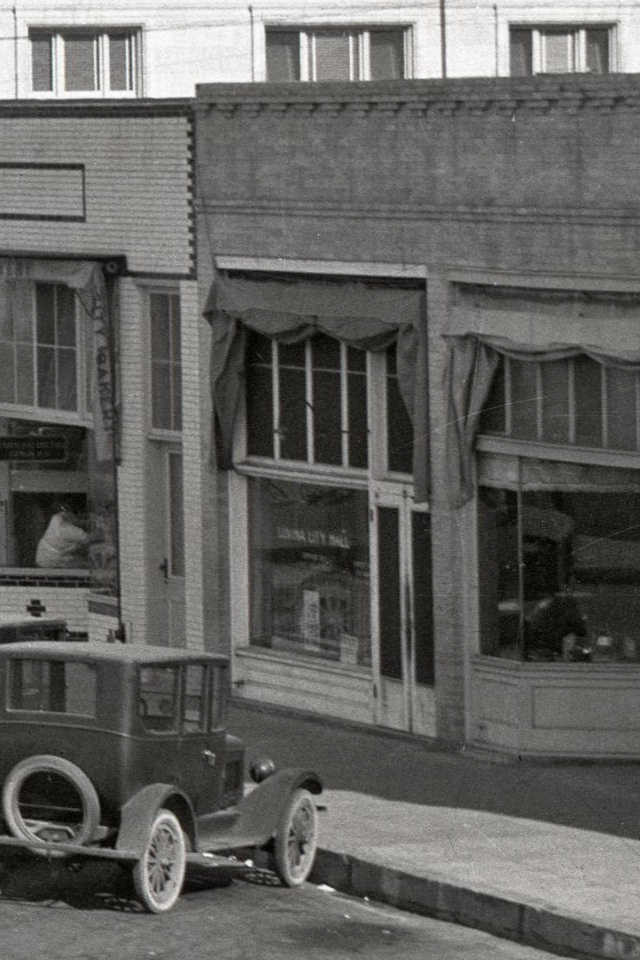
Probably the most interesting detail in this photo is the lettering in the window of the storefront two doors up from the furniture store. It reads "COVINA CITY HALL." Check out the closeup below.


The pre-1930 Covina City Hall at 132 N. Citrus.


I'd always wondered where city hall was located before the "new" one opened in January, 1930,1 and now I know!

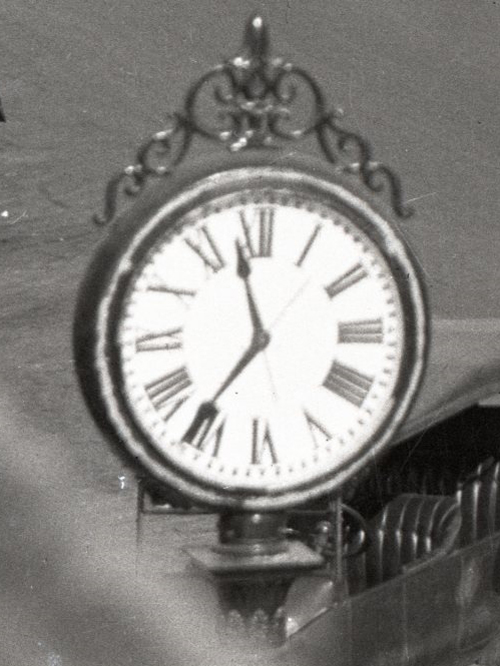
Another noteworthy detail in this photo is the closeup of the Finch Brothers street clock. Apparently its original face used IIII for the 4, while the one now has IV. The rest of the old downtown landmark has remained unchanged since it was erected in 1916.2

References:

1 Covina Argus, January 24, 1930, p.1.
2 Pflueger, D. H. 1964. Covina: Sunflowers, Citrus, Subdivisions. Castle Press, Pasadena, California, 372pp.
 

Friday, October 14, 2022

Early Covina Theatre Photo

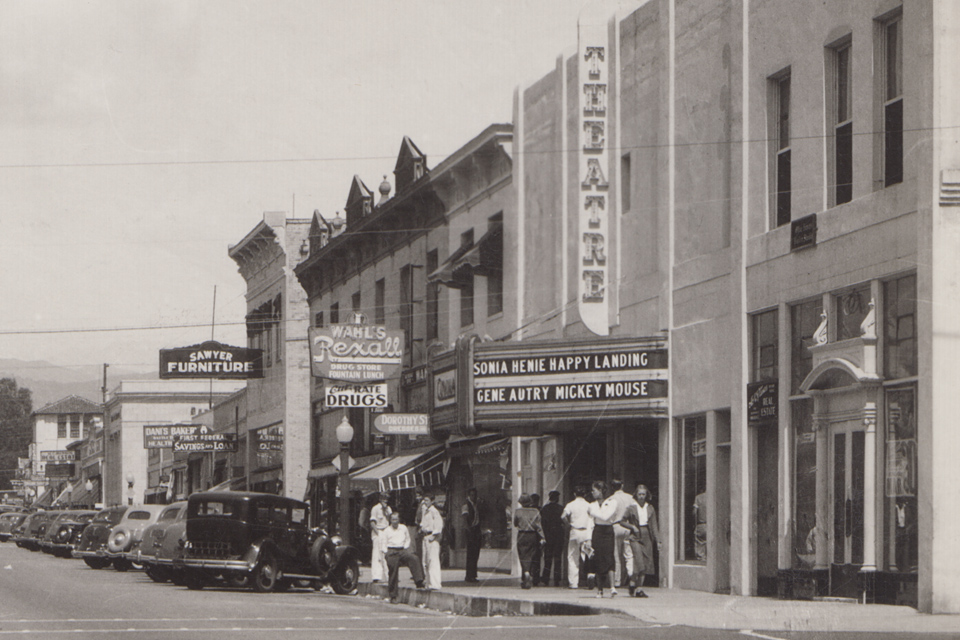
In this previous post about the opening of the Covina Theatre in 1921, I remarked that I didn't have a photo of the place in the 1920s. Well, I do now! Judging by the car license plates, it was taken in 1924.


Citrus and Badillo in 1924. Photo by Tucker Studio. Click image to enlarge.


At first glance, it appears the theater does not yet have a marquee. However, on higher magnification, the longer panels on the canopy can be seen to spell out C-O-V-I-N-A--T-H-E-A-T-R-E. Although not very visible in the daytime, it's likely those panels were made of glass and were backlit by light bulbs in the evening.


Closeup of the early marquee. The panels on the right of the canopy spell out T-H-E-A-T-R-E, as well.


In the Thirties, both the theater marquee and the building's exterior facade were upgraded to a more modern appearance.


Saturday, August 14, 2021

Before Glendora Avenue

When I was a kid starting to get curious about local history, the story I heard about West Covina's Glendora Avenue was that it was called that because in olden days it went to Glendora. It did seem to point in that general direction, so I always assumed the tale was true.

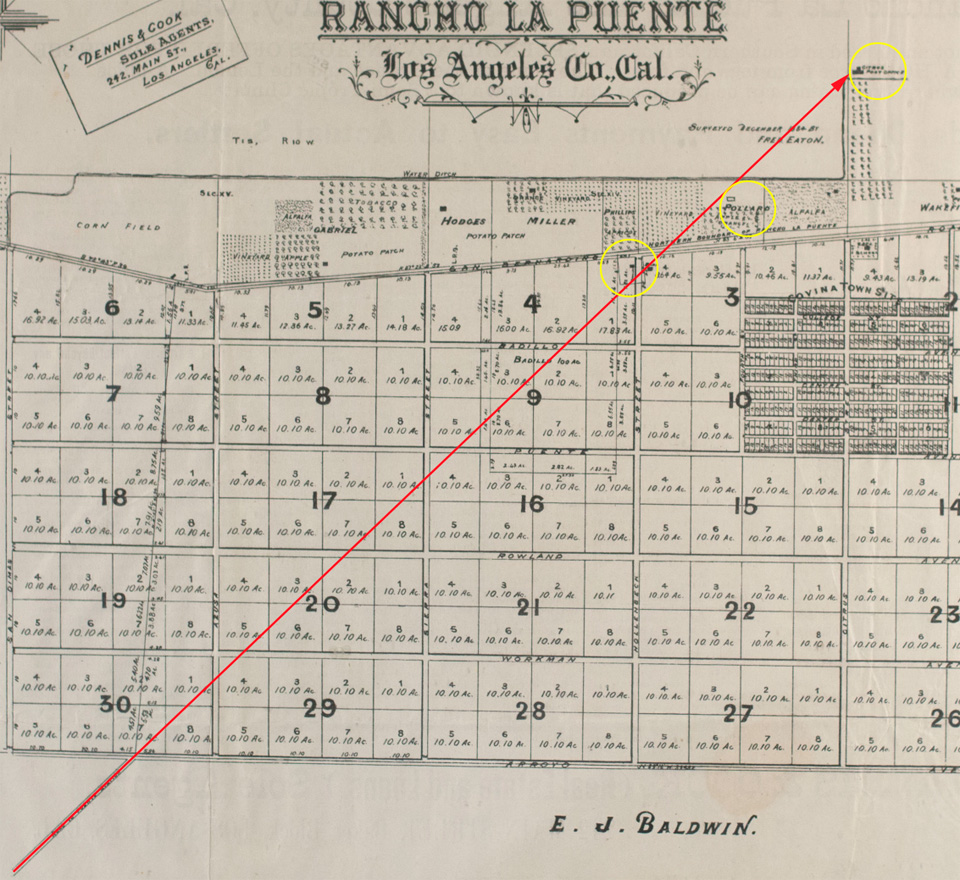
But where did Glendora Avenue actually go in historical times? I didn't think to figure that out until just the other day. Turns out if I take the original 1885 survey map of Covina and precisely extend the line of today's Glendora Avenue, it very conveniently connects three important historical sites: the Julian Badilla home (1876), Eugene Griswold's 1877 Citrus Post Office and general store, and the homestead of Robert J. Pollard, who I have recently come to believe may have been the Covina area's first settler of European descent.


Detail of Phillips Tract map (1885) showing a proposed historical northward extension of Glendora Avenue/Puente Depot Road (red arrow).
Yellow circles indicate the Badilla, Pollard and Griswold properties respectively. Map courtesy Covina Valley Historical Society.


No maps from the 1870s show that such a road existed through the future Covina area, but it would make sense that one did, because if you were Mr. Pollard or Mr. Griswold or the Sres. Badilla, you would need a wagon road in that exact location and orientation to get you to Puente, which was not only the headquarters town of Rancho La Puente, it was also the location of the then-new Southern Pacific Railroad depot, which at the time would have been your main transportation link to the greater world beyond.

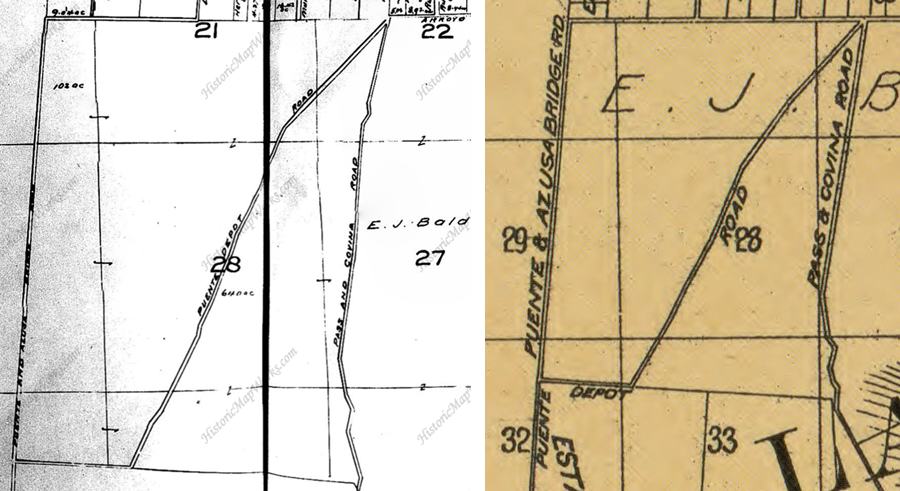
But there are maps from turn of the 20th century that do show a "Puente Depot Road" roughly tracing the path of today's Glendora Avenue. To realize my scenario, we need only imagine that the depot road went further north before the grid of streets for Covina was laid out in 1883-1884.


Maps from c.1900 showing "Puente Depot Road." Courtesy HistoricMapWorks.com and Library of Congress.


I don't think the diagonal Glendora Avenue we know today necessarily followed that same alignment all the way north, though. All it had to do was go as far as Citrus Avenue–a main thoroughfare named "Azusa Road #2" in the 1870s–and from there, you could have taken it up to Azusa or the foothills, where it ended at Fairmount Cemetery. In any case, Glendora wasn't founded until 1886, so the road we now call Glendora Avenue never went to such a place to begin with. The story behind the name turns out to be only the stuff of legend, after all.

One more thing: let's say the depot road did extend north to Citrus Avenue, that would finally answer a nagging question I've had for a long time, which was, why did the Badillas choose to build their HQ exactly where they did? That particular spot always seemed less than ideal to me. However, if we assume that in 1876, it was the intersection of the most crucial local roads at the time: San Bernardino Road (the most direct route to Los Angeles), the Puente Depot Road, and from there, the road north to Azusa, then the Badillas' chosen location makes perfect logistical sense.

This makes me think that the depot road existed before the Badillas arrived. So who first blazed the old wagon track to Puente? No way of knowing for certain at this point, but my guess would be R. J. Pollard, who may have been there before anybody else, but that I have yet to establish.

Much speculation here, I acknowledge, but a lot of history is informed speculation based on previously-known facts. And it's fun stuff to think about, anyway! I mean a historian's gotta have fun once in a while, right? Right!

Grateful thanks to Michael Schoenholtz and Randall Smith for research and discussion.


Thursday, September 10, 2020

Covina Theatre Opens, 1921

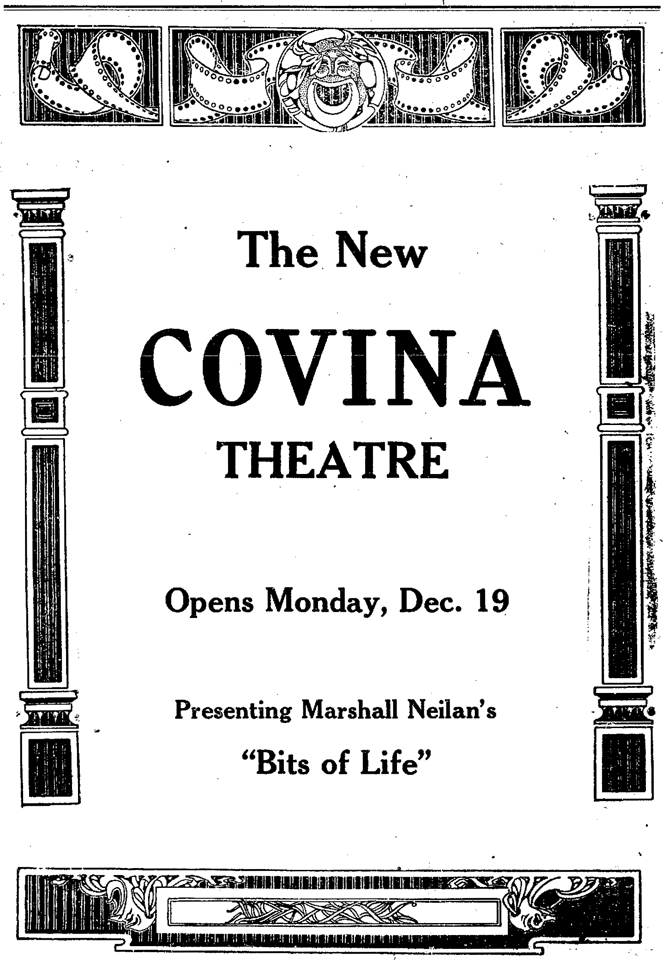
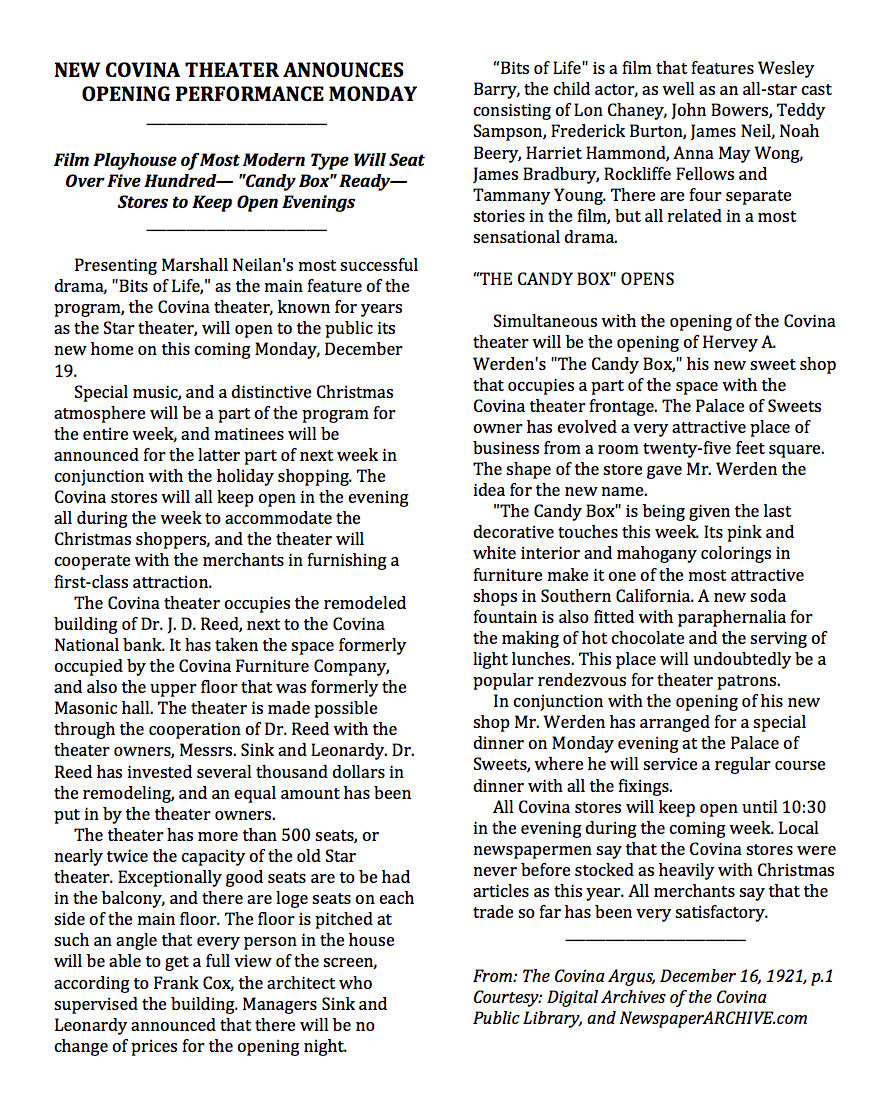
Ad announcing the Grand Opening of the Covina Theatre, which appeared in the Covina Argus newspaper on December 16, 1921.


Image courtesy: Digital Archives of the Covina Public Library, and NewspaperARCHIVE.com.


Transcription of the accompanying news article:

NEW COVINA THEATER ANNOUNCES OPENING PERFORMANCE MONDAY Film Playhouse of Most Modern Type Will Seat Over Five Hundred — Candy Box Ready — Stores to Keep Open Evenings, Presenting Marshall Neilan's most successful drama, Bits of Life, as the main feature of the program, the Covina theater, known for years as the Star theater, will open to the public its new home on this coming Monday, December 19. Special music, and a distinctive Christmas atmosphere will be a part of the program for the entire week, and matinees will be announced for the latter part of next week in conjunction with the holiday shopping. The Covina stores will all keep open in the evening all during the week to accommodate the Christmas shoppers, and the theater will cooperate with the merchants in furnishing a first-class attraction. The Covina theater occupies the remodeled building of Dr. J. D. Reed, next to the Covina National bank. It has taken the space formerly occupied by the Covina Furniture Company, and also the upper floor that was formerly the Masonic hall. The theater is made possible through the cooperation of Dr. Reed with the theater owners, Messrs. Sink and Leonardy. Dr. Reed has invested several thousand dollars in the remodeling, and an equal amount has been put in by the theater owners. The theater has more than 500 seats, or nearly twice the capacity of the old Star theater. Exceptionally good seats are to be had in the balcony, and there are loge seats on each side of the main floor. The floor is pitched at such an angle that every person in the house will be able to get a full view of the screen, according to Frank Cox, the architect who supervised the building. Managers Sink and Leonardy announced that there will be no change of prices for the opening night. Bits of Life is a film that features Wesley Barry, the child actor, as well as an all-star cast consisting of Lon Chaney, John Bowers, Teddy Sampson, Frederick Burton, James Neil, Noah Beery, Harriet Hammond, Anna May Wong, James Bradbury, Rockliffe Fellows and Tammany Young. There are four separate stories in the film, but all related in a most sensational drama. THE CANDY BOX OPENS Simultaneous with the opening of the Covina theater will be the opening of Hervey A. Werden's The Candy Box, his new sweet shop that occupies a part of the space with the Covina theater frontage. The Palace of Sweets owner has evolved a very attractive place of business from a room twenty-five feet square. The shape of the store gave Mr. Werden the idea for the new name. The Candy Box is being given the last decorative touches this week. Its pink and white interior and mahogany colorings in furniture make it one of the most attractive shops in Southern California. A new soda fountain is also fitted with paraphernalia for the making of hot chocolate and the serving of light lunches. This place will undoubtedly be a popular rendezvous for theater patrons. In conjunction with the opening of his new shop Mr. Werden has arranged for a special dinner on Monday evening at the Palace of Sweets, where he will service a regular course dinner with all the fixings. All Covina stores will keep open until 10:30 in the evening during the coming week. Local newspapermen say that the Covina stores were never before stocked as heavily with Christmas articles as this year. All merchants say that the trade so far has been very satisfactory. From: The Covina Argus, December 16, 1921, p.1 Courtesy: Digital Archives of the Covina Public Library, and NewspaperARCHIVE.com


Ad for "The Candy Box" concession stand at the front of the new theater.
Image courtesy: Digital Archives of the Covina Public Library, and NewspaperARCHIVE.com.


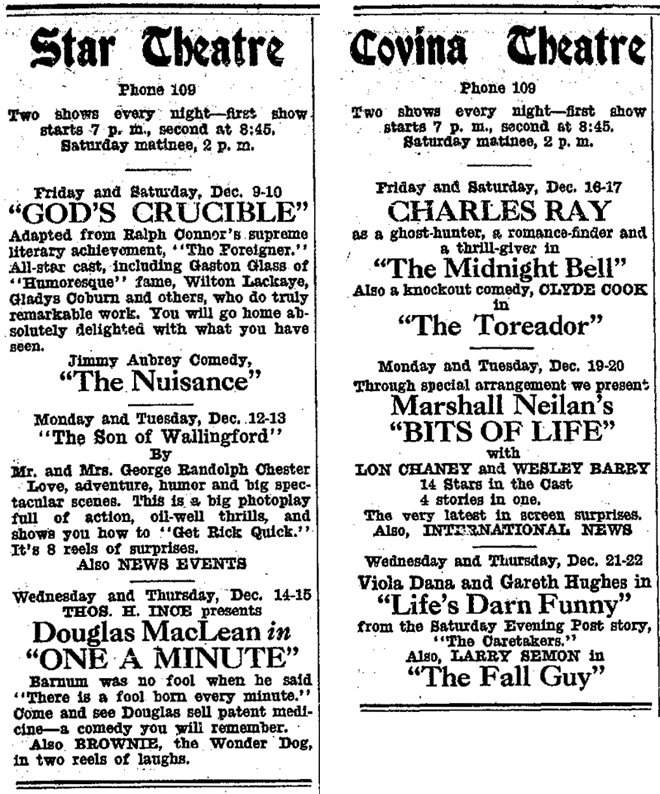
Out with the old and in with the new! Looks like the old Star Theatre had its last showing on Thursday, December 15th, and the new Covina Theatre opened unofficially the next day. Also, it appears "[A] Midnight Bell" was actually the very first feature shown in the brand new venue; "Bits of Life" being the Grand Opening bill-topper.


Image courtesy: Digital Archives of the Covina Public Library, and NewspaperARCHIVE.com.


I've not yet been able to find a good photo of the Covina Theatre in the 1920s, so I guess, like so many other things these days, all you get to see is ads. :-)

The Covina Theatre was demolished completely in 2005. Nothing of it remains today. The performing arts center there now is an entirely new building from the ground up.
 

Saturday, May 23, 2020

Covina On the Cusp

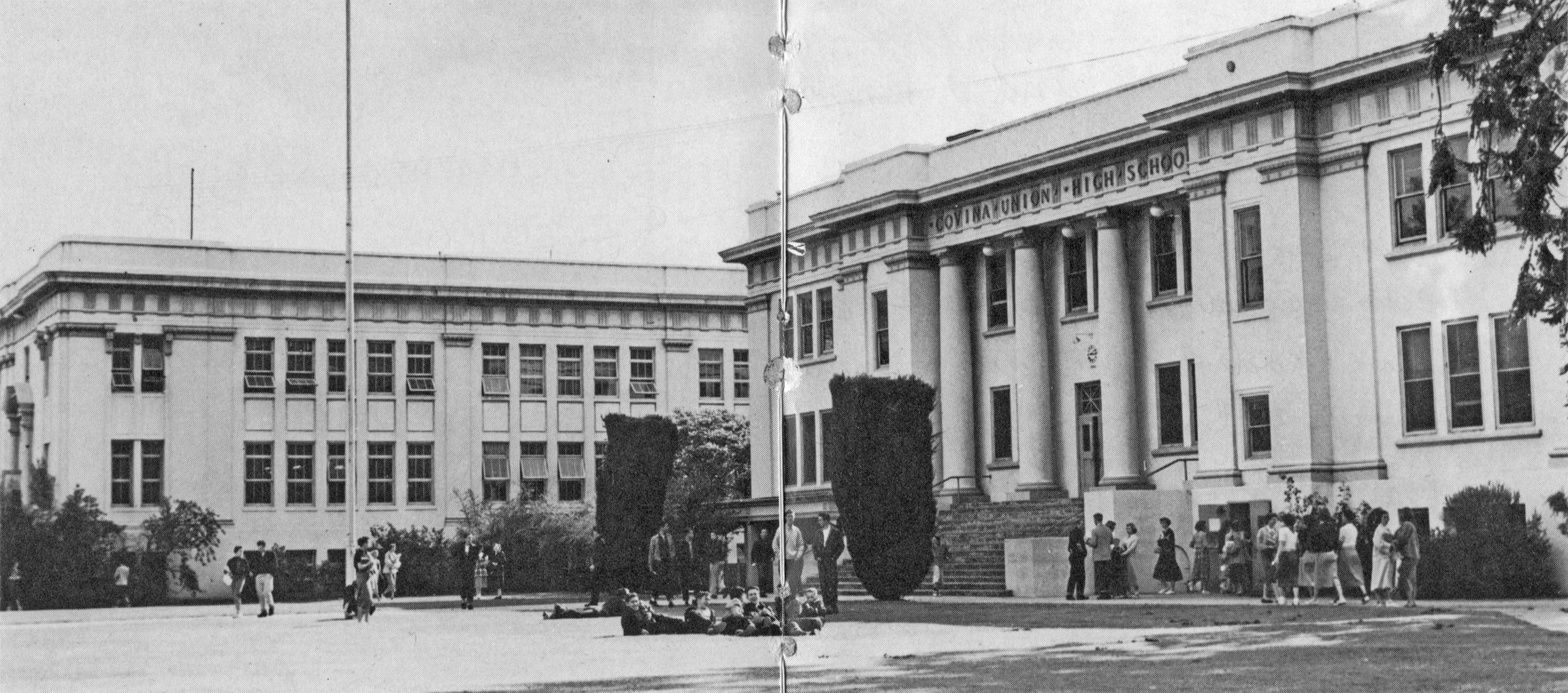
Title page of the CHS Cardinal yearbook from 1954: the year I was born in Covina. It shows my home town on the cusp of its transition from citrus-growing capital to suburban residential community.


Click for full-res image.

Still more groves than subdivisions at this point, but that wouldn't be the case for much longer.

The old high school would soon be no more, as well. CHS began transitioning to a new location on Puente at Hollenbeck starting in Fall, 1956. That same year, students from West Covina attended classes at the old campus until their own new high school would be ready in 1957. In 1958-1959, it became an all-freshman high school, where students from all over the area waited for Northview, Charter Oak, and Edgewood to be completed. After closing completely in 1961, the main building was repeatedly vandalized, and in June, 1962, the gymnasium was destroyed by arson. The entire complex was subsequently demolished.


Covina High quad, 1954. Science Hall annex at left. Click for full-res image.