Wednesday, June 20, 2018

The Naming of Covina

...by guest author Glenn Reed

Recently Karl Blackmun, one of our new members gave us a copy of his great grandmother's memoirs of her life in Covina in the early days. Her name was Clara Margaret Eckles (1874-1966). She married Carl Warner, best known in Covina as the younger brother of Elwin Perle Warner, long time prominent Covina grocer. Her memoirs paint a picture of life in this area before 1900 and relates some of her contacts with such early residents as Antonio Badilla, Lucky Baldwin, and Joseph Phillips.

Of particular interest is her account of how Covina received its name. Most of us have heard that the name came from the location, as a cove between the San Gabriel Mountains and the San Jose Hills at least partly filled with vines. After all, Baldwin Park was for many years called Vineland until the residents changed the name in order to curry the favor of Lucky Baldwin.

Here is the story in the words of Clara Eckles:

The Dunkard Brethren were colonizing Covina, only that wasn't its name yet. One day Phillips called father over to do some surveying and to give some advice. It seemed the colony of Brethren wanted to name their section, "Los Covinas." They thought it was Spanish for "The Little Cove." "Los" was the only Spanish part of it, and Mr. Phillips didn't want to hurt their feelings by pointing out their mistake. Besides, there wasn't any cove present! So a compromise name was suggested, that of "Covina," the leaders were consulted, and the town named before it had time to catch its breath.

I think that is a better story for the naming of Covina than any that I have heard, and besides, it is an account from someone alive at the time; I am accepting it. More of Clara's memoirs later.

This article was originally published in the June, 2018 issue of "The Covina Citrus Peal," the official newsletter of the Covina Valley Historical Society, and is reproduced here with the permission of the author, Covina historian Glenn Reed.
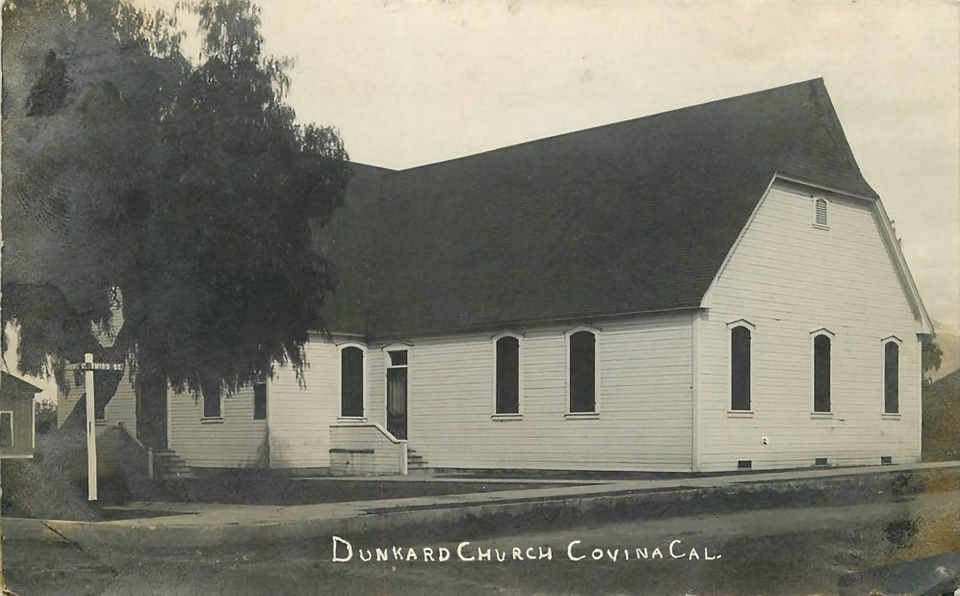

German Baptist Brethren church on Third at Puente, circa 1920.


Wednesday, March 7, 2018

The Ruddock Mansion

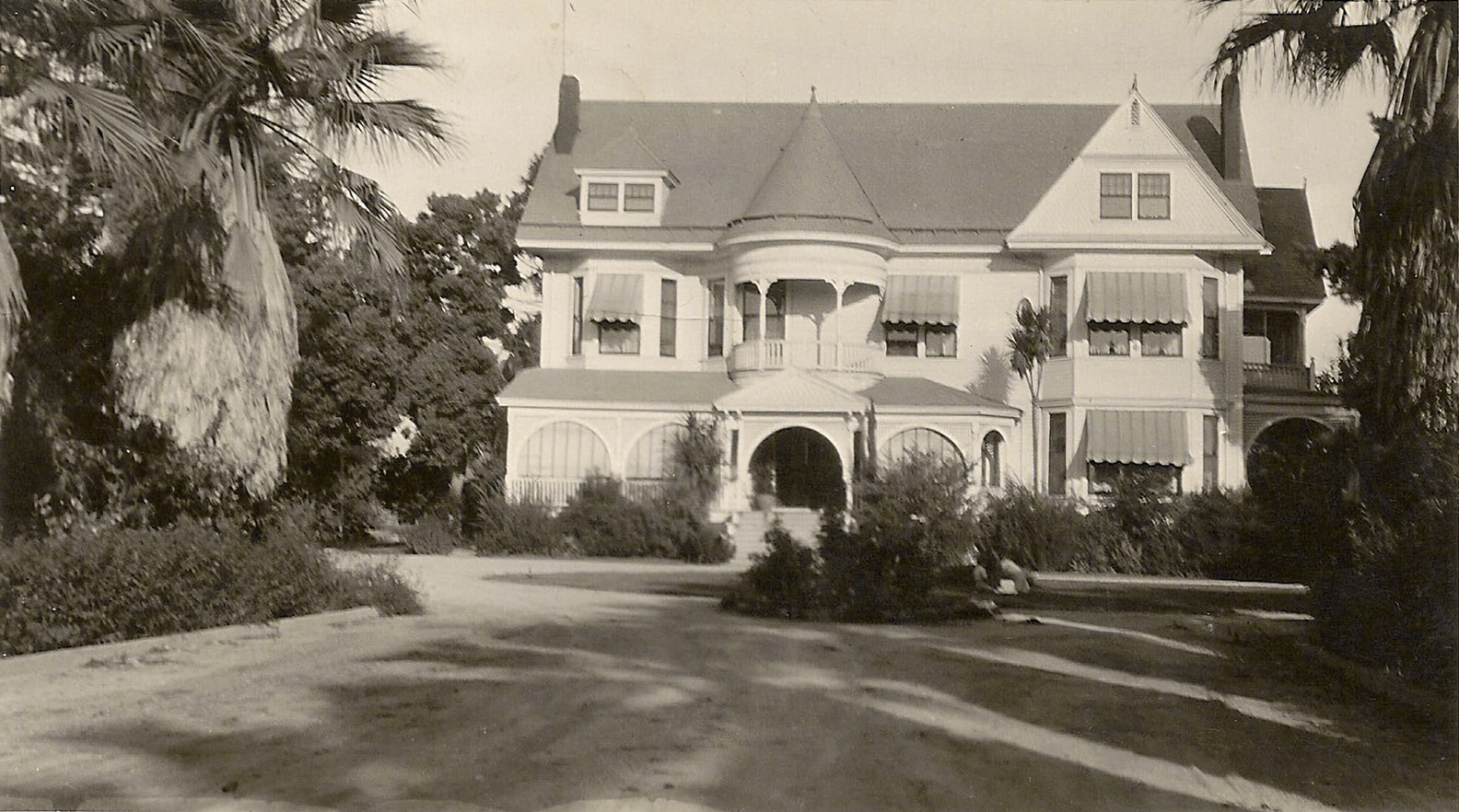
"Mountain View" was the winter home of Chicago lumberman Charles Homer Ruddock (1848-1929) and family.1,2 In March, 1888, Charles's father, Thomas Sanderson Ruddock, had purchased 204.6 acres of Hollenbeck Ranch land from Moye Langley Wicks:3 a huge parcel which lay east of Grand Avenue and the new town of Covina. However, the elder Ruddock died suddenly in Los Angeles on January 17, 1890,4 so he didn't live to see the grand estate that his son built and completed there in 1891.5

In pioneer times, the extravagant 3-story Queen Anne-style mansion1 was the showpiece of the entire Azusa Valley (as the Eastern San Gabriel Valley was called back then).6 According to Covina historian Barbara Ann Hall, Mountain View...

...had 11 7 bedrooms, 5 4 bathrooms, and 7 8 fireplaces of Belgian tile and rosewood. A stained-glass window looked down upon the staircase. There were stained-glass chandeliers in the ballroom. Surrounding the mansion were stables, a carriage house, a bunkhouse, servants' quarters, and a caretaker's cottage. The 800-foot 650-foot drive was lined with palm trees and roses.1

In 1910, Mountain View was sold to Conrad C. Kohlmeier,7 and through his son, William, portions of the former Ruddock lands stayed in the Kohlmeier family into the 1940s.

Ironically, for all its local fame in bygone days, few photographic images of Mountain View were known to have survived. Recently, however, I made the acquaintance of Mary Elarton Kidd–whose great aunt was one of the last residents of Mountain View–and she has shared with me many photos of the ranch which have never before been seen by the public.

To the best of my knowledge, this is the most detailed picture in existence of Covina's lost Victorian treasure. It shows Mountain View not long after John and Mary Chrastka bought the 27-acre mansion property in 1927.8


The Ruddock Mansion, 1891-1956. Photo courtesy Mary Kidd. Click image to enlarge.

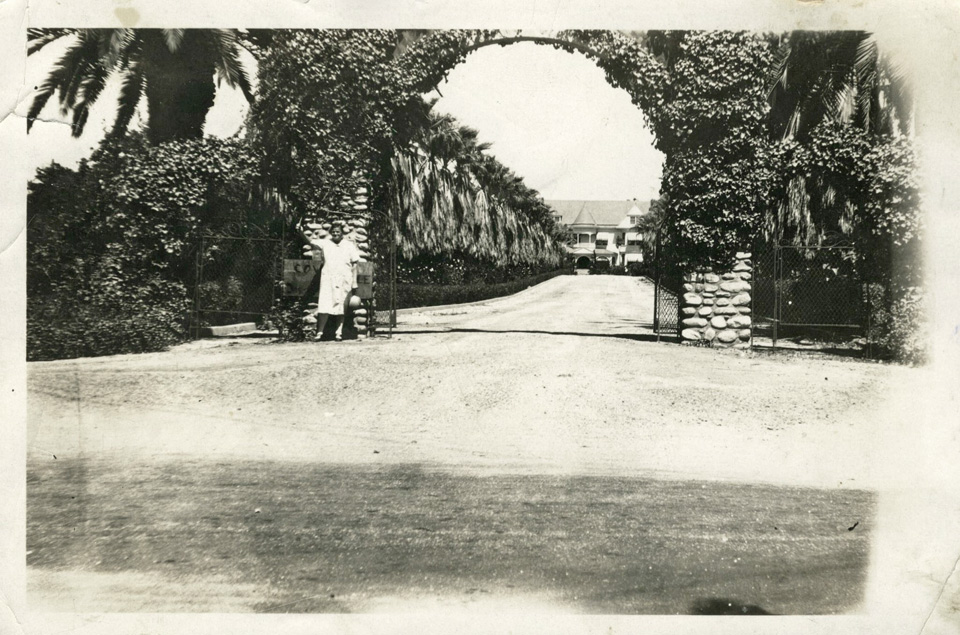
The entrance to Mountain View, formerly located at 522 North Grand Avenue9 at the eastern end of San Bernardino Road. The mansion itself was located immediately east of the intersection of today's East Wingate Street and South Westridge Avenue.


Photo courtesy Mary Kidd.

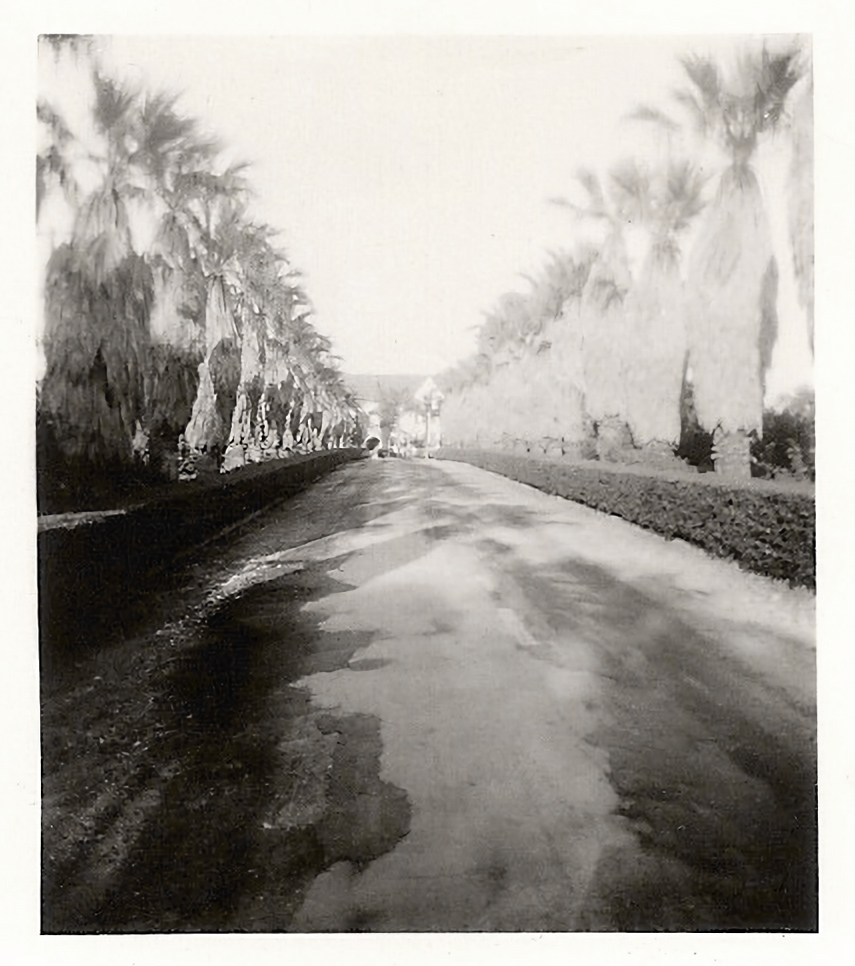
Planted over 130 years ago, the Washingtonia filifera fan palms that still stand today along East Wingate Street are among the oldest trees in Covina (together with the palms that line Hollenbeck Street). Here they are in the 1940s, when they were already six decades old.


Photo courtesy Mary Kidd.

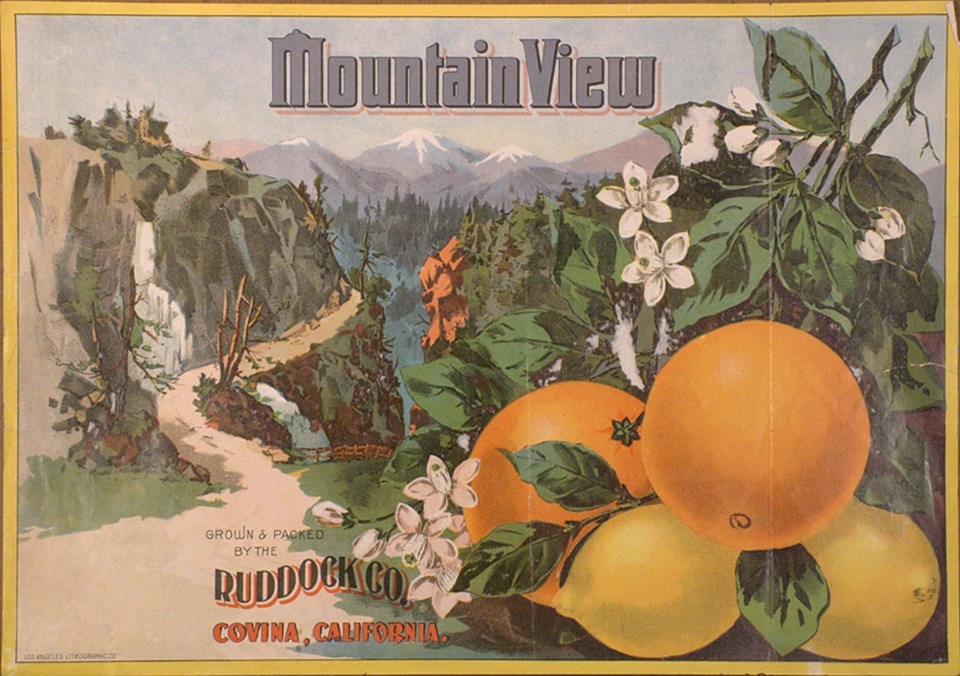
A Ruddock Company citrus crate label:


Image courtesy Calisphere.

Continuing on:

Saturday, February 17, 2018

Covina Banknotes

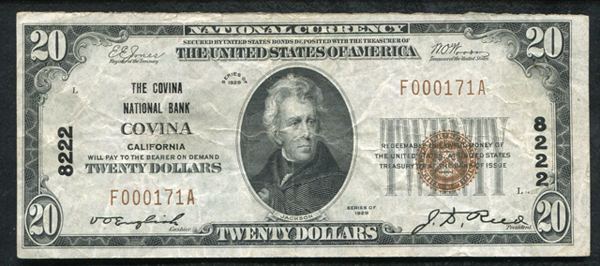
Most people today don't know this, but from 1863-1935, local National Banks could issue their own banknotes, which were legal tender anywhere in the United States.

Here are some examples of U.S. currency produced by the two National Banks in Covina in the early years of the 20th century. (The first two are the old, large "horse blanket" banknotes; the third is the same size as our bills are today.)


$5 note, Series of 1882, Charter date 1901. Portrait depicts the late President James Garfield. Click image to enlarge.


$10 note, Series of 1902, Charter date 1921. Portrait depicts the late President William McKinley. Click image to enlarge.


$20 note, Covina National Bank, Series of 1929. Image courtesy seller jscabani1988 on eBay.

Below are some historical photos of Covina's two chartered National Banks.

Sunday, January 21, 2018

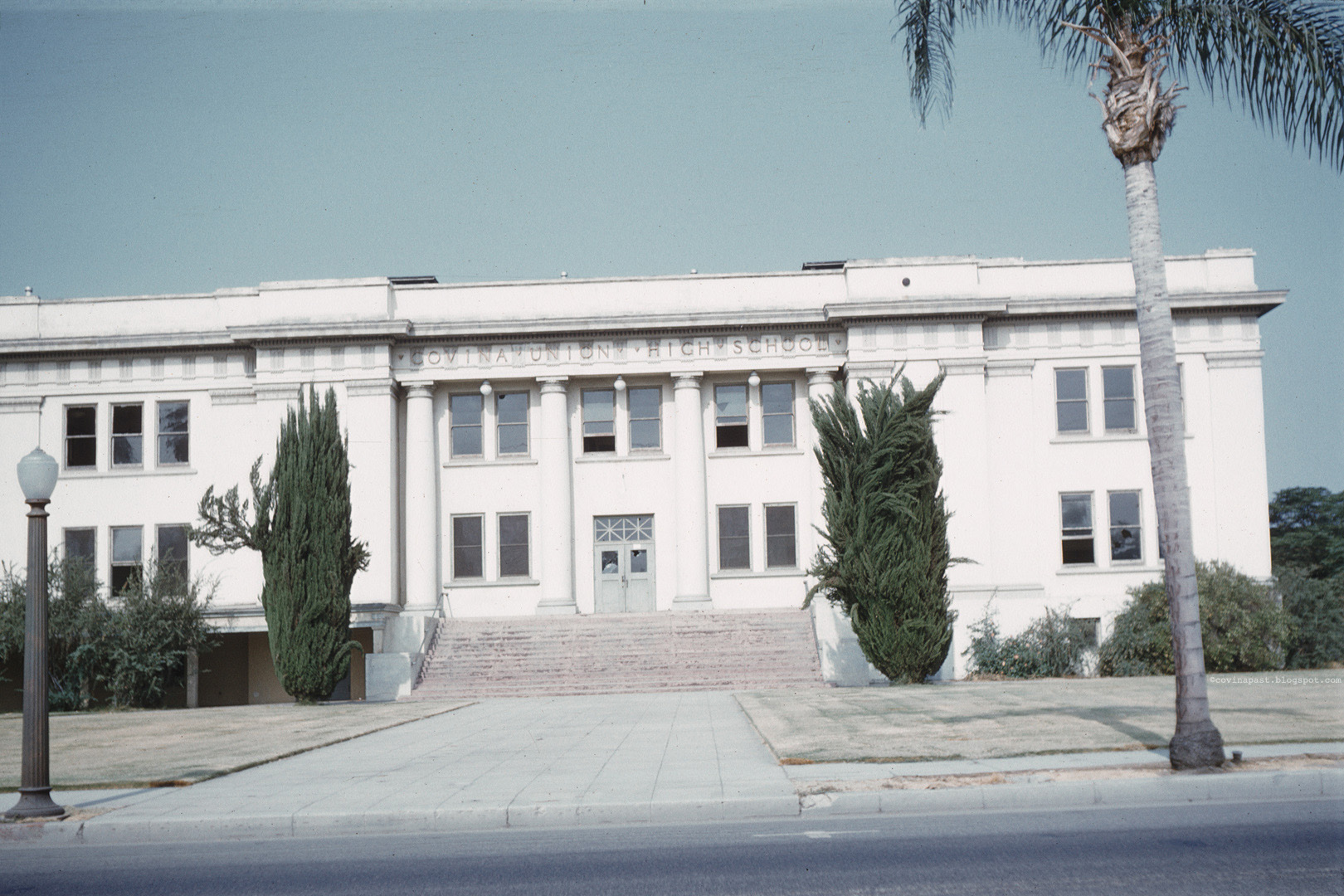
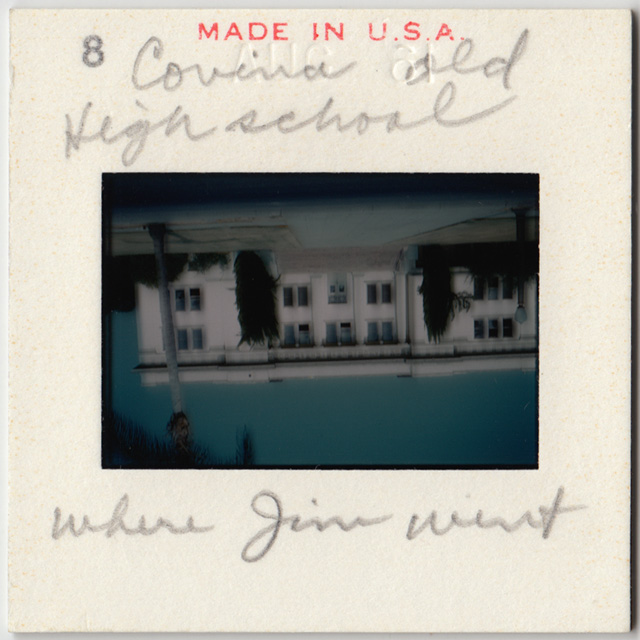
Old Covina High, 1961

Covina Union High School, formerly located on the west side of Citrus Avenue between Puente and Dexter Streets.


Click image for an enlargement.

Opening in 1909, CUHS graduated 48 classes of seniors until it was replaced by the present high school in 1956. West Covina High School got its start on the old campus in academic year 1957-58, with Edgewood High following in 1958-59. This photo was taken in the summer of 1961 after the main building was abandoned, as the numerous broken windows attest.

The gymnasium of the old high school was burned down by child arsonists on the night of June 10, 1962. It was a spectacular fire. We could see the flames all the way from our house in the Covina hills. The Pasadena Independent reported that the presence of over a thousand spectators on the surrounding streets hampered efforts to contain the blaze. The entire campus was razed for redevelopment in 1963.


Wednesday, January 10, 2018

Strapping Youth

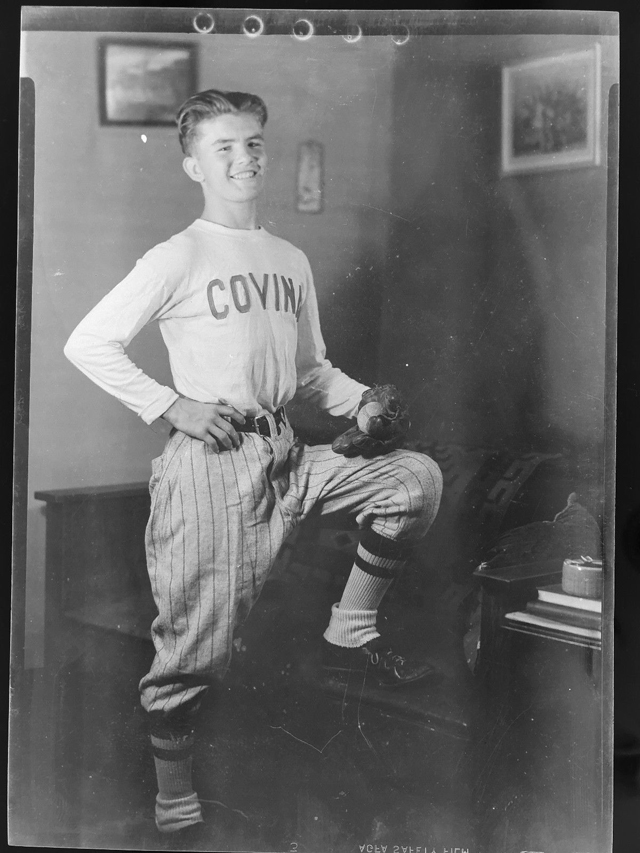
Unknown Covina Union High School Colt varsity baseball player from the 1930s. Photo attributed to Burton O. Burt, who was active in California and the Southwest in the early 20th century.


Image courtesy of seller tobeacat66 on eBay.

Some people I showed this to thought it might be a picture of a young "Doc" Sooter–the semi-legendary CHS sports coach–but one of them asked his surviving brother about it and it turns out Doc was still living with his family in Missouri at the time this photo was taken. So the young man's identity remains a mystery.

Anyway, regardless of who it is, this is a great image of a pre-War Covinan! His face really lights up the room, doesn't it?


Monday, July 17, 2017

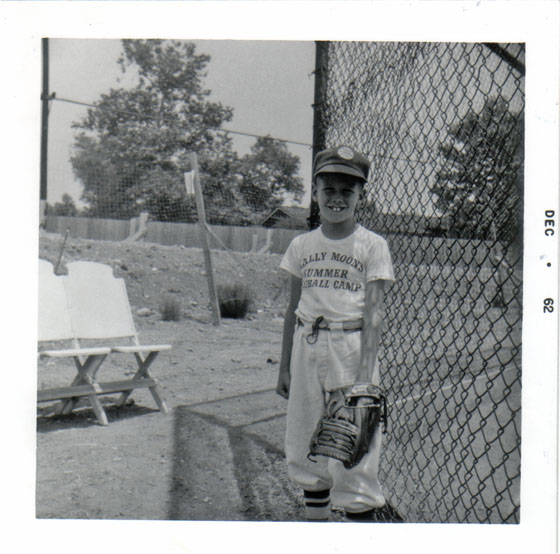
Wally Moon's Baseball Camp

In the early Sixties, Los Angeles Dodgers outfielder Wally Moon started a baseball summer camp at the Baptist Seminary in the Covina Hills, only about a mile from our house. Since we were a big "baseball family," it was natural that I attend.


That mitt's bigger than my whole chest!

Recently, I had some old home movies converted into DVDs, and was delighted to discover footage of me playing my first game at Wally Moon's in the summer of '62, when I was 7 going on 8. I have a ton of fond memories about the camp, but it was great to actually see the place again. It reminded me of just how much fun I really had there.

Anyway, my play here is pretty terrible, but don't watch me, watch the surroundings! If you attended Wally Moon's Summer Baseball Camp back then, I'm sure this will bring back great memories for you, too. :-)

Also in those home movies was a clip of me pitching little league at Barranca Park in 1964. Not at the main ballfield, though; it was on the minors' diamond on the grounds of Barranca School. I was a lot better pitcher than I was a batter, but that's not saying much. I did have a pretty good wind-up and delivery, though...