Friday, October 14, 2022

Early Covina Theatre Photo

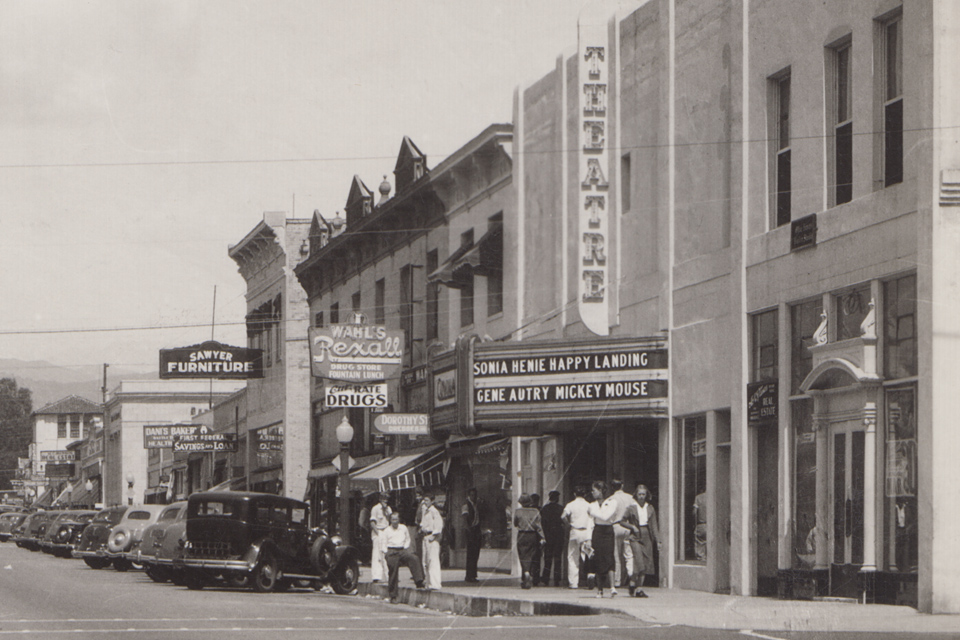
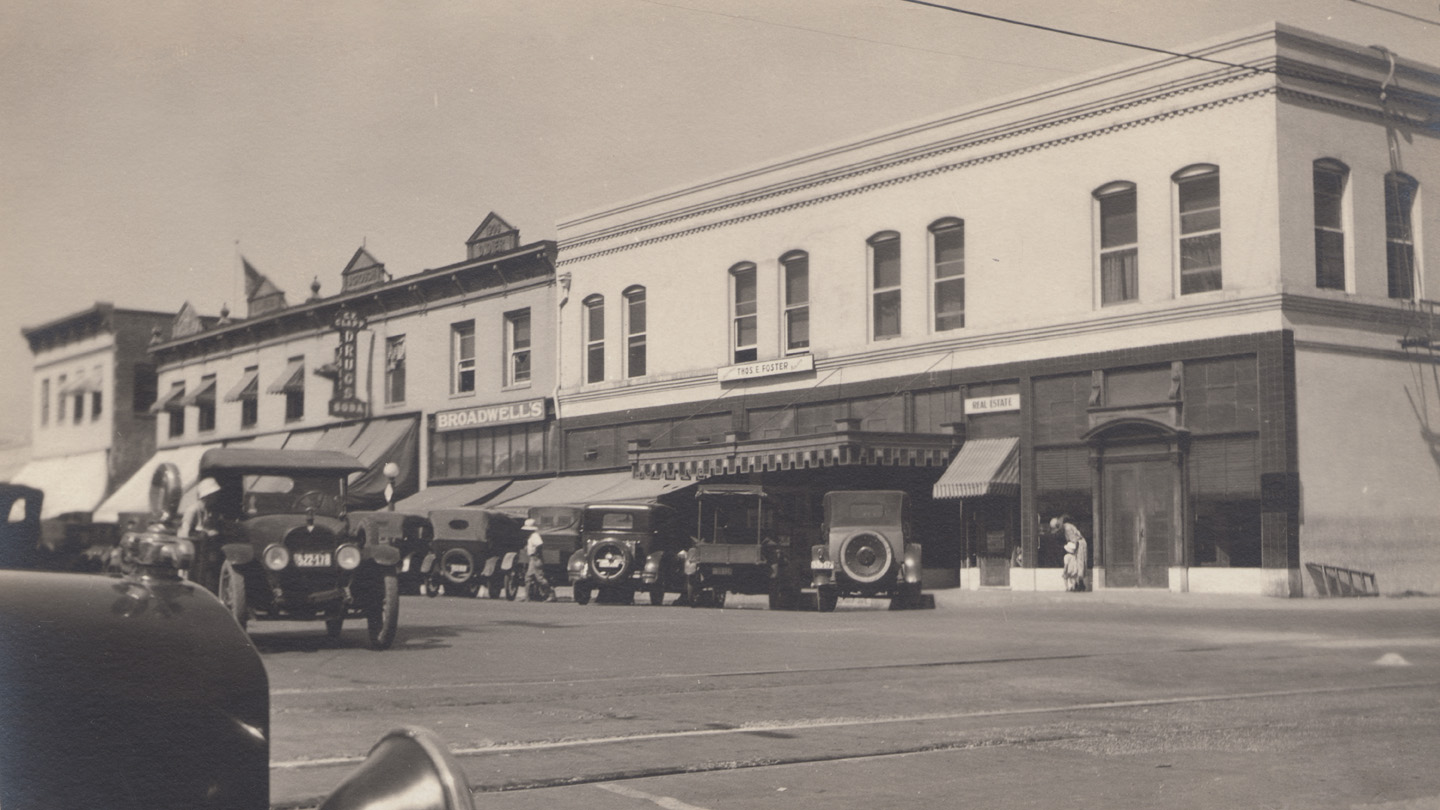
In this previous post about the opening of the Covina Theatre in 1921, I remarked that I didn't have a photo of the place in the 1920s. Well, I do now! Judging by the car license plates, it was taken in 1924.


Citrus and Badillo in 1924. Photo by Tucker Studio. Click image to enlarge.


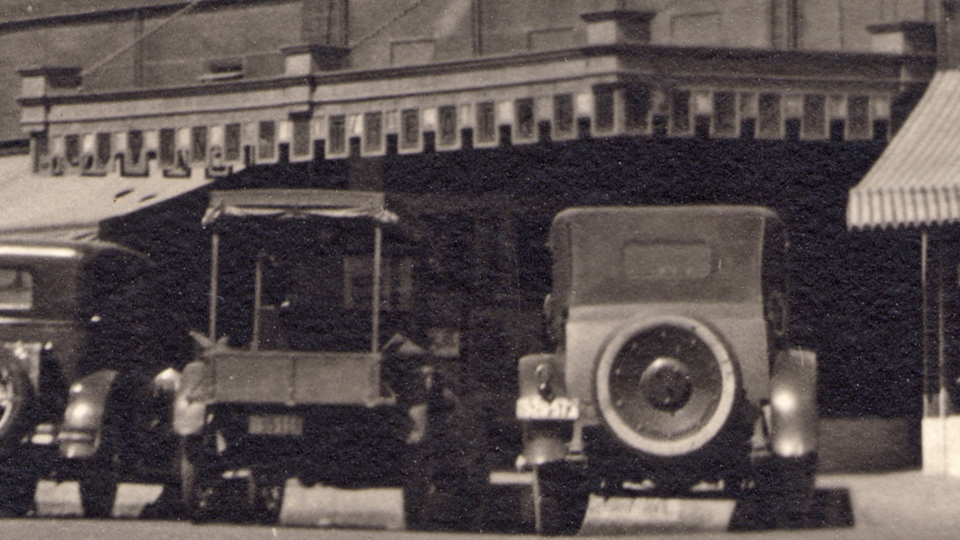
At first glance, it appears the theater does not yet have a marquee. However, on higher magnification, the longer panels on the canopy can be seen to spell out C-O-V-I-N-A--T-H-E-A-T-R-E. Although not very visible in the daytime, it's likely those panels were made of glass and were backlit by light bulbs in the evening.


Closeup of the early marquee. The panels on the right of the canopy spell out T-H-E-A-T-R-E, as well.


In the Thirties, both the theater marquee and the building's exterior facade were upgraded to a more modern appearance.


Tuesday, September 20, 2022

Mountain View in Color

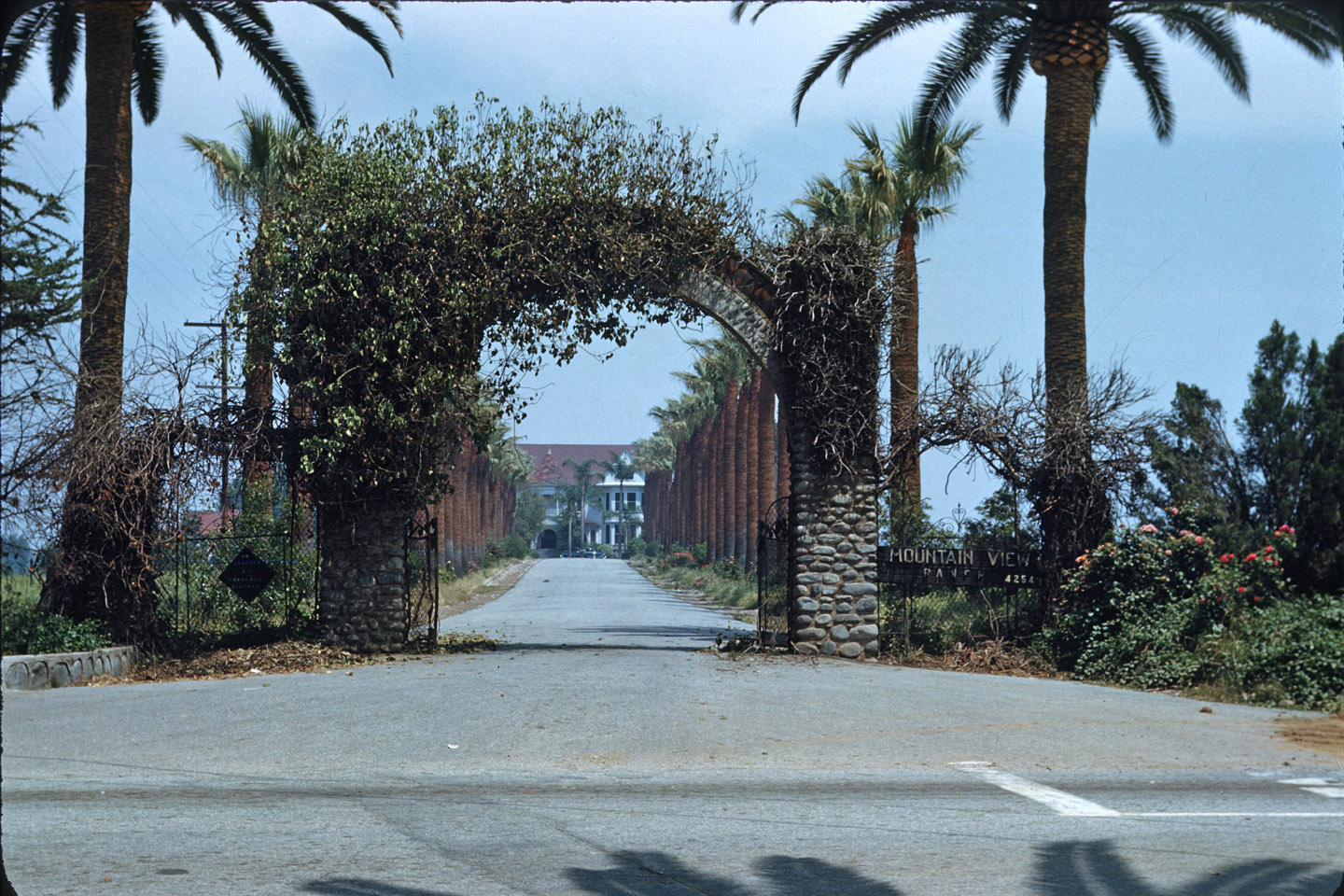
Awhile back, after reading my previous post about the Ruddock Mansion, Marilee Johnson sent me these remarkable never-before-seen color photos of the estate. The three pictures below were taken by her grandfather–Bruce Ward Macy–while Marilee and her family lived at Mountain View Ranch from 1952-1954.


The entrance to Mountain View Ranch, Grand Avenue at San Bernardino Road, Covina, California, May, 1952.
Photo by Bruce Ward Macy, ©Marilee Johnson, All Rights Reserved. Click on image to enlarge.

Friday, May 6, 2022

Old Covina Glass

I know I said a while back that I was done collecting Covina antiques, but bottles were one of my earliest specialties, and I simply can't resist temptation when it comes to old Covina glass.

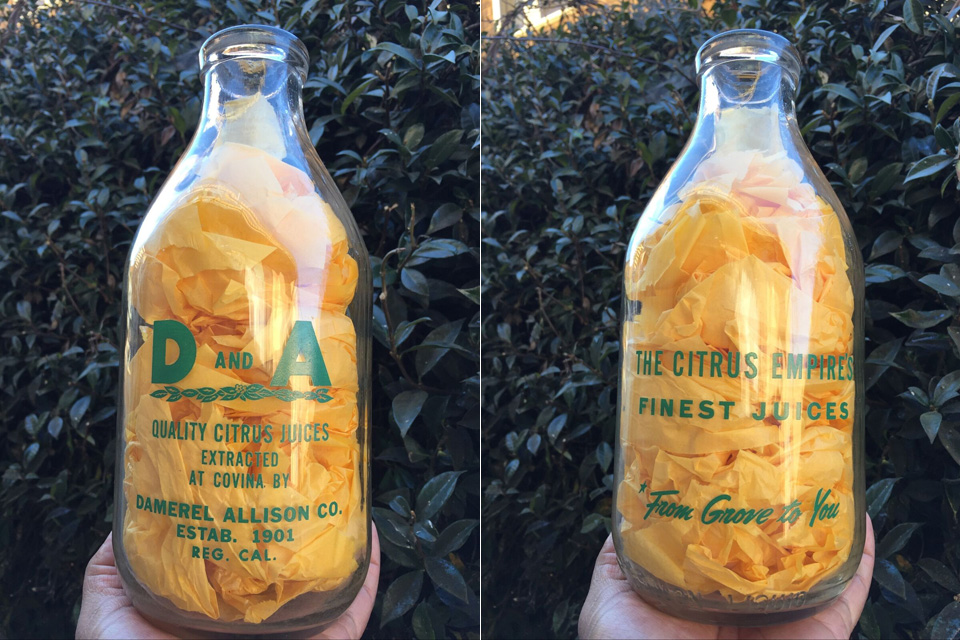
So, given that affinity, what would a local history nut like me most like to acquire? A Covina orange juice bottle, of course! You might think they'd be relatively common, but it's taken me forever just to find one. And here it is: a beautiful, like-new half gallon juice bottle from the Damerel-Allison Company of Covina that dates from 1946-1950.


Photos by Jose Lomeli.


A case could be made that Damerel-Allison invented bottled orange juice. Founded in 1901, D-A pioneered storage and refrigeration techniques that made it possible to reliably mass produce orange and other fruit juices for the regional consumer market. D-A also achieved market advantage by controlling its entire supply and distribution chain all the way from the grove to the grocer's shelf. After WWII, Damarel-Allison opened the largest and most thoroughly automated frozen juice concentrate facility in the United States. In 1950, D-A was acquired by a division of the California Fruit Growers Exchange, whose consumer products brand name was... Vita-Pakt! Under that name, the company would remain a staple of Covina's economy for another half-century.

Tuesday, November 2, 2021

Covina Hills Road

Looking back, I realize that Covina Hills Road was the likely origin of my fascination with olden times. We moved to the Ranchos when I was 5, and even at that young age, I noticed that, taking Rowland towards home, the instant we passed Grand onto Covina Hills Road, the scene changed from modern suburbia to cowboy days. Along almost its whole length were sights to behold that looked frankly ancient to me. Maybe this had been a stagecoach road, or an old indian trail, but no matter who I asked or what library books I read, no one could ever tell me anything about Covina Hills Road that came even close to answering all the questions I had about it. A lifetime would pass before I was able to discover the road's forgotten story myself...
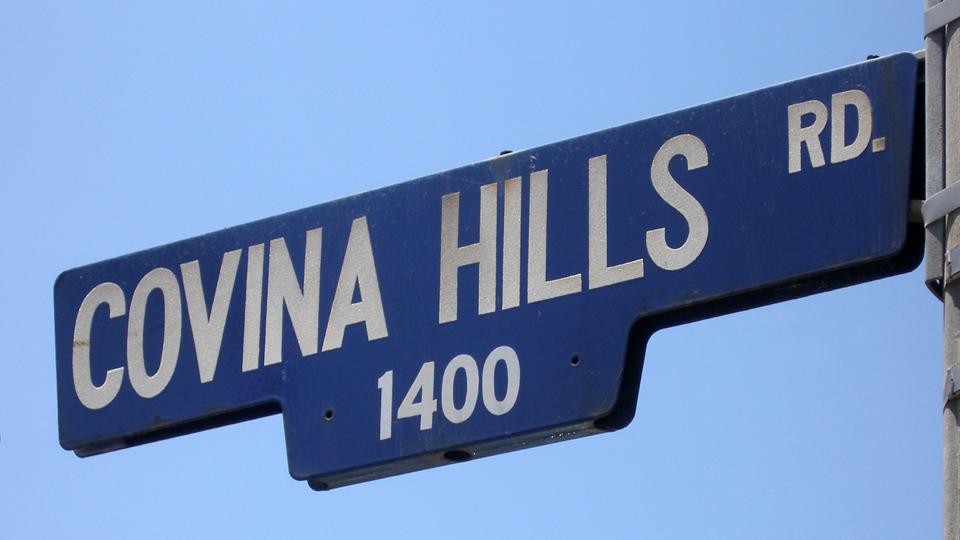

Corner of CHR and Via Verde, San Dimas, June 26, 2010. Photo © J Scott Shannon.

Known by a variety of names over the years, today's Covina Hills Road began its existence in early 1895 as a mile-long access road to the headquarter buildings of the McCarthy Company's Hollenbeck Ranch partition southeast of town.1


Survey map from August, 1895,1 showing the new Hollenbeck Ranch road (yellow) as an extension of Rowland Avenue in the Phillips Tract.
Courtesy Los Angeles Dept. of Public Works.


The year previous, however, a committee of the Pomona Board of Trade together with officials and supervisors of Los Angeles County had already recommended creation of a road extending all the way over the San Jose Hills to give Pomona a more direct route to the San Gabriel Valley and points west.2 At the time, travelers from Pomona wanting to go to Covina had to divert around the hills: either north via Lordsburg (La Verne) and San Dimas, or west via the Old Spanish Trail (today's Valley Blvd.) then north on Pass and Covina Road. If they could cross directly over the hills, though, it would take at least five miles off the trip,3 which in the days before automobiles could mean an hour of time saved.

The route as surveyed in the summer of 1895 passed through the Phillips Ranch4 on the east over what we now call Kellogg Hill, then through Hollenbeck Ranch lands on the Covina side.3 After the rights-of-way were obtained and obstacles to construction overcome, work on the Pomona County Road was completed in four months in early 1896 for a total cost of $1,100.5
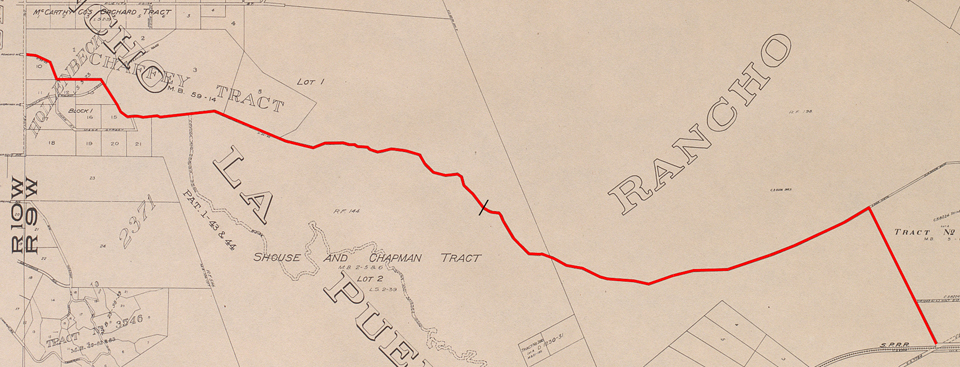

The original as-built alignment of the Pomona Road (red). Since 1933, the road has ended at the point indicated by the black slash.
Tuesday, October 5, 2021

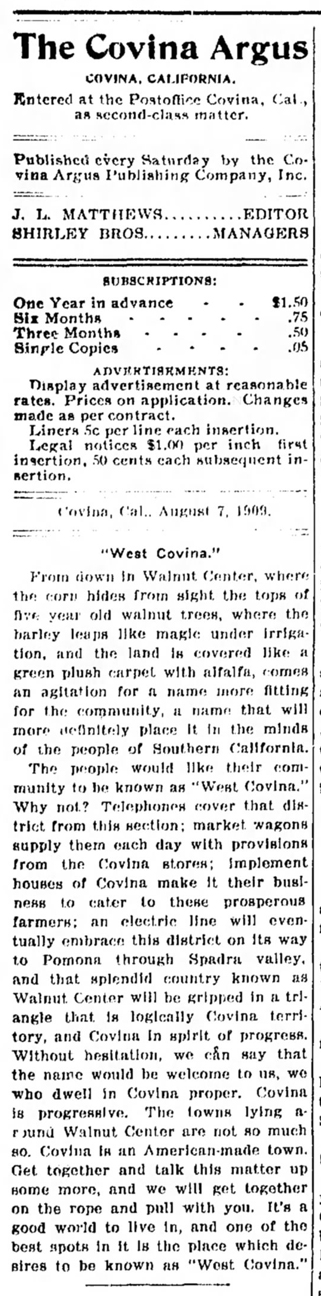
"West Covina."

On August 7, 1909, the name "West Covina" appeared for the first time in a newspaper. Covina Argus editor J. L. "Louie" Matthews had heard that the people of the farming lands to the south and west of town wanted a better name for their growing community than "Walnut Center," and in an editorial, he gave voice to their desire.1,2 Consensus was immediate, and thus was "West Covina" born.


Source: Newspapers.com

References:

1 Pflueger, D. H. 1964. Covina: Sunflowers, Citrus, Subdivisions. Castle Press, Pasadena, California, 372pp.
2 Covina Argus, August 7, 1909, p.4.


Saturday, September 25, 2021

Covina 1907

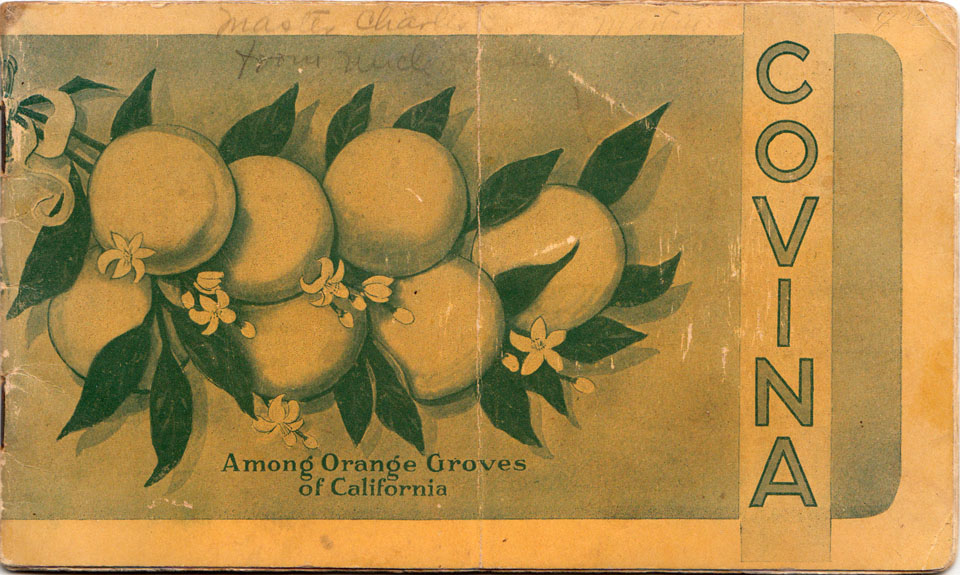
This promotional booklet was put out by the Covina Valley Farmers' Club in March, 1907.1 Some of these images (all by Tucker Studios) are quite rare; a few likely never published elsewhere before or since. Its 12 photos are presented here in the same order they appear in the booklet. (Click on any of the black-and-white pictures to view an enlargement.)


I believe the faded pencil inscription reads "Master Charles ... Martin / from Uncle Archie"


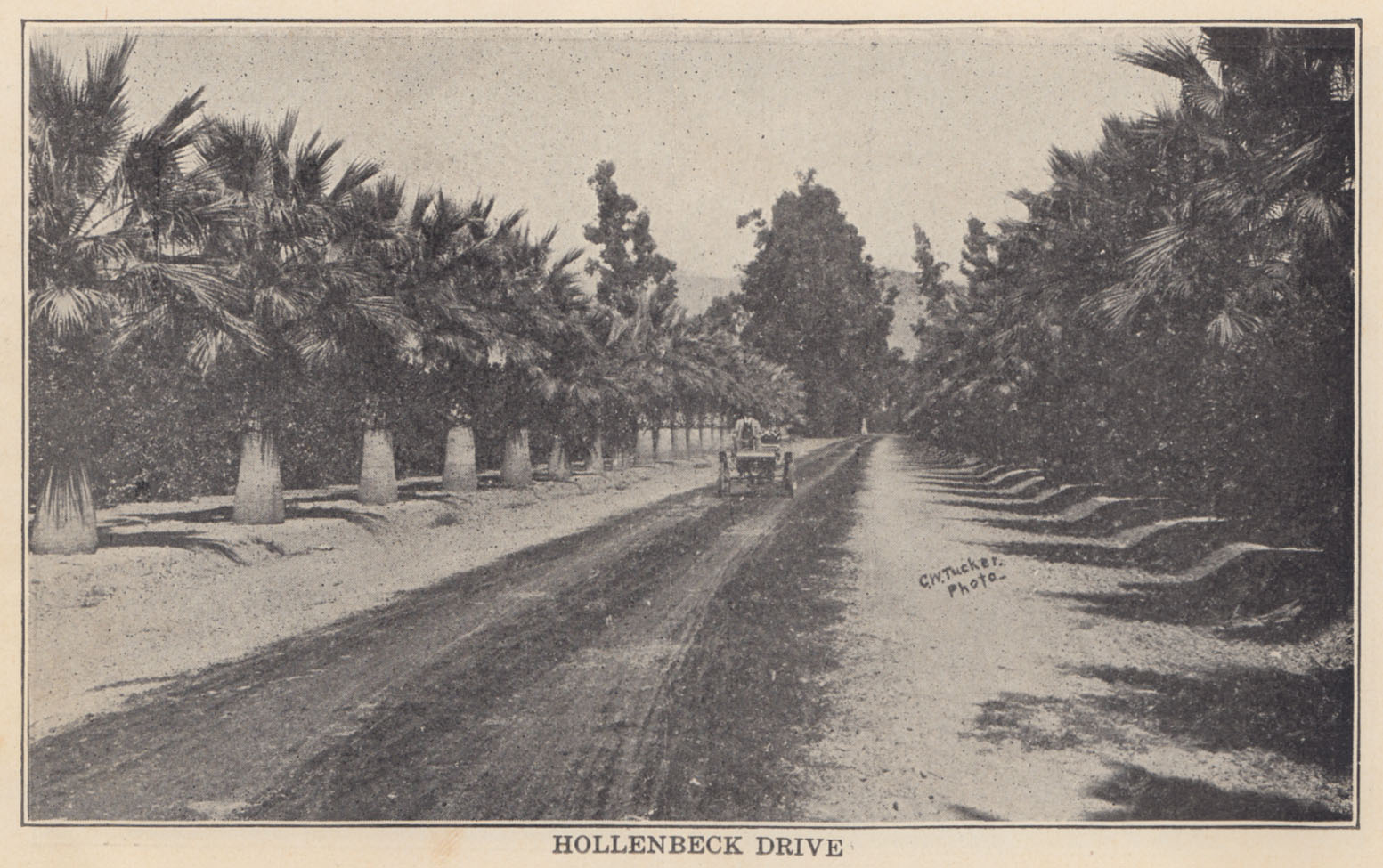
I've always liked this picture of Hollenbeck back when the palms were young. Donald Pflueger says this is Hamilton Temple driving his 1901 Oldsmobile;2 one of the first automobiles in Covina.